







Key takeaways
- Resilience depends on reducing single points of failure: Physician groups need systems and training that promotes continuity when people or processes change.
- Technology demands thoughtful implementation: Systems built on advanced tech like AI tools depend on careful, cohesive rollouts to mitigate risks and maximize long-term stability.
- Standardization is key as groups grow: Variability in billing practices, documentation, and workflow creates compliance and financial risk without consistent, cross-team practices.
Group billers need to prepare for the future to secure collective efficacy.
While billing as a group alleviates expenses and saves valuable time, it may also leave individual group members with less billing autonomy, and therefore, less flexibility to navigate change. These struggles will inevitably impact their bottom lines.
- Why do physicians choose group billing? Hours saved by distributing billing burden are redirected to more meaningful pursuits, such as program expansion and personal development.
Teams of clinicians share billing burden and reap the rewards collectively. But they also share downside risks. For example, how would the group respond to key knowledge holders leaving? What happens if the government shifts compensation incentives? Do all group members interpret compliance rules the same?
The answers to these questions guide immediate decisions for long-term revenue growth. Read on to discover five things group billers need to plan for, and actions to take today.
1) Administrators retiring or leaving
In Canada, rates of physician burnout increased from 30% to 46% from 2017–2025 and more physicians—52% in Ontario—considering retirement or plan to retire in the next five years.
When burnout leads to turnover, this creates major risks to billing groups that rely on specific individuals to administer their billing operations. Across Canadian physician groups, long-tenured billing administrators often hold critical operational knowledge that isn’t formally documented. This includes how to handle provincial billing nuances like RAMQ vs. OHIP rules, as well as informal workarounds that keep claims flowing.
When these individuals retire or leave, that knowledge disappears overnight. This creates immediate gaps in billing accuracy and efficiency.
Claim submission delays, increased rejection rates, and slower resubmissions disrupt cash flow—particularly in groups operating under blended or APP models where reporting requirements are strict. Remaining staff are often expected to absorb this complexity, even if they lack the same depth of experience.
This feeds a negative cycle of burnout, more errors, and further turnover. The financial impact is negative, too.
Three ways to prepare
- Document end-to-end billing workflows: Capture step-by-step processes, including edge cases like rejected claims, shadow billing requirements, and payer-specific nuances by province.
- Standardize onboarding and training programs: Build structured onboarding that includes billing rules, system navigation, and real scenarios. This reduces ramp-up time and ensures consistency across hires.
- Cross-train team members: Ensure multiple people can handle core billing functions. This reduces dependency on any single individual and improves resilience during transitions.
Physicians using Petal gained an average of $34,346 annually compared to manual billing.
2) Government changes to compensation models

Physicians are beholden to government priorities and associated incentives.
Shifts in provincial compensation models, such as moving from fee-for-service (FFS) to alternative payment plans (APPs), capitation, or blended models, introduce financial and operational uncertainty. Clinical activity no longer matches revenue in the same way, and without clear visibility, groups won’t understand whether they’re optimizing under the new model.
During transition periods, revenue predictability often declines. Delays in funding adjustments, evolving policy interpretations, and new reporting requirements (such as shadow billing or access metrics) create confusion. If physicians don’t fully understand how their work translates into compensation, they’ll become frustrated or disengaged. Administratively, teams must adapt quickly to new data capture requirements and ensure compliance with provincial guidelines, which vary significantly across jurisdictions like Ontario, Quebec, and British Columbia.
Three ways to prepare
- Model financial impact before rollout: Use historical data to simulate how different compensation models affect revenue distribution, physician income, and group sustainability.
- Ensure data capture supports funding formulas: Align billing and scheduling workflows with required reporting (shadow billing, patient attachment, access metrics etc.) to avoid funding discrepancies.
- Communicate frequently with stakeholders: Keep physicians and administrators informed with clear, ongoing updates to reduce confusion and support adoption of new models.
3) Technological advancements
The adoption of advanced billing platforms, AI-driven coding tools, and integrated EMR systems is accelerating across Canada.
While these technologies promise efficiency gains, they also introduce complexity. Data migration from legacy systems carries real risks: missing records, corrupted data, or incomplete transfers directly affect billing accuracy and reporting.
New systems also come with a learning curve. Productivity often dips in the early stages as staff adapt to new workflows and interfaces. At the same time, integration challenges emerge between billing systems, scheduling platforms, and financial tools. In fragmented environments, even small disconnects result in duplicate work or missed claims.
For physician groups operating across multiple sites or provinces, these risks are amplified by differing requirements and system configurations.
Three ways to prepare
- Run parallel systems during transition: Temporarily operating old and new systems side by side allows teams to validate outputs and catch discrepancies before full cutover.
- Provide role-specific training and clear ownership: Tailor training to each role and assign clear responsibility for system configuration, updates, and issue resolution.
- Build contingency plans for downtime: Establish backup workflows (manual or alternative systems) so billing and scheduling continue during outages or disruptions.
Clinicians save an average of 161 hours annually using Petal Billing.
4) Compliance and billing audits
As physician groups grow or merge, variability in billing practices becomes more pronounced.
Different clinics may interpret provincial billing rules differently. They may apply codes inconsistently. They may follow unique documentation standards. When combined with varying compensation agreements across physicians, this forms a complex environment where standardization and monitoring are difficult.
This complexity increases exposure to audits from provincial payers, such as RAMQ or OHIP. Inconsistent billing or insufficient documentation lead to clawbacks or penalties, as well as rejected claims where providers may already be losing 5–8%+ of earned revenue.
Larger groups face challenges in reconciling revenue distribution accurately, particularly when multiple compensation models coexist. Barring clear oversight, small discrepancies accumulate into significant financial and compliance risks.
Three ways to prepare
- Conduct regular internal billing audits: Proactively review claims and coding patterns to identify issues before external audits occur.
- Document to support claims: Align clinical documentation with billing requirements to reduce the risk of rejections or clawbacks.
- Stay updated on billing rules and guidelines: Monitor provincial updates and ensure teams are trained on changes to maintain compliance across all sites.
5) Evolving industry trends
Physician group operations evolve alongside broad, multi-dimensional healthcare trends.
For example, team-based care models common in Family Health Teams in Ontario, Groupes de médecine de famille (GMFs) in Quebec, and interdisciplinary clinics are changing how services are delivered and billed. Attribution becomes more complex when multiple providers contribute to a patient encounter, especially under blended funding models.
At the same time, virtual care and hybrid scheduling have become standard. While they improve access, they introduce additional billing considerations, including modality-specific codes and eligibility rules that vary by province. Scheduling also becomes more dynamic, requiring coordination across in-person and virtual slots.
Finally, there’s also growing pressure to meet access-related metrics, such as wait times and patient attachment rates, which are increasingly tied to funding. Groups must balance these priorities with operational realities by aligning scheduling decisions with both patient needs and reporting requirements.
Three ways to prepare
- Support multi-provider scheduling workflows: Ensure systems handle shared panels, cross-coverage, and team-based care without breaking billing attribution.
- Integrate virtual care billing into workflows: Clarify how virtual visits are documented and billed to reduce errors and inconsistencies.
- Standardize processes across sites: For groups operating across multiple clinics or regions, consistent workflows improve reporting accuracy and compliance.
No matter what happens, bill with confidence
Choose a billing tool that makes financial planning easy.
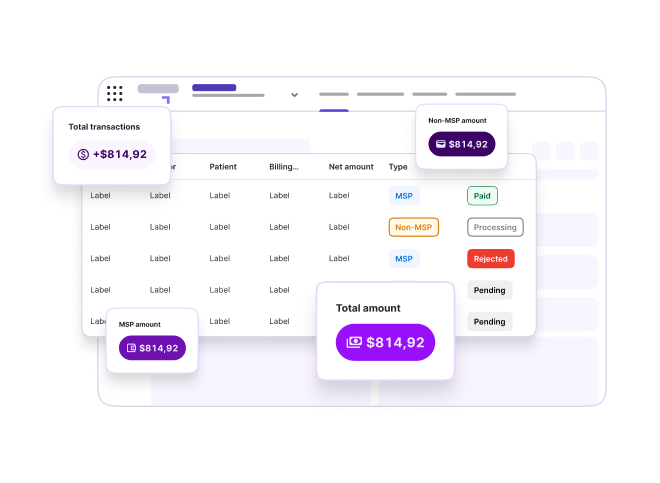
Petal Billing automates billing processes using tools designed for unique billing rules across Canada. Live agents are ready and based in your province. You’ll access stable, predictable revenue through end-to-end claim management.
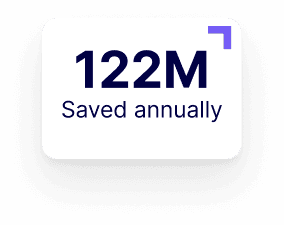
- Proof: Our independent study found physicians using Petal Billing reported an annual average of 161 hours saved and 9.4% more revenue or $24,123 per year.
Enjoy features that support fewer rejected claims. Through provincial code validation, centralized billing for specialty groups, real-time claim updates, and remittance tracking, your group will be positioned for long-term success.
No matter what happens, Petal’s here to guide your billing success.
Access stable billing for today and tomorrow: