








Key takeaways
- Individual billing provides autonomy; group billing provides stability. Clinicians need to consider their unique patient situation, such as common patient fluctuation patterns, before determining the right approach for them.
- Administrative burden is the price paid for individual billers’ autonomy. Group billers share admin burden through expense and claim management.
- Financial risk is distributed differently between each model. A clinician’s risk tolerance and growth ambitions will greatly influence the choice between individual or group billing.
Every clinician wants to make the right billing choices. This starts with choosing between individual billing or group billing.
Both options present upside.
Clinicians throughout the healthcare landscape choose group billing to share expenses and reduce hours spent on administrative burden. Individual billing clinicians must spend these administrative hours but hold greater autonomy and more potential for higher earnings based on their expansionary ambitions.
Below, you’ll learn how both forms of billing work, and see each compared in three areas: financial opportunities, work-life balance, and performance insights.
Read on to see which is right for you!
Practice
factor
Individual
billing
Group
billing
Financial
opportunities
Clinicians hold full ownership of their billings. This autonomy balances flexibility and growth potential with personal risk.
Revenue is pooled if there is an alternate payment structure in place. Physicians are still paid based on the work that they do.
Work-life
balance
Individuals oversee all scheduling, clinic operations, and workload decisions, but spend more time doing it.
Shared responsibilities reduce admin burden while tying personal practice decisions to collective aims.
Practice insights
and reporting
Reporting focuses on individual billings and personal performance.
Shared reporting systems provide visibility into both individual and group-level benchmarks.
How group and individual billings work
Clinicians want to know how they’ll be paid within a given payment model. These models function differently depending on whether a clinician performs individual billing or group billing.
Individual billing: Tied to your service volume
Individual billing models mean clinicians manage expenses independently.
In this model, clinicians don’t pool finances with other clinicians. They independently oversee expenses, submit claims, pay administrative staff, manage compensation, and meet compliance requirements.
Clinician income is directly tied to service volume. This means that individual billers gain greater autonomy while combatting higher financial variability and more exposure to fluctuations in patient demand. More independence is weighed against greater financial and administrative risk on the clinician.
Here’s how common payment models function under individual billing:
- Pure Fee-For-Service (FFS): Clinicians bill the provincial payer directly for each service they provide and receive payment individually. Revenue is tied to personal service volume.
- Blended capitation: Individual clinicians receive fixed payments for each enrolled patient on their roster, supplemented by fee-for-service billings and incentive payments.
- Alternative Funding Plans (AFPs): Clinicians may be paid through structured contracts tied to specific roles, programs, or institutions. Compensation is allocated to individual clinicians rather than distributed through a group revenue pool.
- Salaried or hospital-based arrangements: Clinicians receive a fixed salary through an employment contract with a hospital or organization. Billing codes may still be submitted (often as shadow billings) to track activity and support funding formulas.
Group billing: Tied to your collective success
Group billing structures, like medical billing rules and regulations, vary across Canada. There’s no single national model.
Here are three common models in Canada:
- Salaried (shadow billing) model: Fixed salary independent of service volume. Billing is still submitted (shadow billed).
- Productivity-based splits: Income reflects individual billings or workload.
- Hybrid models: A base allocation plus performance-based adjustments is distributed.
Clinicians throughout the healthcare landscape choose group billing to share expenses on clinic space, software subscriptions, EMR systems, and other recurring costs. Clinicians often continue to deliver care independently, as group billing does not eliminate individual accountability.
Typically, providers submit claims to their provincial health insurance plan using their billing identifiers. Revenue may be deposited into a shared group account, pooled with other physicians’ billings, or redistributed based on pre-agreed compensation formulas.
Here’s how popular payment models function in group billing:
- Pure Fee-For-Service (FFS): Clinicians bill individually for each service provided. Payments are pooled into a shared group account and then redistributed according to an agreed formula
- Blended capitation: The group receives fixed payments per enrolled patient along with fee-for-service billings and incentive payments. Revenue is pooled and distributed internally.
- Alternative Funding Plans (AFPs): The government provides lump-sum payments to groups rather than paying per service. Clinicians are compensated through internal agreements.
- Salaried or hospital-based arrangements: Clinicians have fixed salaries where billing codes may still be submitted (often as shadow billings) to track activity. Revenue is not tied to individual service volume, and compensation is determined by employment contracts.
Reduce claim rejections with a first-pass acceptance billing system.
Financial opportunity: Control vs. Stability
From expansion goals to debt repayment and personal development, every clinician’s financial situation is unique.
Choosing between individual and group billing requires balancing the desire for predictable income and the freedom to shape one’s financial trajectory. Both structures distribute financial opportunity and operational responsibility differently: individual billing gives clinicians direct control over their earnings and expenses, while group billing distributes costs across multiple physicians.
Individual billing: Revenue control, flexibility
Individual billing gives clinicians full ownership over their revenue and financial decision-making. Clinicians bill directly for the services they provide, so their income wholly reflects their patient demand and professional performance.
- Note: This raises the risks and rewards in hiring, vendor selection, and scheduling, as risk isn’t dispersed across a group.
This level of autonomy creates opportunities for financial growth. Clinicians increase earnings by adjusting clinic hours, expanding patient panels, introducing new services, or optimizing billing practices. Individual billing also provides flexibility in how practices are structured, because clinicians decide how much and where to invest.
While this independence creates greater earning potential, it also means clinicians manage financial variability themselves. Revenue fluctuates with patient demand and operational costs must be covered independently.
Group billing: Predictability and stability
Group billing facilitates more predictable revenue for individual clinicians who face fluctuating patient visits, operational expenses, and staff turnover.
Each member of the billing group saves money and time by decreasing administrative burden otherwise experienced in individual billing. When cost-sharing for clinic space, staff salaries, and technological solutions are grouped, the individual financial burden of running a practice decreases. From billing infrastructure to compliance support and software subscriptions, sharing the burden saves time and money for individual clinicians.
- Remember: Economies of scale lower the per-physician cost of operations.
Notably, patient visit totals are often inconsistent throughout the year. To protect against downturns during slower periods—particularly under blended or capitation models—group billing improves predictability.
Work-life balanced: Autonomy vs. Distribution
More than half of doctors in Canada plan to cut their hours due to administrative burden.
Administrative tasks such as claim submissions, payment reconciliation, compliance monitoring, and expense management take significant time. Whether these responsibilities are handled individually or shared across a billing group plays an important role in determining how clinicians balance professional demands with personal time.
Individual billing: Total autonomy
Individual billing often requires clinicians to take on both clinical and operational responsibilities.
In addition to delivering care, physicians frequently oversee claim submissions, monitor rejected claims, manage clinic expenses, and coordinate staff or administrative services. Even when billing services or office managers are involved, the clinician typically remains responsible for ensuring claims are accurate and compliant. This independence requires sacrificing more time than group billers who spread admin burden across their billing group.
At the same time, individual billing provides flexibility. Clinicians maintain full control over scheduling, clinic operations, and workload decisions. Individuals need to consider how greatly they prioritize autonomy in their practice management.
Individual billers increase revenue by 9.4% annually on average using Petal.
Group billing: Shared responsibilities
Improved work-life balance in billing requires clinicians to cut their hours by reducing time spent on submissions, claim management, and expense payment.
Rather than decreasing the number of patients seen, clinicians cut their hours by reducing time spent billing. This empowers clinicians to spend saved time supporting their teams, improving professionally, or connecting with loved ones. In an era of rising burnout throughout healthcare, dispersing admin burden throughout a group is a welcome benefit.
Save hours are distributed to patient care, team building, professional development, or personal pursuits.
However, clinicians lose freedom when operating within a group structure. Members of groups must align with shared policies, schedules, and operational decisions. This limits the flexibility clinicians might otherwise have to adjust their schedules or modify billing practices. Further, decisions about clinic hours or resource allocation may require group agreement.
Performance insights: Personal productivity vs. Group benchmarking
Access to reliable billing and operational data is vital to informing clinicians of their practice performance. Reporting tools help physicians track revenue, monitor billing activity, identify rejected claims, and maintain compliance with provincial health plans.
Yet, the insights available often differ depending on how a billing structure is organized. Individual billing typically provides visibility into a clinician’s own practice performance, while group billing environments offer broader insights across multiple clinicians and shared operations.
Individual billing: Visibility into personal performance
In an individual billing environment, physicians primarily track their own billing activity and financial performance.
Reports from billing software, EMRs, and provincial payment statements allow clinicians to monitor claim submissions, identify rejected claims, and track revenue trends within their own practice. The data is directly tied to personal service delivery and patient demand, because reporting is focused on a single clinician’s activity.
This structure provides clear visibility into individual productivity. Billing accuracy and patient volumes are wholly owned by the individual biller. Clinicians evaluate their own performance and adjust scheduling or service mix accordingly.
Yet, identifying broader patterns like comparative productivity trends or clinic-level performance may require additional tools—at an additional expense. Without shared reporting infrastructure, benchmarking across multiple clinicians is typically more limited.
Group billing: Broad visibility, benchmarking
Group billing environments provide broader visibility into both individual and collective performance through shared reporting systems.
Collective data sharing through standardized reporting provides comprehensive analytics that support informed and compliant decision-making. Operating within a group structure improves visibility into financial and clinical performance across the practice.
Here are four ways this visibility benefits clinicians:
- Consolidated reporting allows for centralized tracking of billings and revenue flows.
- Clear visibility into group-level productivity makes it easier to understand workload distribution and compensation alignment.
- Tracking service targets and incentive eligibility—such as preventive care targets or service volumes—is particularly valuable in blended and alternative payment models.
- Standardized reporting strengthens audit readiness and compliance by aligning billing data with provincial payment reports, internal distribution formulas, and incentive programs.
Clinicians are responsible for discerning which portions of the collective performance are derived from their activity. For example, if the collective is struggling but they are excelling, this may be cause for reconsidering their decision to bill collectively.
Across financial opportunities, work-life balance, and performance insights, there’s no wrong choice when selecting between individual billing and group billing. The only requirement: make your decision based on your situation and then maximize its upside.
Physicians using Petal gained an average of $34,346 annually compared to manual billing.
Whichever route you choose, Petal is here
Now, you’re ready to choose between individual billing and group billing. The good news? Petal is here to drive revenue either way.
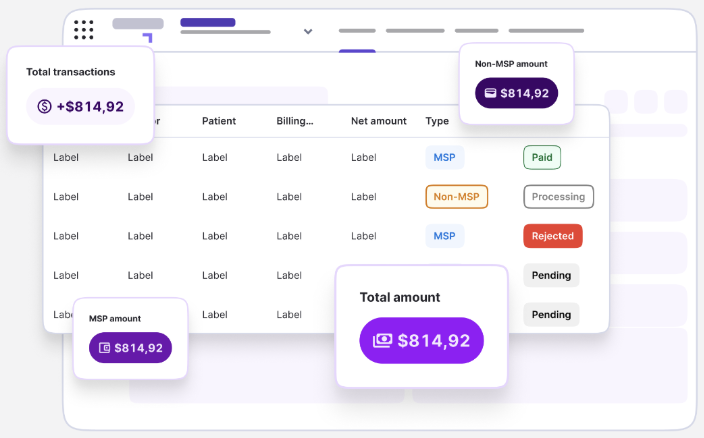
Petal Billing automates your billing processes using tools designed for each province’s unique billing rules. If you need support, live agents are here. You’ll access stable, predictable revenue through end-to-end claim management guiding fewer billing rejections.
- Proof: Our recent independent study found physicians using Petal Billing reported an average revenue increase of 9.4% compared to manual billing. This equates to 161 hours saved annually at a value of $24,123 per year.
Access features that simplify billing, including provincial code validation, centralized billing for specialty groups, real-time claim status and remittance tracking, and more.
No matter what route you take, trust proven success to guide your billings.
Earn more on your terms: