







Key takeaways
- Technology works best alongside expertise: Automation, reporting tools, and secure workflows are more effective when accompanied by experienced billing professionals.
- Revenue cycle optimization improves visibility: Ongoing monitoring helps organizations identify bottlenecks and strengthen financial performance.
- Live billing support agents save valuable time: Physicians and administrators spend less time troubleshooting complex billing issues.
When billing issues arise—whether through rejected claims, delayed payments, patient billing questions, or changing reimbursement requirements—healthcare teams need fast solutions to maintain their focus on patients. Software best serves this need when combined with expert services that streamline operations and free time from managing billing complexity.
As margins tighten in healthcare, expectations for access and experience grow.
And these expectations extend to technology solutions.
When healthcare organizations lean on software for billing and scheduling, they quickly discover that specific, human centric challenges can’t be solved by automation and design.
- For example: A rejected claim may require investigation; a denied payment still needs follow-up; niche billing questions demand answers; and evolving provincial rules sew uncertainty.
For providers already burdened with nearly 20 million hours on unnecessary administrative tasks annually, a total which continues to increase, wasted on time on billing processes is unacceptable.
Those hours can be redirected toward patient care, clinic growth, staff development, and other priorities that drive meaningful outcomes.
Here are four medical billing services every healthcare software solution should provide.
1) Expert claims management to reduce claim rejections
Claim submission is only one step in the billing process. Too often claims are submitted and left to the void with no follow ups.
Before a claim reaches a payer, numerous details must be verified:
- Billing codes aligned with documentation
- Modifiers applied correctly
- Patient information added accurately
Even small discrepancies result in delays and rejections, leading to lost revenue.
Strong claims management services help organizations mitigate these risks before claims are submitted.
Experienced billing professionals review submissions and identify recurring issues to ensure claims meet billing requirements. They also support correction workflows when rejections occur, helping you recover revenue fast.
This expertise becomes especially valuable when organizations operate across multiple sites or specialties. Requirements evolve regularly, and keeping up manually can become a significant administrative burden.
Technology plays an important supporting role. Automated validation tools, real-time error checking, and integrated workflows identify common issues early. However, experienced oversight helps resolve the edge cases that automation alone can’t address.
Impact in action
Expert claims management allows a multi-provider clinic facing consistent, high-value claim rejections to identify the source of recurring issues within their documentation.
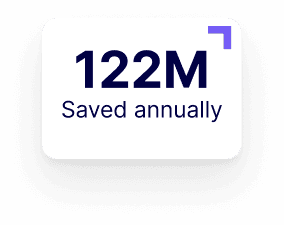
Clinicians save an average of 161 hours annually using Petal Billing.
2) Provincial billing expertise to navigate changing requirements
Medical billing requirements rarely stay static.
Provincial governments regularly update fee schedules, introduce new incentives, revise documentation expectations, and adjust reimbursement rules. This forces physicians and their care teams to keep pace with changes or face growing admin burden.
- For example, Ontario family physicians already spending and average of 19 hours a week on admin tasks don’t have time to navigate OHIP’s constantly evolving requirements.
This is why access to provincial billing expertise is critical.
Without it, even small misunderstandings have major revenue consequences. Missed billing opportunities due to incorrect code selection or outdated documentation lead to rejected claims and delayed payments.
Experienced billing professionals help organizations interpret evolving requirements and apply them correctly. Whether it’s understanding a new incentive program, adapting to updated billing rules, or navigating specialty-specific requirements, expert guidance reduces uncertainty and boosts confidence.
Technology supports this process through rule updates, notifications, and automated validation tools. Human expertise answers questions that software alone can’t resolve.
Impact in action
Provincial billing expertise leads a family physician who’s unfamiliar with eligibility criteria around a new billing incentive to confidently submit claims because a billing expert explained the requirements.
3) Revenue cycle optimization to improve financial performance
Submitting claims is important. But understanding how claims perform over time is equally critical to long-term success.
Many organizations focus on individual billing events without examining broader performance trends. As a result, recurring issues go unnoticed.
Revenue cycle optimization services provide ongoing oversight of billing performance.
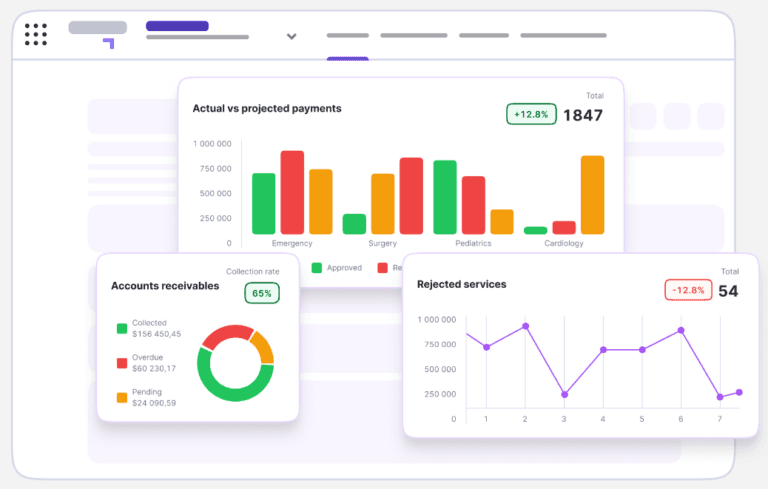
These services help organizations monitor key metrics such as rejection rates, payment timelines, collection performance, and outstanding receivables. Patterns that would otherwise remain hidden become easier to identify, and later, fix.
- Did you know that up to 8% of manual claims get rejected on first submission?
If a clinic discovers that a specific service category generates more rejections than expected, or if a specialty group notices documentation gaps impacting reimbursements, then quick identification of issues will halt revenue loss before it’s significant.
Modern billing platforms guide this work through analytics dashboards and performance monitoring. Expert billing teams translate those insights into operational improvements.
Impact in action
Revenue cycle monitoring shows a specialty practice experiencing monthly revenue fluctuations that a small group of billing codes generates most delays and rejections.
Clinicians increase revenue by an average of 9.4% using Petal Billing.
4) Dedicated billing support to get paid faster
Submitting a claim doesn’t guarantee payment.
Between claim reviews, documentation requests, reimbursement questions, and payer-specific requirements, many healthcare organizations spend significant time managing post-submission admin work.
When these issues aren’t addressed promptly, payments are delayed and cash flow is less predictable.
Dedicated billing support helps organizations navigate these challenges more efficiently.
Experienced billing specialists assist with:
- Claim follow-up
- Payment inquiries
- Reimbursement questions
- Documentation requirements
This support combines with your technology—automated claim tracking, payment monitoring, secure communication, and real-time status updates. Human expertise resolves the issues that require judgement and payer-specific knowledge beyond software’s capacity.
Organizations that receive timely billing support often spend less time chasing payments and more time on patients.
Impact in action
Dedicated billing support means a physician who noticed several claims submitted weeks ago remaining unpaid can work with a billing support specialist to identify the problem and get paid sooner.
Your billing support shouldn’t stop at software
Ready to ease your billing burden?
Petal Billing maximizes your claims with personalized support tailored to your specialty and based in your province.
- Our recent independent study found clinicians using Petal Billing reported an average revenue increase of 9.4% compared to manual billing. This equates to 161 hours saved annually at a value of $24,123 per year.
Petal specialists are here to assess your situation, identify opportunities for growth, and provide live support to solve your problems fast. It’s why we’re trusted by more Canadian physicians than any other provider.
Save your time and energy for what matters through simpler, smoother billing.
Discover the difference that personalization makes:
FAQs: Medical billing services
What are medical billing services?
Medical billing services help healthcare organizations manage claim submissions, payment collection, reimbursement workflows, rejection management, and revenue cycle performance.
Why isn’t medical billing software enough on its own?
Software automates many tasks, but complex claim issues, payer rule changes, and patient billing questions often require expert human support.
What is claims management?
Claims management involves reviewing, submitting, tracking, correcting, and resubmitting claims to improve reimbursement outcomes and reduce revenue loss.
What does revenue cycle optimization include?
Revenue cycle optimization includes performance monitoring, reporting, rejection analysis, payment tracking, and workflow improvements designed to strengthen financial outcomes.
What do live billing support agents do?
Live billing support agents investigate billing issues, answer reimbursement questions, assist with rejected claims, and provide guidance on complex billing scenarios.