


Key takeaways
- Cybersecurity must be foundational for healthcare activities. Rising attack rates paired with high breach costs make proactive security essential for patients and organizations.
- Security extends beyond care settings. Anytime users access a health system, their activity must be secured. Interoperable systems must include consistent protection across devices, users, and locations.
- Preparedness saves time and money. Staff training, incident response planning, and tested backups minimize operational and clinical disruption in the event of a cyberattack.
Healthcare data demands security. But what do secure processes look like?
In 2025, healthcare cyberattacks increased by 21% globally. Paired with cyberattacks costing healthcare organizations more than other groups at $10.1M per attack on average, it’s critical that healthcare organizations follow cyber security best practices. Patient wellbeing and organizational credibility rely on it.
Healthcare networks, government groups, product vendors, and any other party who supports healthcare data infrastructure should make choices with security in mind. This requires understanding what effective security measures look like, and how they’re implemented.
Get started with these six cybersecurity best practices in healthcare.
1) Prioritize transparency
Trust is built on clarity and accountability.
Annual independent audits, published compliance reports, and clear communication about hosting and security practices are non-negotiable. When patients and health authorities have questions about your data management, the answers must be within reach.
Vendors should undergo independent audits annually, hold publicly available certifications (SOC 2, ISO 27001), have a clear incident response plan, and feature 24/7 monitoring. Healthcare institutions rely on long-term partnerships. Vendors should demonstrate operational resilience and proven experience building security roadmaps. Technical know-how isn’t enough in healthcare.
Transparency also includes financial and organizational stability. Long-term stability relies on healthy, open relationships with your product team and vendors. Ensure they treat processes transparently.
What protects patient data? Here’s your Canadian data storage explainer.
2) Secure interoperability across users
It’s critical that healthcare systems are secured anywhere they’re accessed.
Whether it’s a provider messaging colleagues on the go, a planner scheduling shifts in a hospital, or a department chief reviewing team performance at home, data must be secured at every access point. This makes interoperability foundational to any serious security best practice. When teams rely on workarounds or unsecured messaging tools to bridge system gaps, risks increase massively.
- Note: Cloud networking usage relies on interoperability. If data isn’t secured external to hospitals or clinics, then cloud advantages are diminished.
Your security vendor plays a pivotal role in promoting interoperability in their software security. Among the numerous benefits of using a single vendor for multiple solutions—such as billing and workforce management—data protection is one. You decrease the total entry points available to a cyberattacker when users only need one account for multiple tools and services. Plus, if you’ve found a security vendor you trust, then relying on their security is likely advantageous compared to introducing a new vendor to your system.
Standards like FHIR support secure, structured data exchange while maintaining privacy. Security and privacy are integrated into the design process to promote secure, confident collaboration. Compliance officers and legal teams rest easy knowing their teammates safely enter data systems whether inside or outside the organization’s care space.
3) Host patient data in Canada

Today, 89% of Canadians are at least somewhat concerned about the protection of their privacy.
By hosting medical data in Canada, you ensure it is subjected to Canadian privacy legislation, including PIPEDA and provincial information acts. These are designed to safeguard personal information through strict accountability requirements.
Hosting patient and operational data outside Canada can expose organizations to foreign regulations like the U.S. CLOUD Act, which allows government access to data stored on U.S. servers. This creates gaps through which bad actors access your sensitive data.
Further, infrastructure reliability is a vital security consideration for health networks. Canada offers stable political and economic conditions, as well as resilient energy grids to meet modern data storage standards.
When researching a security vendor, consider:
- Is your data hosted exclusively in Canada?
- Does your vendor disclose hosting locations clearly?
- Are backups and redundancy also within Canadian borders?
CHUM achieved a 98% reduction in manual scheduling work.
4) Train staff to limit cyberattack risk
Technology alone can’t prevent cyberattacks.
Healthcare teams are busy and systems are complex, presenting opportunities for human error, which happen to be the most common entry points for breaches. Phishing emails, weak passwords, unsecured devices, and improper data sharing all threaten sensitive patient information. Every user on the network must view themselves as a node demanding security.
Here are four modules to include in mandatory, role-specific training programs:
- How to identify phishing and social engineering attempts
- How to reinforce secure password practices
- How to maintain proper device and remote access protocols
- How to report suspicious activity immediately
Beyond modules, training should include regular refreshers, simulated phishing exercises, and updated guidance in response to emerging threats help teams stay vigilant.
5) Strengthen incident response and recovery
Even the best laid plans go awry from time to time.
You know threats will emerge at some point. Thus, it’s imperative to standardize how your team would respond if a threat broke through your defenses. A documented, well-tested incident response plan is critical to minimizing operational disruption and protecting patient care. In healthcare, these consequences are both clinical and financial.
- Preparedness pays: Organizations that include response teams and formal incident response plans reduced data breach costs by over $643,000 on average.
Effective response frameworks define roles and responsibilities across the organization. They highlight escalation paths and decision-making authority, as well as communication protocols. These frameworks must also meet federal and provincial privacy expectations—for example, satisfying breach notification requirements under PIPEDA in Canada.
Before real responses, make sure your team is tested! Regular tabletop exercises and simulated breach scenarios give staff confidence before issues arise.
6) Encrypt data at every stage
Never leave your healthcare data in an unprotected state.
Encryption ensures that sensitive information remains secure at every touchpoint. It’s one of the most effective safeguards against unauthorized access, because even if data is intercepted, it remains unreadable.
Best practice requires encrypting data both in transit and at rest. Whether information is moving between systems, accessed remotely by a clinician, or stored in the cloud, strong encryption standards should be applied consistently.
Effective data encryption should include:
- End-to-end encryption across devices and networks
- Secure APIs for system integrations
- Encrypted databases and storage environments
- Key management practices
Encryption is especially important in cloud-based environments, where interoperability and remote access are essential. When implemented properly, encryption enables flexibility without compromising security.
Does your security vendor follow best practices?
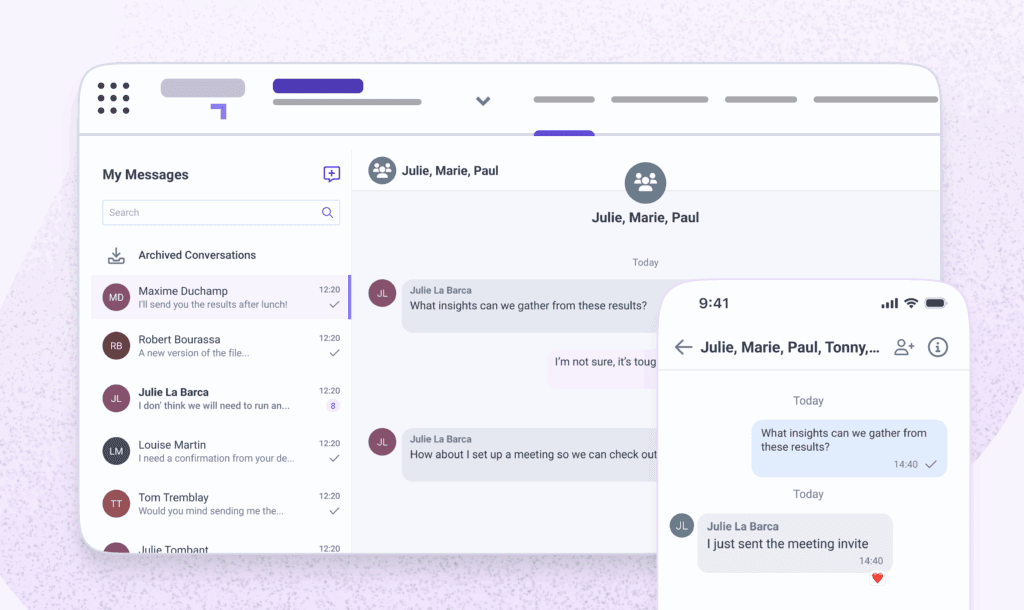
Petal’s cloud solutions—Workforce, Billing, and Patient Hub—are designed with security in mind.
They’re also 100% Canadian-built and hosted.
Our 3,000+ worldwide customer deployments benefit from top-grade data protection, because security is prioritized in our organization and our products.
Clients maintain full ownership of their data. It’s located across multiple time zones for redundancy and resilience, including backups. Backups are tested regularly to ensure recoverability as needed. Each solution:
- Meets global standards in interoperability (FHIR, HL7) and security (SOC2 Type 2).
- Aligns with GDPR and other global privacy frameworks.
- Includes annual, independent audits.
Securing your patients’ and organization’s data is paramount. We’re here to make it happen.
Have confidence in your security infrastructure: