






Key takeaways
- Policy alone won’t fix access gaps quickly: Quebec’s primary care challenges stem from structural issues, but legislative reforms take years to deliver results.
- Coordination unlocks hidden capacity today: Connecting clinics, providers, and navigation services unlocks resources by making them visible and actionable.
- Proven impact in Quebec: Petal’s Patient Hub has reduced low-acuity ED visits by 12.5%, avoided 814,000 ED visits, redirected 353,000 patients to primary care, and generated $339M in savings.
The policy problem—and its practical consequences
The C.D. Howe Institute’s recent report, The Quebec Primary Care Conundrum: Good Intentions, Persistent Problems, highlights an ongoing reality: despite years of effort and a strong physician workforce, timely access to primary care remains difficult for many Quebecers. Nearly one in four residents does not have a regular family doctor, and emergency departments (EDs) often become the default for non-urgent needs. The result? Overcrowded hospitals, higher costs, and a frustrating experience for patients.
The report points to structural complexities that include fragmented delivery models and competing priorities as factors that make progress challenging. These are not quick fixes. Even with new initiatives underway, meaningful change typically takes time. Patients, however, need solutions now.
The hidden lever: Coordination
While policy sets the framework, operational coordination determines whether patients receive care in the right place, at the right time. Going beyond a shortage of physicians, Quebec’s challenge is a shortage of visibility. Existing capacity exists. It is merely hidden, caught in the background of business-as-usual operations.
No single person, organization, or solution is at fault for this. Dormant capacity exists because systems don’t talk to each other. Clinics, hospitals, and navigation services operate in silos, leaving patients to navigate a maze on their own.
This is where connected care comes in. By linking providers, clinics, and access points through real-time digital infrastructure, Quebec unlocks capacity immediately—without waiting for legislative overhaul or onboarding new clinicians to the province.
Proof that it works: Petal’s Patient Hub
Since 2022, Petal Health’s Patient Hub has been operationalizing this vision across Quebec. The results speak for themselves:
- 814,000 avoided ED visits and 353,000 redirected to primary care clinics.
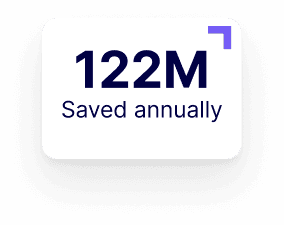
- $339 million in cumulative savings since 2022, including $121 million annually in 2024–2025—that’s $2.3 million every week reinvested into the system.
- 12.5% fewer low-acuity ED visits (CTAS 4–5) compared to pre-Patient Hub levels.
- Same-day or next-day appointments booked directly from ED or 811 health services, reducing reliance on overcrowded hospitals.
- 850 clinics and 19,000 professionals connected for real-time orchestration.
These aren’t theoretical gains. They’re happening now, proving that coordination delivers measurable improvements in access, efficiency, and patient experience.
Why this matters
The C.D. Howe report emphasizes that Quebec’s reforms have leaned heavily on coercive measures—mandatory shifts, quotas—rather than enabling environments. Connected care flips that script. It doesn’t force providers to work differently; it empowers them with visibility and tools to allocate resources strategically. And, together with Petal, the government has put these efforts into action.
Consider this: 811 health services, integrated with Patient Hub, now route 23% of calls to booked primary care visits, up from 15% two years ago. That’s 710 patients per day redirected from EDs to more appropriate settings. This is coordination in action—simple, scalable, and effective.
The call to action
Quebec’s healthcare system has capacity waiting to be unlocked, and positive gains are being made. The challenge is making the capacity visible and actionable every day and across every care environment. Digital orchestration platforms like Patient Hub demonstrate that:
- Access gaps are shrinking now.
- ED congestion is being tackled through coordination, freeing resources for urgent cases.
- Economic value is being reinvested, fueling sustainability and innovation.
Policy will always matter—but while policymakers debate incentives and legislation, operational leaders can act. Coordination is the fastest lever Quebec has to improve patient outcomes today.
Grow revenue and save time for patients:
Talk to a Petal expert