








Key takeaways
- Administrative efficiency leads to more time for care. In constrained healthcare settings, saved hours mean better patient outcomes and more satisfied staff.
- Centralized visibility strengthens coordination. A single source of truth allows clinicians and decision-makers to manage coverage in real time.
- Mobile access is a game changer in care environments. Healthcare schedules change constantly, so flexibility is vital.
Across Canada, healthcare organizations are being asked to do more with less.
Strained budgets and staffing shortages leave care providers to seek solutions to system-wide challenges. Every year, clinicians spend nearly 20 million hours on unnecessary administrative tasks. In this environment, administrative burden actively limits care delivery. Every hour clinicians or staff spend reconciling schedules or resolving coverage gaps is an hour away from patients.
Scheduling is foundational to increasing or decreasing this burden. Manual schedules built on paper, spreadsheets, or pagers, fragment care coordination and demoralize staff.
Read on for five reasons why choosing digital healthcare scheduling is transformative for patients, care teams, and health systems.
1) Centralizing visibility across care settings
When everyone operates from the same scheduling view, teams coordinate more effectively.
Physicians and admins update shifts directly to the platform; changes populate on the calendar instantly; everyone who needs to know about updates, does know. Manual scheduling can’t provide this visibility.
Fewer transcription errors lead to less rework. When schedules live in one system of record, teams stop re‑entering data in multiple places and avoid cascading mistakes. That returns time to patient care and lowers the risk of failures at handoff. Coverage dashboards show capacity by provider type and specialty, helping leaders close gaps fast.
Impact: Improved visibility strengthens collaboration and drives faster, more effective patient care.
Clinicians increase revenue by an average of 9.4% using Petal Billing.
2) Making equitable schedules through real-time updates
Healthcare is dynamic by nature. Traditional tools, such as paper schedules, pagers, or spreadsheets can’t meet modern health setting demands. Updates are slow to communicate, easy to miss, and outcomes are imbalanced across team members.
Automated scheduling offers built-in and established rules to apply fairness rules, saving hours of planning time and reducing mistakes. Teams gain the flexibility they need to adapt quickly when filling sudden coverage gaps and adjusting on-call coverage.
Benefits of automation include:
- Equity enforcement: Targets and exceptions are applied consistently.
- Real-time monitoring: See fairness metrics as you build the schedule.
- Flexibility: Adjust priorities without starting from scratch.
This responsiveness supports both operational continuity and staff wellbeing. Care providers are less likely to be caught off guard, and managers resolve issues before they escalate.
Impact: Scheduling changes are made and shared automatically, reducing confusion and facilitating fairer schedules for all team members.
CHUM saves 161 admin hours per year with the Petal Workforce Hub.
3) Going mobile for anywhere, anytime access
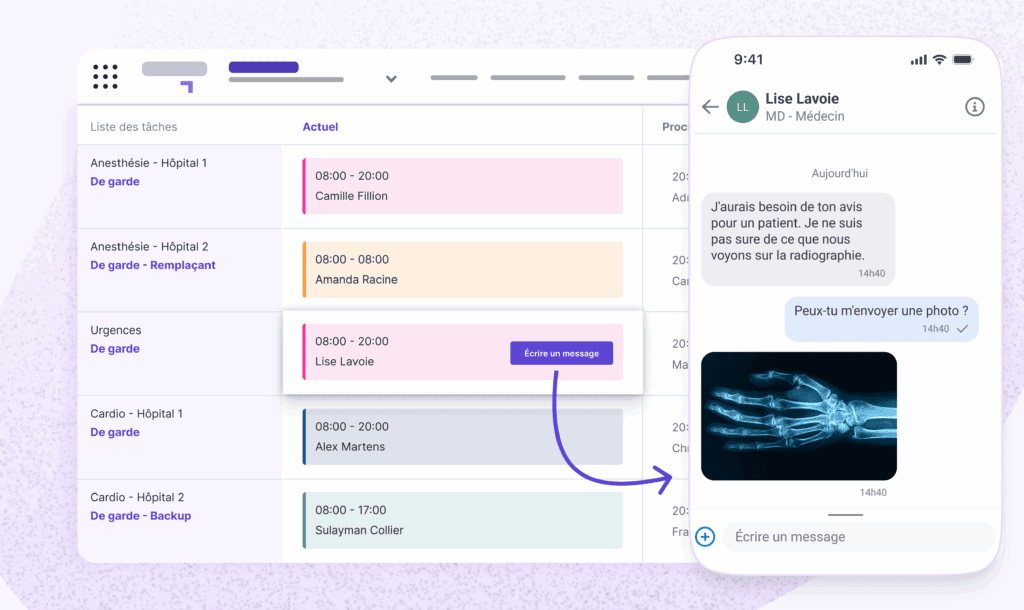
Replace spreadsheets, email attachments, and local bulletin boards with a single, web‑ and mobile‑accessible calendar that aggregates clinical and on‑call schedules across all services.
- For organizations: Mobile scheduling strengthens reliability and transparency into operational fluidity.
- For providers: Care providers access a transformative tool when they want from wherever they are.
Mobile access empowers care providers to stay informed without added friction. They check upcoming shifts and on-call assignments from their devices. Compared to manual scheduling, this accessibility supports faster responses and better personal planning—particularly in on-call or multi-site environments.
Impact: Fewer missed updates mean fewer coverage issues and smoother coordination across teams.
4) Saving more time for patients
Time is among healthcare’s most valuable resources.
Manual scheduling processes quietly consume it. Whether it’s double-checking availability, resolving conflicts, or managing last-minute changes, these tasks add up quickly. Digital scheduling reduces this burden by automating coordination and eliminating repetitive manual work.
Clinicians free up valuable time to spend more time with patients, and managers shift from troubleshooting to planning. Over time, this creates a meaningful ripple effect of smoother patient flow, fewer delays, and a better overall experience.
Patients gain:
- More clinician availability
- Fewer delays or disruptions in care
- Improved continuity of care
On the care side, nurses, physicians, unit clerks, and department leaders all benefit from faster access to accurate schedules.
Impact: Saved time on scheduling is reinvested into supporting patients and staff and expanding programs.
5) Improving care provider satisfaction
Administrative friction is a major contributor to clinician frustration and burnout.
Digital scheduling addresses this by simplifying scheduling to provide a more stable foundation for cross-team collaboration. Clear and accessible schedules deliver a reliable sense of control to users. Over time, this improves job satisfaction, supports retention, and fosters a more engaged workforce.
Satisfied care providers deliver better care. When staff aren’t weighed down by avoidable administrative work, they bring more focus and energy to patient interactions.
Impact: Digital scheduling benefits both sides of care by creating a healthier environment for providers while improving patient outcomes.
Your scheduling? Let’s simplify it
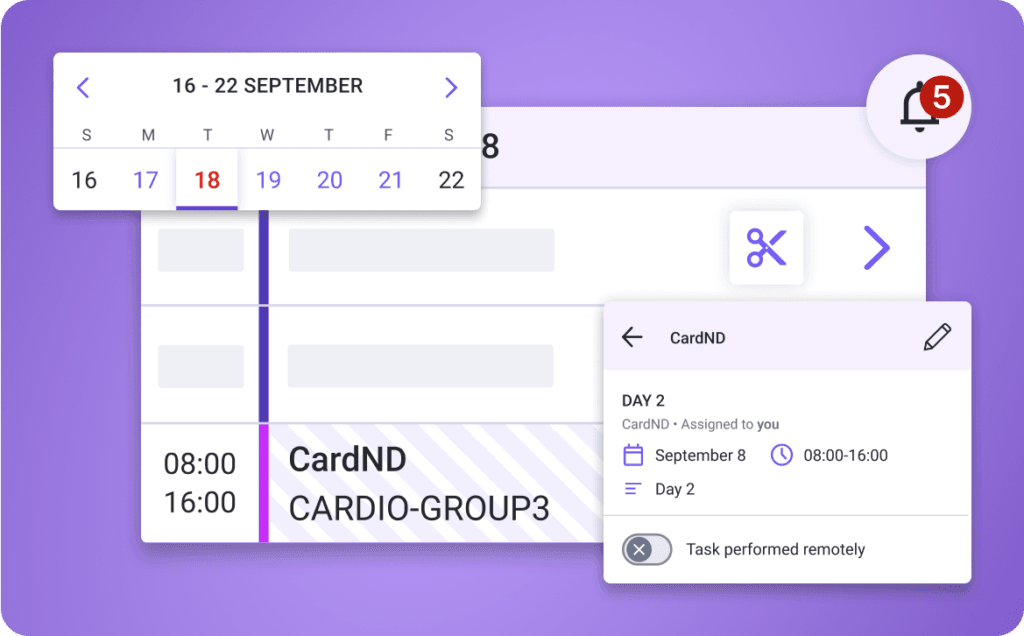
Choose an automated scheduling solution tailored to your specialty.
Petal Automated Scheduling is proven to save time by simplifying schedules. Build and publish optimized schedules in minutes while reducing manual errors and administrative overhead.
- Proof from our independent study: CHUM cuts planning time by 98% and achieves 92% staff satisfaction using Petal Workforce.
At Petal, 37,000+ physicians already leverage automated planning features to reduce manual work and improve scheduling accuracy.
Transform your scheduling and drive benefits for your patients and teams.
Save more time for your patients and staff: