





Points clés à retenir
- First-pass acceptance protects revenue: Standardized intake and documentation, as well as billing validation, reduce claim rejection rates.
- Eligibility verification limits claim failures: Accurate patient information at every encounter decreases administrative rework and payment delays.
- Rapid rejection management improves recovery rates: Structured response workflows help healthcare teams recover revenue faster and avoid missing deadlines.
What are the best practices for effective medical billing? They focus on six areas: building a first-pass acceptance system, verifying patient eligibility at every encounter, using automation to reduce manual errors, following a consistent billing timeline, responding quickly to rejected claims, and conducting regular billing audits.
Medical billing challenges are usually preventable, and yet, they directly affect revenue and administrative workload for many physicians.
Fortunately, effective billing doesn’t require working longer hours or reviewing every submission manually. It requires a clear, repeatable system that supports accuracy before claims are submitted.
- Did you know that depending on specialty and practice type, up to 8% of manual claims get rejected on first submission?
Whether you’re an individual physician, clinic administrator, or part of a larger physician group, the right billing processes decrease claim rejections and drive more predictable income.
Explore all six best practices that strengthen billing performance and decrease administrative burden.
1) Build a first-pass acceptance system
The strongest billing operations focus on preventing errors before claims are submitted.
A first-pass acceptance system combines standardized intake procedures, clear documentation requirements, eligibility verification, and billing validation into a single workflow. When these elements work together, first-pass acceptance claim rates often increase.
- Remember: Premiums, modifiers, and other billing enhancements are more likely to be documented correctly when they’re part of your workflows.
For starters, embed billing requirements into everyday clinical and administrative processes. Patient information should be verified consistently, documentation should support the services provided, and billing rules should be reviewed before claims are submitted.
This approach lessens the need for retroactive corrections while improving revenue predictability.
Instead of spending time managing rejected claims, teams focus on patient care and operational priorities.
Impact: A first-pass acceptance system reduces preventable claim rejections before submission. Teams spend less time correcting errors, and administrative burden decreases across the billing cycle.
Physicians using Petal gained $34,346 more annually on average compared to manual billing.
2) Verify patient eligibility at every encounter
Even minor patient information errors trigger immediate claim rejections.
And only a few minutes spent confirming information upfront saves hours of follow-up work later.
Incorrect health card numbers, expired coverage, outdated demographic information, and eligibility discrepancies are among the most common reasons claims fail before adjudication. But these issues are often preventable.
Establish a standardized process for confirming patient information at every encounter, even for returning patients. For example, verifying health card information, even for existing and long-term patients remains necessary in the event of a patient’s identification number being updated or name change.
Here are three items to review and update regularly:
- Coverage status
- Identification numbers
- Demographic details
Consistency is critical. When eligibility verification becomes a routine part of intake, clinics reduce preventable claim failures and avoid the administrative burden associated with corrections and resubmissions.
Impact: Consistent eligibility verification prevents common rejection triggers such as coverage issues and demographic errors. Clinics avoid unnecessary resubmissions while accelerating the path from patient care to payment.
3) Use automation to reduce manual errors
Manual billing processes create opportunities for mistakes.
Missed modifiers, incompatible code combinations, outdated billing rules, incomplete documentation, and data-entry errors all contribute to rejected claims and delayed payments.
Automation helps limit variability and improve consistency across providers and locations. For example, an automated billing workflow reviews claim before submission and flags common issues in real time. If something is missing, the claim is routed back to the billing team or provider with a specific prompt.
Automation also improves visibility into billing performance by forging clearer audit trails and reporting processes.
When routine billing tasks are supported by automated workflows, teams spend less time correcting preventable errors and more time on patients and operational priorities.
Impact: Automation improves consistency by identifying billing issues before claims are submitted. Teams unlock time for higher-value work while decreasing the risk of costly billing mistakes.
56,000+ providers and administrators trust Petal to simplify their billing.
4) Create a billing timeline and follow it consistently
Successful billing depends on consistency.
Without a clear timeline, claims sit unsubmitted, and rejected claims may go unresolved. Establishing a billing cadence helps ensure that responsibilities are completed on time.
A practical timeline might include submitting encounter data daily and reviewing flagged claims within 24 to 48 hours.
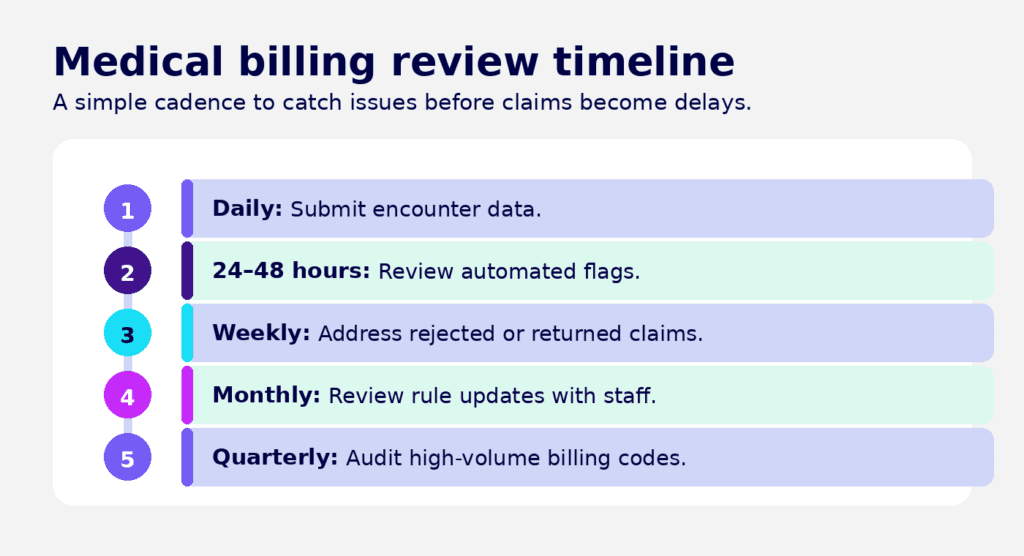
Standardized timelines support accountability and make billing performance more predictable. They also help clinics maintain healthier cash flow by limiting delays between patient care and payment.
Small actions completed consistently often produce the biggest long-term improvements.
Impact: Standardized billing timelines cut backlog and keep claims moving through the revenue cycle. Timely submissions and reviews support healthier cash flow and more predictable financial performance.
5) Establish a rapid rejection response workflow
Even strong billing processes won’t eliminate every rejection.
What separates high-performing organizations from struggling ones is how quickly they respond when rejections occur. Delayed corrections lead to missed filing deadlines, revenue write-offs, and growing administrative backlogs.
- Note: These challenges aren’t one-size-fits-all. For example, Alberta, British Columbia, and Ontario clinicians each face distinct billing systems and submission requirements.
To stay ahead, make a structured workflow that defines who reviews rejection reports, who investigates issues, who resubmits claims, and who confirms payment. Clear ownership prevents rejected claims from being overlooked.
A rapid response process protects revenue while turning rejection management into a repeatable operational function rather than a recurring source of disruption.
Impact: A structured rejection management process helps recover revenue faster and prevents claims from being overlooked. Organizations maintain momentum even when billing issues occur.
6) Conduct regular billing audits
Billing audits identify issues before they become costly problems.
Over time, documentation habits and workflow variations lead to compliance risks and improve billing performance. Regular audits provide visibility into these trends and help organizations address root causes early.
Review high-volume billing codes, rejection patterns, documentation quality, and coding consistency across providers. Look for recurring issues that indicate process gaps or workflow inefficiencies.
- This effort supports national priorities, too. Given Canada’s deficit of 22,823 family physicians and only approximately 1,300 new graduates per year, it’s evident that the country needs more from existing clinic capacity.
Audits also support continuous improvement. Organizations that review billing performance regularly are better positioned to reduce claim rejections, improve accuracy, and maintain stable revenue over time.
Impact: Regular audits reveal process gaps that otherwise stunt clinics’ ability to achieve their goals. Continuous monitoring supports stronger compliance and long-term billing performance.
Use a billing solution with built-in best practices
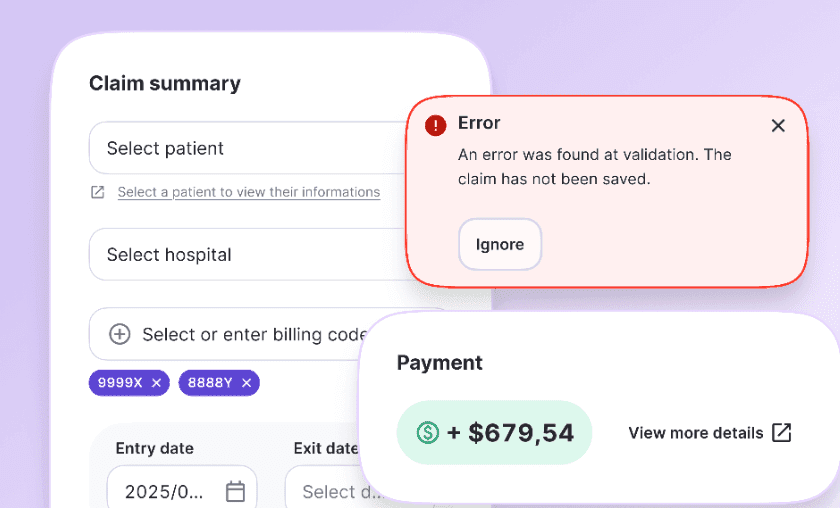
What’s easier than managing best practices yourself? Trusting a proven solution to do it for you.
Facturation médicale features advanced tools and live support agents based in your province. Stabilize revenue through fewer billing rejections, so you can focus more on patients and less on rejected claims.
- Proof: Our recent independent study found physicians using Petal Billing reported an average revenue increase of 9.4% and 3.1 hours saved per week compared to manual billing.
Make billing a strength to get more from your time.
Earn more from your delivered services:
FAQs: Medical billing best practices
What is first-pass acceptance in medical billing?
First-pass acceptance refers to claims being accepted on their first submission without requiring corrections or resubmission.
Why are medical billing claims rejected?
Common causes include eligibility errors, incorrect billing codes, missing documentation, incompatible code combinations, and incomplete patient information.
How often should patient eligibility be verified?
Patient eligibility should be verified at every encounter to ensure coverage information remains accurate and current.
How can automation improve medical billing?
Automation helps validate claims, flag missing information, identify coding conflicts, and reduce manual data-entry errors before submission.
What should a billing timeline include?
A billing timeline should include regular claim submissions, claim reviews, rejection management, billing rule updates, and periodic audits.
How often should billing audits be performed?
Most organizations benefit from ongoing monitoring with formal audits conducted quarterly, especially high-volume billing codes and recurring rejection trends.