








Points clés à retenir
- Group billing allows clinicians to share financial overhead. Individual accountability persists while sharing expenses and protecting against fluctuations in patient visits.
- Clinician wellbeing benefits from fewer admin hours. More than half of doctors in Canada plan to cut their hours due to administrative burden. It’s a priority to help clinicians unlock time for team building, clinic expansion, or personal wellness.
- Group billing increases flexibility and negotiating power. Clinicians more easily participate in blended, alternative, or hospital-based funding arrangements.
Fewer hours spent billing would benefit every healthcare stakeholder.
In Canada, 47% of clinicians’ administrative tasks could be eliminated or don’t require specialized expertise. That’s almost 20 million hours across all clinicians. Medical billing is a primary culprit in driving this burden, so unlocking time should include smarter billing processes.
One approach: group billing rather than individual billing. Billing as a collective alleviates expenses while saving invaluable time. These hours are then redirected to more meaningful pursuits, such as program expansion, team building, and personal development. Teams of providers share billing burden and reap the rewards collectively.
Read on to learn how group billing works and why clinicians choose group billing to reduce their admin burden.
How does group billing work in Canada?
Clinicians choose group billing to share expenses on rent, software subscriptions, EMR systems, and other sources of recurring cost.
Still, clinicians often continue to deliver care independently. Group billing simply means multiple physicians operate under a shared financial structure.
In most provinces, physicians submit claims to their provincial health insurance plan (OHIP, RAMQ, MSP etc.) using their billing identifiers. After payments are issued, revenue may be deposited into a shared group account, pooled with other physicians’ billings, or redistributed according to a pre-agreed compensation formula.
Group billing does not eliminate individual accountability.
Group billing in practice
Group billing structures, like medical billing rules and regulations, vary across Canada. There’s no single national model.
Structures differ based on provinces where funding frameworks differ significantly. Practice type also greatly influences how a group of clinicians determine their billing approach, as context ranges between family medicine, specialty, and academic practice.
Here’s how popular payment models function in group billing:
- Pure Fee-For-Service (FFS): Clinicians bill individually for each service provided. Payments are pooled into a shared group account and then redistributed according to an agreed formula
- Blended capitation: The group receives fixed payments per enrolled patient along with fee-for-service billings and incentive payments. Revenue is pooled and distributed internally.
- Alternative Funding Plans (AFPs): The government provides lump-sum payments to groups rather than paying per service. Clinicians are compensated through internal agreements.
- Salaried or hospital-based arrangements: Clinicians have fixed salaries where billing codes may still be submitted (often as shadow billings) to track activity. Revenue is not tied to individual service volume, and compensation is determined by employment contracts.
Of course, clinicians want to know how exactly they’ll be paid within a given payment model. Here are three common distribution models found in Canadian billing groups:
- Equal revenue sharing: All clinicians receive the same compensation regardless of volume.
- Productivity-based splits: Income reflects individual billings or workload.
- Hybrid models: A base allocation plus performance-based adjustments is distributed.
Individual billing compared to group billing
Individual billing models leave clinicians managing their expenses independently.
In this model, clinicians don’t pool finances with other clinicians. They independently oversee expenses, submit claims, pay administrative staff, manage compensation, and meet compliance requirements.
Income is directly tied to service volume. This means that individual billers gain greater financial autonomy while combatting higher financial variability and more exposure to fluctuations in patient demand. Increased operational responsibility means administrative burden remains on clinicians rather than spread across their billing group.
While individual billing offers independence, it places full financial and administrative risk on the clinician.
Physicians using Petal gained an average of $34,346 annually compared to manual billing.
The advantages of group billing in healthcare
When teams align on group billing, the advantages compound. Each member of the billing group saves money and time by decreasing administrative burden otherwise experienced in individual billing. Collective data sharing through standardized reporting provides more comprehensive data analytics than individual reporting, supporting informed and compliant decision-making.
- Remember: From team-based clinics to procedural groups and academic hospitals, clinicians throughout Canada’s healthcare landscape join group billing.
Financial stability
Group billing facilitates more predictable revenue for individual clinicians who face fluctuating patient visits, operational expenses, and staff turnover.
When cost-sharing for clinic space, staff salaries, and technological solutions are grouped, the individual financial burden of running a practice decreases. Economies of scale lower the per-physician cost of operations. From billing infrastructure to compliance support and software subscriptions, sharing the burden saves time and money for individual clinicians.
Importantly, patient visits are inconsistent for many clinicians. To protect against downturns during slower periods—particularly under blended or capitation models where unique patient visits are critical to revenue—group billing improves revenue predictability.
Groups also provide greater negotiating leverage. As a collective, groups gain greater power in service contract terms to promote sustainable success.
Improved work-life balance
More than half of doctors in Canada plan to cut their hours due to administrative burden.
Rather than decreasing the number of patients seen, clinicians cut their hours by reducing time spent billing. This empowers clinicians to spend saved time supporting their teams, improving professionally, or connecting with loved ones. Group billing addresses burnout at the source. Patient experiences improve as clinicians have more energy and more time to support personalized care.
Socially, group billing reduces professional isolation compared to solo practice, fostering collaboration and peer support. This further addresses threats to burnout by developing relationships core to clinicians’ professional networks.
Enhanced data and performance tracking
Operating within a group structure improves visibility into financial and clinical performance.
Here are four ways how:
- Consolidated reporting allows for centralized tracking of billings and revenue flows.
- Clear visibility into group-level productivity makes it easier to understand workload distribution and compensation alignment.
- The ability to track targets within service volumes, preventive care targets, or incentive eligibility is especially advantageous in blended and alternative payment models.
- Standardized reporting strengthens audit readiness and compliance by aligning billing data with provincial payment reports, internal distribution formulas, and incentive programs.
Data-informed decisions are harder to achieve in isolated solo practices, because data access is comparatively limited. Shared reporting systems support strategic planning that informs scheduling, staffing, and long-term growth decisions.
CHUM achieved 92% clinician satisfaction with the Petal Workforce Hub.
Enjoy group billing bounties with Petal
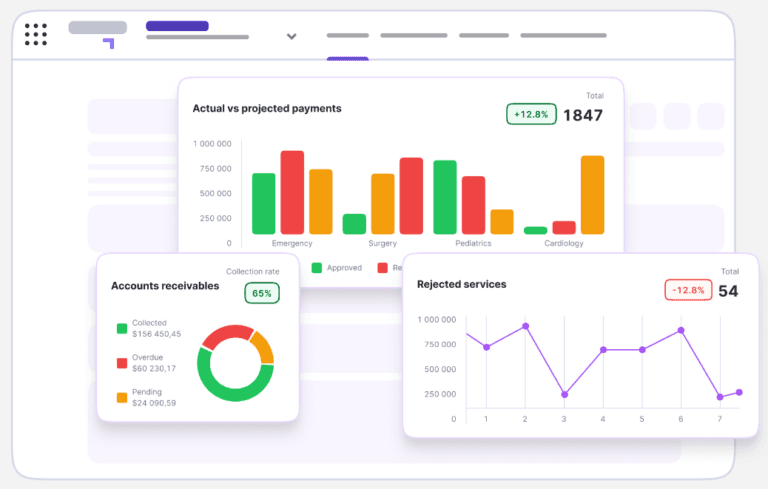
Submit medical claims confidently in a group (or as an individual) using tools designed for each province’s unique billing rules.
Facturation médicale automates billing processes and provides live agent support. Access stable, predictable revenue through end-to-end claim management guiding fewer billing rejections. More acceptances mean fewer hours of resubmissions and more time with patients and staff.
Access features that simplify billing:
- Validation du code provincial et vérification des erreurs
- Statut des réclamations et suivi des versements en temps réel
- Live billing agents based in your province
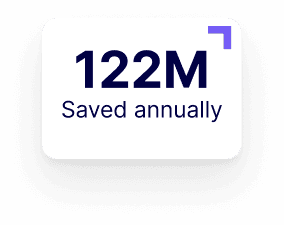
Our recent independent study found physicians using Petal Billing reported an average revenue increase of 9.4% compared to manual billing. This equates to 161 hours saved annually at a value of $24,123 per year.
Let collective success ease your administrative burden.