





Points clés à retenir
- Maximizing limited resources requires innovation. Moving patients to the most appropriate care setting is critical to address systemic challenges at the source.
- Supply demand mismatch worsens care outcomes. System capacity exists; networks need to better connect patients to available seats beyond emergency departments and to avoid future ED visits through more appropriate care.
- Patient direction moves patients to the right care, faster. By connecting hospitals, clinics, and pharmacies, health authorities optimize care navigation in real time.
How do health networks do more with less? Optimize access to care.
From overcrowded emergency departments (EDs) to burnt-out clinicians and misplaced resources, Canada’s health challenges demand action. Future generations will continue to experience declining public health services and worsening care outcomes without innovative approaches today.
- Long wait times—5.5 hours per visit nationally between 2024–25—lead patients to exit EDs to wait, self-treat, or seek alternative care options.
Patient redirection offers an advanced solution for moving patients to the right care, faster. Connecting nodes in the health system—hospitals, clinics, and pharmacies—allows providers to direct patients to the most appropriate care in real time.
Discover why patient redirection is needed, how it works, and the benefits already being gained in Quebec.
The challenge: Matching supply to demand
When a patient goes to an ED with a low acuity case that could be solved in a clinic or pharmacy, that appointment space could be used for higher acuity patients in need.
The systemic issue facing patients, providers, and network authorities: 5.9 million adults in Canada lack access to primary care and 79% of the health workforce reports feeling burnt-out.
In practice, low-acuity patients find themselves going to EDs, even when they don’t require ED treatment. This drives a negative feedback loop of overcrowded EDs driving clinician burnout, leading to higher turnover rates, which leaves fewer clinicians to support patients, causing longer wait times and even more crowded EDs.
- Supply: Available care providers, whether in hospitals, clinics, or pharmacies, and the “seats”—literal or figurative—open to patients requiring support.
- Demand: Patients with issues ranging in acuity who desire professional support from a provider within their health network.
This is a cycle that pressures clinicians, patients, and health authorities alike. Solutions must be centred on breaking the cycle of strain leading to mismatched supply and demand in the care system. Critically, the solution also needs to justify financial investment among provincial governments with limited fiscal leeway.
Better outcomes begin by connecting patients to care providers within the larger health system in real time.
In summary: Clearing system bottlenecks is critical for maximizing health networks’ limited resources and stemming negative care feedback loops.
Quebec achieved 12.5% fewer low-acuity ED visits (CTAS 4–5) using the Petal Patient Hub.
How patient redirection solves capacity bottlenecks
Health systems need resilient, centralized, data silo breaking tools that connect care providers to patients in real time.
The best part is that this is being utilized right now. Patient redirection—otherwise known as patient navigation, patient flow, or patient orchestration—already saves health networks millions of dollars a year while improving staff satisfaction and improving patient outcomes.
Digital harmony solves inefficient, uncollaborative disconnection caused by digital silos. Through interoperability and automation, healthcare teams collaborate more effectively and respond faster to real-time demand.
- How it works: Patient redirection solutions centralize requests, confirm patient identity, validate with insurers and registries, and send appointment reminders.
Empowering health teams to precisely measure and manage their real-time healthcare supply is critical to meeting ongoing patient demand. The supply exists, and through a complete view of who is working, where they’re working, and what activities they’re performing, administrators match supply and demand with confidence.
Using this visibility, healthcare leaders:
- Limit overtime and scheduling conflicts to improve working conditions and morale.
- Access real-time metrics on medical activities to anticipate high-demand periods.
- Reduce patient processing times to enhance access to care.
Effective capacity management makes care simpler. Patients enjoy faster, more personalized treatment when provider morale is high, and system finances run smoothly.
In summary: Patient redirection centralizes care in real time to support more patients while driving immense economic benefits across health systems.
CHUM reduced time spent scheduling by 98% using Petal.
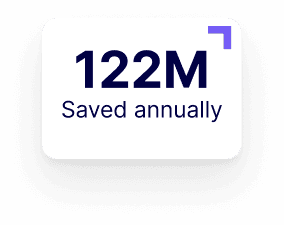
Proof: Quebec saves $2M per week navigating patients à the right care
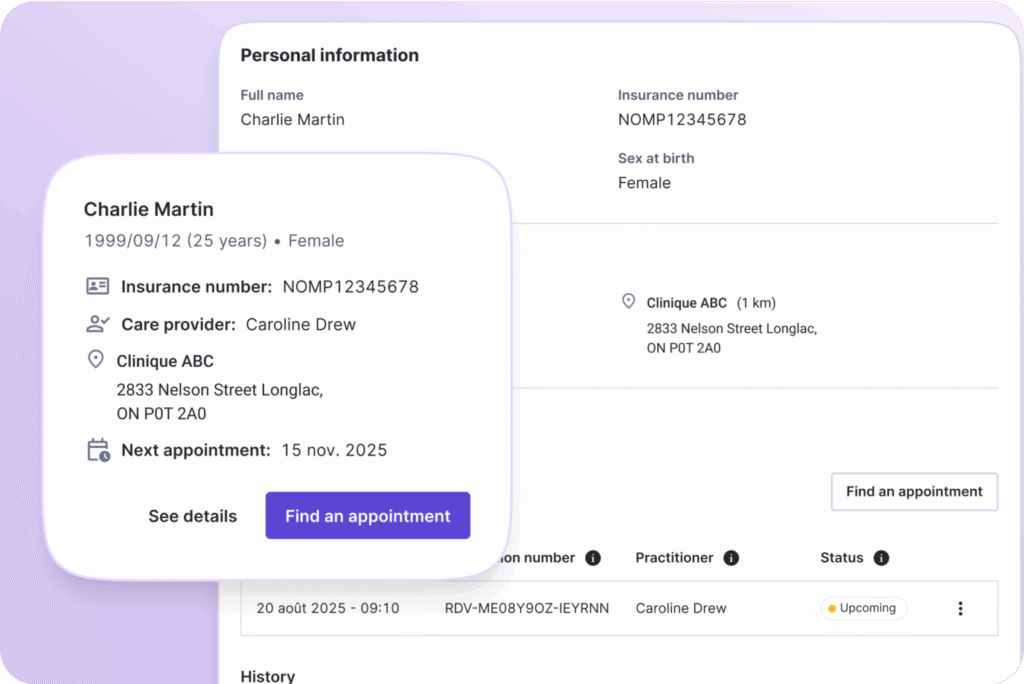
The Hub Patient redirects patients to unlock network capacity and improve patient outcomes system wide.
Our independent report explains how Petal helps the Government of Quebec redirect 800+ patients daily to more appropriate care settings while generating $2M per week in economic benefits and achieving 12.5% fewer low-acuity ED visits (CTAS 4–5).
Advanced features drive change across the province, including:
- Centralized care requests to capture patient preferences and history in one place.
- Intégrer les DME, les PMS et les portails de réservation en ligne pour mettre en relation les patients et les prestataires disponibles.
- Predicted demand to drive high impact resource allocation.
Make your health network future-forward to satisfy patients and providers. The time for innovation is now.
Unlock care capacity system-wide: