








Points clés à retenir
- Know how you’re compensated: Understanding your payment model gets you paid correctly for the care you provide.
- Systems prevent headaches: A clear billing workflow reduces mistakes and creates consistency from day one.
- Document, document, document: Thorough clinical notes make it easier to justify services, resolve disputes, and stay compliant.
New physicians commonly lose time and revenue because of five avoidable billing mistakes: treating billing as an administrative task, misunderstanding compensation models, starting practice without a billing workflow, missing submission deadlines, and relying on incomplete documentation.
After medical school, physicians quickly realize: professors didn’t train you for medical billing success.
Hours wasted managing rejected billing claims will drain your energy and restrict opportunities for professional or personal growth. Not to mention, hold up getting paid.
In Canada, 75% of physicians report unnecessary administrative tasks—such as through billing— worsening their job satisfaction. Paired with physicians leaving up to 7% of their billings unearned, there’s a danger that physicians are both losing time and revenue on inefficient billings.
Clinicians stuck in a “figure it out later” mindset save minimal time before submission and lose much time once claims are rejected.
But when new clinicians begin their careers using effective billing practices, the advantages compound. They have more time, more revenue, and more energy to support more energy.
This requires avoiding common mistakes that cause rejections. Read to discover five of them and ways to avoid their pitfalls.
1) Treating billing as an administrative task instead of a core skill
Most new physicians spend years mastering clinical care, but few receive formal training in billing. This is understandable, but as a result, billing is often viewed as a back-office task to be figured out later.
In both time and money, that mindset is costly.
Billing affects how quickly you’re paid and whether claims are accepted. It even dictates how much administrative work follows each patient encounter. Small mistakes lead to rejected claims and hours spent resolving issues.
Building billing knowledge early doesn’t mean becoming an expert overnight. It means understanding the fundamentals of how physician compensation works, what information is required for claims, and where to turn when questions arise.
- For example, a new physician in Alberta needs to understand the distinction between insured services and services requiring modifiers, while a physician in British Columbia must become familiar with MSP billing requirements.
Like any other professional skill, billing becomes easier with practice. The sooner you develop confidence in the process, the more time and energy you’ll devote to patients.
How to avoid it
Set aside time during your first year to learn the fundamentals of physician billing. Understanding the basics early will help you avoid common mistakes and build confidence in managing your practice.
Clinicians increase revenue by an average of 9.4% using Petal Billing.
2) Not understanding how you’re paid
Before your first day in practice, it’s important to understand how your compensation model works.
Whether you’re paid through fee-for-service, sessional arrangements, salary, or a blended model, each structure comes with different rules, expectations, and opportunities.
Here’s how each payment model typically functions:
- Pure Fee-For-Service (FFS): Clinicians bill the provincial payer directly for each service they provide and receive payment individually. Revenue is tied to personal service volume.
- Blended capitation: Individual clinicians receive fixed payments for each enrolled patient on their roster, supplemented by fee-for-service billings and incentive payments.
- Alternative Funding Plans (AFPs): Clinicians may be paid through structured contracts tied to specific roles, programs, or institutions. Compensation is allocated to individual clinicians rather than distributed through a group revenue pool.
- Salaried or hospital-based arrangements: Clinicians receive a fixed salary through an employment contract with a hospital or organization. Billing codes may still be submitted (often as shadow billings) to track activity and support funding formulas.
Compensation models also vary by province and practice setting. For example, an Ontario family physician working within a Family Health Organization may be compensated differently than a physician billing primarily fee-for-service through OHIP.
Many new physicians focus on clinical responsibilities and assume compensation will sort itself out. Unfortunately, this leads to missed payments and compensatory outcomes that doesn’t reflect the work performed.
How to avoid it
Review your compensation agreement before you begin practicing. If anything remains unclear, speak with your federation, workplace administration, billing authority, or trusted billing advisor to better understand how you’re paid.
3) Starting practice without a billing process
The first year of practice comes with enough uncertainty already. Billing shouldn’t be one of them.
Many physicians wait until they begin seeing patients before deciding how they’ll document encounters, manage claims, track payments, or handle administrative follow-up. By then, small inefficiencies often become recurring frustrations.
Before you start practicing, establish a workflow that fits your needs and reduces medical billing rejections.
For instance, a clinic in British Columbia may establish procedures for MSP claim reviews, while an Ontario practice may build workflows around OHIP submission timelines and rejection management.
A clear process limits errors, improves consistency, and makes it easier to stay organized during busy periods. Good systems support a stronger foundation for your practice as patient volumes grow.
Before you begin, ask yourself:
- Who will enter billing information?
- How will claims be reviewed?
- Where will documentation be stored?
- How will payment reports be monitored?
How to avoid it
Create a billing workflow before your first patient encounter. Answer the above questions and communicate your process clearly for current and new team members.
56,000+ providers and administrators trust Petal to simplify their billing.
4) Missing deadlines for submissions
Submitting a claim is only one step in the billing process. Following up is just as important.
New physicians are often surprised by how much revenue us affected by missed deadlines or rejected claims. Further, these problems tend to compound, leading to more wasted time and higher likelihoods of future missed deadlines and rejections.
A claim submitted incorrectly may be fixable, but only if the issue is identified in time.
Develop a routine for reviewing payment statements, monitoring claim status, and addressing problems promptly. Keep track of what was submitted versus what was paid to ensure that nothing falls through the cracks.
- In practice, physicians billing OHIP, RAMQ, MSP, or Alberta Health each operate within their own administrative rules and timelines.
A few minutes spent reviewing payments regularly can prevent significant revenue loss and reduce the stress of discovering issues long after correction windows have closed.
How to avoid it
Develop consistent documentation habits early in your career. Clear, complete notes that accurately reflect the care provided make billing easier and support compliance requirements.
5) Assuming clinical documentation is “good enough”
Clear documentation supports good patient care.
It also plays a critical role in billing accuracy and compliance.
When clinical notes are incomplete, unclear, or missing key details, it becomes difficult to support the services that were billed. This causes issues when correcting claim issues or participating in payment reviews.
- For example, Ontario physicians’ supporting documentation may need to justify certain OHIP-insured services during reviews, while Quebec physicians need records that support RAMQ billing submissions.
Develop the habit of documenting thoroughly and consistently from the start of your career. Your notes should accurately reflect the services provided and the clinical reasoning behind decisions. In the rare case of an audit, any supporting details you’ve added will prove invaluable.
Good documentation protects both patients and physicians. It also makes administrative tasks far easier when questions arise weeks, months, or even years after patient encounters.
How to avoid it
Schedule regular time to review your billing documentation. Here’s a solid billing timeline structure:
- Daily: Submit encounter data.
- 24–48 hours: Review automated flags.
- Weekly: Address rejected or returned claims.
- Monthly: Review rule updates with staff.
- Quarterly: Audit high-volume billing codes.
Secure your earnings with expert support
You’ve worked hard for years to get to where you are. Now, getting paid what you deserve is more important than ever.
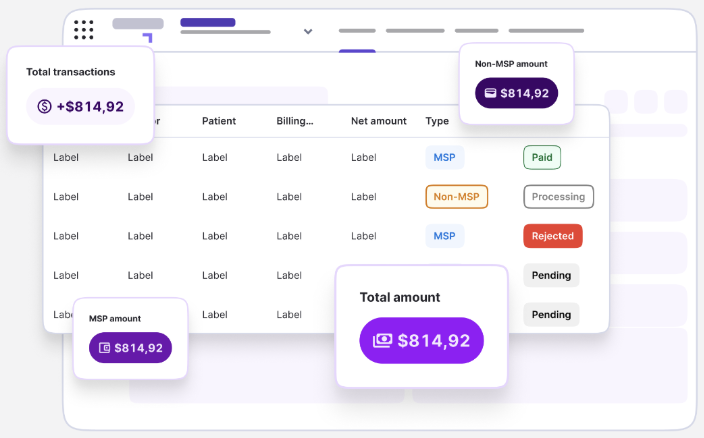
Facturation médicale features robust tools—and live support agents based in your province—to fulfill your billing needs. Stabilize revenue through fewer billing rejections. More acceptances mean fewer hours managing claims to unlock more time with patients and staff.
- Proof: Our recent independent study found physicians using Petal Billing reported an average revenue increase of 9.4% and 3.1 hours saved per week compared to manual billing.
Launch your career from a strong billing foundation.
Get paid what you’ve made:
FAQs: Medical billing for new physicians
Do physicians receive billing training during residency?
Many physicians receive limited formal education on billing and compensation during training, making self-directed learning essential during the transition to practice.
What is the most common billingmistakenew physicians make?
Incomplete documentation, incorrect claim submissions, and missed follow-up on rejected claims are among the most common issues.
Why is documentation so important for billing?
Clinical documentation provides the record needed to support services billed and can be critical during reviews or audits.
Should I manage billing myself or seek support?
The right approach depends on your practice style, comfort level, and available resources. Regardless of the model chosen, physiciansremain responsible for billing accuracy.
How often should I review payment statements?
Review them regularly andestablish a consistent process for identifying rejected claims, payment discrepancies, and outstanding corrections.
What should I learn first as a new physician?
Start with the basics: compensation models, documentation requirements, claim submission processes, and payment reconciliation.