








Points clés à retenir
Time savings: Physicians saved an average of 161 hours annually—a 24% reduction in administrative workload—making more time for patient care and staff wellbeing.
Revenue growth: The study revealed an average revenue increase of 9.4%, or approximately $34,346 per physician per year nationally ($29,000–$38,000 across provinces).
High satisfaction: Physicians reported strong satisfaction with their digital billing solutions, reflected in a Net Promoter Score (NPS) of +45 overall, and +50 among self-entry users, signaling high trust and loyalty.
Why the billing burden is more than an inconvenience
Medical billing in Canada isn’t just paperwork. It’s a complex process that shapes both physician well-being and practice sustainability. Each province operates its own health insurance plan with unique fee schedules, coding rules, and compliance requirements.
For physicians, this means navigating thousands of codes and evolving regulations, often without formal training. The result? Lost revenue, rejected claims, and hours of administrative work that could otherwise be spent on patient care.
A new independent study commissioned by Petal set out to answer a critical question: Do medical billing solutions deliver measurable value for physicians?
The findings are clear: time, money, and peace of mind are all found. Let’s dig into the details.
How the study was conducted
The research was led by an independent health economist with full autonomy over methodology and interpretation. Using a cross-sectional, web-based survey, the study captured insights from physicians while also incorporating physician remuneration benchmarks from Canadian Institute for Health Information (CIHI) and workload data from the Canadian Medical Association (CMA).
The survey results and national benchmarks for gains from medical billing solutions are clear on every level.
The study focused on four key questions:
What priorities drive physicians when selecting a medical billing solution?
Which features do they value most?
What is the economic impact in terms of time saved and revenue gained?
How satisfied are physicians with their current solution?
Discover how physicians saved an average of 161 hours annually.
The economic impact: real revenue and time gains, nothing marginal
The research was led by an independent health economist with full autonomy over methodology and interpretation. Using a cross-sectional, web-based survey, the study captured insights from physicians while also incorporating physician remuneration benchmarks from Canadian Institute for Health Information (CIHI) and workload data from the Canadian Medical Association (CMA).
The survey results and national benchmarks for gains from medical billing solutions are clear on every level.
The study focused on four key questions:
What priorities drive physicians when selecting a medical billing solution?
Which features do they value most?
What is the economic impact in terms of time saved and revenue gained?
How satisfied are physicians with their current solution?
The economic impact: Real revenue and time gains, nothing marginal
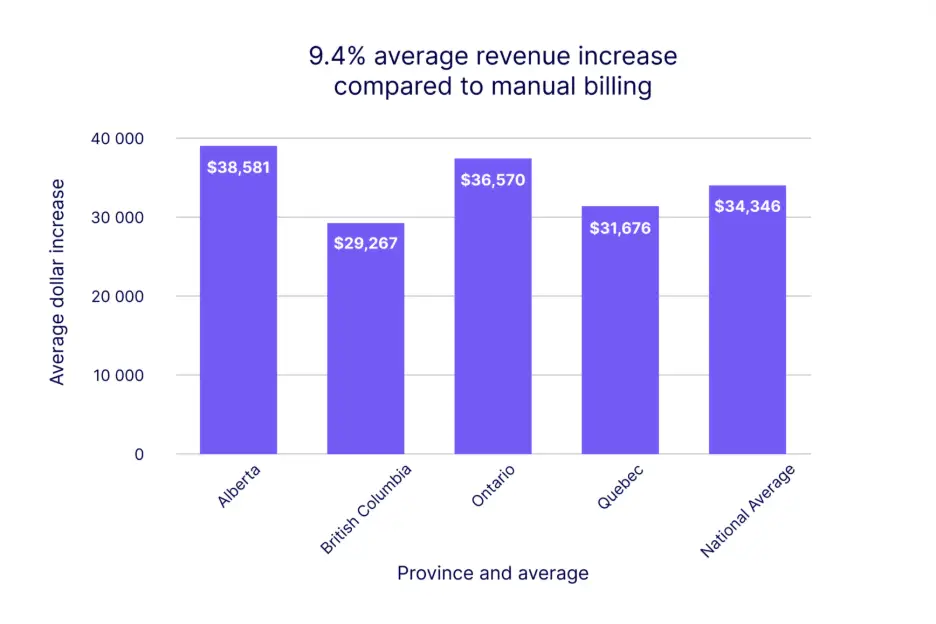
The numbers speak for themselves. Physicians reported an average revenue increase of 9.4% compared to manual billing. Applied to national benchmarks, that translates to:
$38,581 in Alberta
$31,676 in Quebec
$36,570 in Ontario
$29,267 in British Columbia
$34,346 average nationally
Impact on time
Time savings were equally significant. On average, physicians saved 161 hours annually—a 24% reduction in administrative workload. When valued at national physician remuneration rates, that time is worth $24,123 per year.
Between benchmark revenue gains and time saving, the annual benefit per physician reaches approximately $58,500. That’s beyond incremental. It’s transformative for practice sustainability.
Petal users make 400,000+ shift trades and transfers per year.
Features that make the difference
The study also explored which features physicians find most valuable when it comes to medical billing solutions. Leading the list was optimization of billing codes and modifiers, rated “extremely valuable” by 87% of respondents and “valuable” and above by 96%. Close behind were:
Up-to-date provincial fee rules (94%)
Real-time error validation (91%)
Access to expert support (90%)
By contrast, features like analytics and onboarding were rated lower, suggesting that physicians prioritize immediate, tangible benefits over secondary enhancements.
What physicians say they care about most
Transparency and compliance were viewed as baseline expectations rather than differentiators. This tells us something important: physicians want tools that deliver tangible economic and time-saving benefits—not just dashboards or reporting features.
When asked to rank their priorities, physicians were clear:
Maximizing revenue was the top priority for 54% of respondents.
Reducing administrative burden followed at 33%.
Shortening reimbursement cycles came next at 23%.
Physician stress decreased
Numbers tell part of the story, but physician voices bring it to life. One participant summed it up:
“Billing is so efficient and accurate—it reduces stress.”
Others praised the platform’s ease of use and responsive customer service, which contributed to an overall Net Promoter Score of +45—a strong indicator of satisfaction. Self-entry users scored even higher, with an NPS of +50.
What physicians say they care about most
Transparency and compliance were viewed as baseline expectations rather than differentiators. This tells us something important: physicians want tools that deliver tangible economic and time-saving benefits—not just dashboards or reporting features.
When asked to rank their priorities, physicians were clear:
Maximizing revenue was the top priority for 54% of respondents.
Reducing administrative burden followed at 33%.
Shortening reimbursement cycles came next at 23%.
Why download the full report
Medical billing solutions are strategic enablers of physician well-being and practice resilience. In a system where every hour and every dollar counts, the evidence is clear: these solutions deliver measurable value.
These are only the highlights. The full report goes deeper, including:
Provincial breakdowns of revenue gains and time savings
Detailed feature rankings and what they mean for adoption
Methodology transparency describing how the numbers were calculated and why they matter
Ready to see the full picture?
Download the full report now and explore the data, insights, and physician voices shaping the future of medical billing in Canada.