





Key takeaways
- Reciprocal billing simplifies interprovincial care: Alberta physicians can submit eligible claims for patients insured in other Canadian provinces and territories through AHCIP.
- Patient eligibility determines the billing pathway: Verifying a valid health card and home-province coverage reduces preventable claim refusals.
- Certain medical services are excluded: Virtual care, workers’ compensation claims, and other specified services require different billing arrangements.
Alberta physicians can bill the Alberta Health Care Insurance Plan (AHCIP) for insured medical services provided to patients from other Canadian provinces, barring Quebec, and territories. Through reciprocal medical billing agreements, Alberta Health processes eligible claims and coordinates reimbursement with the patient’s home province.
For physicians, treating out-of-province patients is a familiar part of practice.
You might see a Saskatchewan resident visiting family in Calgary, an Ontario tourist requiring medical attention in Banff, or a British Columbia student temporarily living in Edmonton. The need for care happens regardless of traveling plans or timing.
- Residents of Quebec are the primary exception. Quebec doesn’t participate in reciprocal physician billing agreements, so Alberta physicians usually bill Quebec patients directly.
These patients present different health cards, but that doesn’t necessarily mean a different billing process.
Here’s how reciprocal medical billing works in Alberta and what physicians should know to get paid what they’ve earned.
How does reciprocal medical billing work in Alberta?
Canada’s provinces and territories maintain reciprocal billing agreements that simplify payment for insured medical services delivered outside a patient’s home province.
Under these agreements, Alberta physicians submit eligible claims to AHCIP, which processes them using Alberta’s Schedule of Medical Benefits (SOMB).
Alberta Health then coordinates reimbursement with the patient’s home province or territory.
- For example, imagine a British Columbia resident visiting Calgary who develops a respiratory infection. After visiting a local physician, they present their valid BC health card and receive an insured medical assessment.
In turn, the Alberta physician submits the claim through AHCIP without requiring the patient to pay directly.
Here's how billing usually differs by patient coverage
Patient’s home coverage | Billing arrangement |
BC, Saskatchewan, Ontario, or another participating province or territory | Eligible services are billed through AHCIP |
Quebec | Separate arrangements apply; physicians often bill patients directly |
No valid health card presented | Additional eligibility verification or alternative billing arrangements may be required |
How do Alberta physicians bill out-of-province patients?
The usual process resembles regular AHCIP billing, with additional attention to the patient’s provincial coverage.
Follow these four steps:
Step 1: Verify the patient's health insurance eligibility
Ask to see the patient’s current provincial or territorial health card. This is critical.
Then, confirm their name, health insurance number, province of residence, and applicable expiry information.
- For example, an Ontario patient visiting an Edmonton walk-in clinic should present their Ontario health card. The billing team needs to capture the correct identifying information to submit a reciprocal claim.
Key action: Don’t assume an out-of-province patient is uninsured because they don’t have an Alberta Personal Health Number (PHN).
Step 2: Confirm the service qualifies for reciprocal billing
Determine whether the care provided is an insured AHCIP service and eligible under the reciprocal agreement.
The SOMB establishes Alberta’s medical billing codes, fees, and applicable requirements.
A standard medical assessment may qualify, while certain specialized or excluded services follow different rules.
Step 3: Submit the claim to Alberta Health
Eligible reciprocal claims are submitted electronically through AHCIP using the appropriate out-of-province claim information.
Include the patient’s home-province health insurance number, province code, and all required physician and service details.
- Alberta’s standard medical billing submission deadlines generally provide 90 days from the service date or applicable hospital discharge date. Don’t expect successful claims if submitting after this period.
Tip: Be sure to submit promptly to preserve time for corrections.
Step 4: Review payments and resolve claim issues
After processing, review your Alberta Health remittance information for accepted, reduced, or rejected claims.
Incorrect patient details or an unsuitable billing pathway can create avoidable payment issues.
Learn more about medical billing reconciliation and why reviewing payments is essential for physician revenue.
Clinicians increase revenue by an average of 9.4%, or $38,581 in Alberta, using Petal Billing.
What exceptions apply to out-of-province billing in Alberta?
Not every patient or service qualifies for standard reciprocal billing.
Two distinctions deserve particular attention:
1. Quebec patients follow different arrangements
Quebec doesn’t participate in Canada’s reciprocal physician billing agreements.
For example, suppose a Montreal resident visiting Calgary needs treatment for a minor injury.
The most common course of action is to charge the patient directly, who can then apply to Quebec’s Régie de l’assurance maladie du Québec (RAMQ) for reimbursement.
- Alberta Health provides a Quebec Claim for Physician/Practitioner Services form for this purpose.
Remember: Hospital services follow separate interprovincial arrangements, including reciprocal agreements with Quebec.
2. Some medical services are excluded
Alberta’s reciprocal billing rules exclude certain services and claim types.
Examples include:
- Virtual care: Specified telephone and video consultations are excluded from medical reciprocal billing.
- Workers’ compensation: Work-related injury claims commonly follow the applicable workers’ compensation process.
- Third-party examinations: Employment medicals and driver’s licence assessments aren’t eligible for reciprocal billing.
- Patients who are refugees: Delivered care is billed to Medavie Blue Cross under the Interim Federal Health Program (IFHP).
- Patients covered by the Interim Federal Health Program (IFHP): Eligible medical services are billed to Medavie Blue Cross, which administers IFHP claims, rather than AHCIP.
Other exclusions also apply. Make sure you consult Alberta Health’s Physician’s Resource Guide before submitting unfamiliar claims.
In practice: Confirm the billing pathway before charging a patient or submitting a claim for an excluded service.
How do Alberta physicians avoid out-of-province billing errors?
To achieve accurate out-of-province billing, you need to start before claim submission.
Reliable patient intake and consistent claim follow-up will position your team for higher, more predictable revenue.
Four habits make a big difference over the long-term:
- Verify patient details: Confirm the patient’s health card, registration number, and home province.
- Check service eligibility: Identify exclusions before submitting reciprocal claims.
- Submit complete claims: Include the correct provincial identifiers and billing codes, as well as any supporting information.
- Review remittances: Investigate your rejected or reduced payments and follow through on corrections.
Want to know about provincial reviews? Check out five things provinces look for when reviewing medical billing claims.
In-province or out, Petal's got you covered
Treat patients with confidence, regardless of their home province.
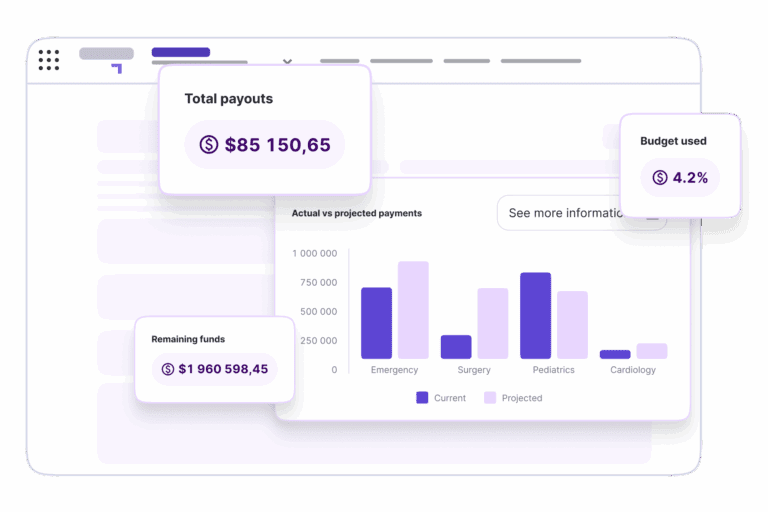
Petal Billing Alberta supports AHCIP, WCB, private, and out-of-province claims through intuitive technology and specialized billing expertise.
- From claim validation to automated payment reconciliation, our solutions simplify administrative workflows.
- Local experts with 20+ years of Alberta billing experience are ready to support.
Protect your revenue and spend more time delivering care.
Simplify your medical billing:
FAQs: Out-of-province medical billing in Alberta
Can Alberta physicians bill AHCIP for patients from other provinces?
Yes. Alberta physicians can generally submit reciprocal medical billing claims to AHCIP for eligible insured services provided to residents of participating Canadian provinces and territories. Patients must present valid provincial or territorial health coverage.
Can Alberta physicians bill AHCIP for patients from Quebec?
No. Quebec doesn’t participate in reciprocal physician billing agreements. Alberta physicians usually bill Quebec patients directly for medical services, and patients can request reimbursement from RAMQ using the applicable claim form.
What happens if an out-of-province patient doesn’t have a valid health card?
The physician must establish the appropriate billing pathway. Alberta Health provides procedures for patients unable to present valid coverage. Depending on the circumstances, direct patient billing or alternative claim submission may be appropriate. Urgent care mustn’t be withheld because a patient cannot pay in advance.
Are virtual medical consultations eligible for reciprocal billing in Alberta?
Specified virtual care services are excluded from Alberta’s medical reciprocal billing arrangements. Physicians should consult the current Alberta Health Physician’s Resource Guide and applicable SOMB rules before submitting claims involving out-of-province virtual consultations.
How long do Alberta physicians have to submit out-of-province billing claims?
Standard AHCIP submission deadlines generally require claims within 90 days of the date of service or applicable hospital discharge date. Physicians should confirm the relevant deadline and any special rules for claims outside the regular reciprocal billing process.
Can Alberta physicians charge out-of-province patients directly?
Direct billing may be appropriate for Quebec residents, patients without valid coverage documentation, and certain excluded services. For eligible reciprocal claims, physicians should use the standard billing process. Patient charges must comply with applicable provincial and professional requirements.