





Key takeaways
- Focus on the submission structure in Alberta. Many rejections are due to claims being misaligned with billing arrangements or hospital context fields.
- Teleplan expects specificity on required fields and formatting in British Columbia. PHN accuracy, dates/times/units, and location indicators are often behind rejections.
- Eligibility and rule nuance create repeat errors in Ontario. Health card/version code validation and strict premium/sequence rules cause many rejections.
Rejected medical billing claims derail clinic progress.
Despite successfully delivering care, errors in the billing process lead to stalled reimbursements and destabilized revenue. Clinicians and their teams fall into a loop of troubleshooting, resubmitting, and reconciling. This wastes time and energy better spent with patients. Staff satisfaction declines, and clinics struggle to fulfill their mission.
That challenge isn’t one-size-fits-all. Alberta, British Columbia, and Ontario clinicians each face distinct billing systems and submission requirements. Some rejection reasons are common across each system, but they’re often dependent on specific rules and practices in their home province.
The most sustainable way forward is to reduce variability at the source: build a consistent intake and encounter documentation workflow, then support it with automated tools tailored to provincial health systems backed by live agent support.
Read on to discover common and unique reasons for medical billing rejections.
Common reasons for billing rejections in all three provinces
Most claim rejections in Canada fall into a handful of categories. Fortunately, these are established, and therefore, predictable. Prepare your clinic with a first-pass acceptance billing process to overcome these common errors before submission:
1) Incomplete or incorrect patient information
The fastest path to a rejected claim is basic identity mismatch. If a health number is wrong, expired, missing digits, or doesn’t align with payer records, the claim won’t pass. Moreover, if the patient isn’t eligible on the date of service, the claim will be denied.
Here’s a checklist to use at intake:
- Confirm health number is valid and current
- Confirm coverage status for date of service
- Confirm demographic match (name/DOB) where required
- Flag out-of-province patients early (different data requirements)
2) Missing mandatory claim details
Most services have hidden “required fields” tied to billing rules. The claim may be accurate clinically, but if a mandatory detail is missing, such as a referral ID for consults or admission date for inpatient services, then rejection is likely.
Fields commonly made mandatory include:
- Referring provider details
- Admission dates / encounter context for hospital services
- Start/end times or unit counts for time-based codes
3) Data entry errors and typos
Small mistakes create big delays. A single wrong digit or mismatched code will fail submissions when passing through electronic edit checks. These are among the most common rejections, because they’re easy to make and hard to spot.
These are high-risk fields for typos:
- Health number / patient ID
- Date of service
- Provider ID
- Location indicators (where applicable)
4) Eligibility and timing issues
Billing oversight demands accuracy in timing details. Submitting outside the permitted time window (often around 90 days) will trigger rejections or require special handling. Duplicate claims or services are also consistently refused across systems.
5) Rule and policy violations
Every province enforces fee schedule logic: frequency limits, code combinations, prerequisites, and documentation expectations. If a code requires another code, a specific modifier, or an eligible context, the result is often a refusal when the claim doesn’t match.
The most common rule violations:
- Billing codes together that can’t be paid together
- Missing prerequisites (a required first service)
- Exceeding frequency limits
- Incorrect use of modifiers or premiums
Clinicians increase revenue by an average of 9.4% using Petal Billing.
Alberta’s main reasons for billing rejections
Alberta has several submission features that surprise new billers, including Business Arrangement (BA) numbers and functional centre codes. These are more central in Alberta than in BC or Ontario. Many Alberta rejections come from technical alignment issues: the right patient, provider, and service code—but the wrong submission structure.
1) Missing or invalid patient information
Even small personal health number (PHN) errors trigger immediate rejection. Out-of-province claims raise the bar further. They often require additional demographic details, and missing any required element leads to “incomplete person data” issues.
Note these pre-submit checks:
- Validate PHN format and accuracy
- Confirm coverage for date of service
- Flag reciprocal/out-of-province claims early
- Ensure required demographics are complete
2) Provider registration and billing ID issues (BA + Prac ID)
Alberta’s workflow depends on the claim being tied to the correct submitting structure. If the BA number is missing or not linked properly—or if the physician’s practitioner ID isn’t active for the service date—the claim is refusable. Additionally, locum arrangements must be reflected correctly in the submission.
Use this checklist for Alberta submissions:
- BA number present and correctly linked
- Physician Prac ID active on date of service
- Locum billing configured correctly when applicable
- Submitting party aligned to the billing arrangement
3) Billing code conflicts or rule violations
Alberta’s fee schedule logic rejects claims when codes are used outside permitted contexts—wrong location, wrong specialty, wrong modifier, or an invalid combination of services. Premium modifiers are a frequent pain point: adding a premium when the date/time/service context doesn’t support it will often trigger rejection.
Avoid these common pitfalls:
- Hospital-only code billed as office service
- Required complementary code/modifier missing
- Premium modifier doesn’t match service context
- Mutually exclusive services billed together
4) Missing required claim details (referrals, facility, functional centre, timing)
Alberta claims may require details beyond the core code. Consultation and referral billing commonly require the referring provider’s information. Hospital claims often require correct facility identification and functional centre codes. Time-based or multi-visit services may require time entries or counters, and exceeding permitted limits trigger refusals.
Ensure you double-check these details:
- Referring physician info included when required
- Facility details correct for the service setting
- Functional centre code entered correctly for hospital claims
- Time/unit fields complete for time-based services
- Limits respected (visits, units, frequency)
5) Patient eligibility and coverage problems
Claims are refused if the patient wasn’t insured under AHCIP on the date of service—or if the claim should be routed elsewhere (e.g., Workers’ Compensation or federal programs). Alberta also allows limited “Good Faith” pathways in certain scenarios, but misuse leads to rejection.
6) Duplicate, previously paid, or stale-dated claims
Duplicate submissions are routinely refused, and “previous payment” logic triggers rejections when the same service is billed twice unintentionally. Alberta also commonly operates around a ~90-day submission expectation; claims outside the window require special handling and may be rejected without approved extensions.
British Columbia’s main reasons for billing rejections
In BC, physicians bill MSP through Teleplan, which includes strict validation rules and explanatory codes. Many BC rejections resemble those elsewhere— but Teleplan’s pre-edit checks and MSP’s fee schedule rules introduce a few predictable trouble spots.
1) Invalid or missing PHN
Teleplan typically rejects quickly when PHN data is missing or invalid. The simplest prevention is also the most effective: verify the PHN and ensure it matches MSP records—especially for out-of-province patients where formatting and province codes matter.
Here’s a BC PHN checklist:
- PHN entered and complete
- Format correctly, including province coding for OOP
- Demographics match payer record where required
2) Patient not enrolled or eligible with MSP
A “patient without insurance or valid coverage” scenario is especially disruptive because it’s often discovered after the visit, or rather when the claim is already being processed. These rejections are difficult to fix retroactively unless the patient re-establishes coverage and MSP accepts it for the date of service.
3) Missing required claim info (dates, times, units, location indicators)
Some BC services require admission dates, times, units, or specific location indicators. If required values are missing or formatted incorrectly (including time format expectations), Teleplan edits will refuse the claim.
Common required elements in BC:
- Admission date for applicable hospital services
- Time of service where required
- Units/quantities for time-based billing
- Location indicators when applicable
4) Fee schedule rule violations (prerequisites + frequency limits)
BC has specific patterns that trigger refusals:
- Prerequisite logic: Some premiums require an initial service to be billed first (e.g., call-out before continuing care). If the prerequisite isn’t present/paid, the follow-on claim is refused.
- Frequency limits: Some codes are only billed a set number of times per patient per week; exceeding the limit triggers rejection unless appropriately justified and manually reviewed.
5) Incorrect fee code or code combinations (including diagnostic alignment)
Using a fee item that doesn’t match provider role, setting, or diagnosis context is a common trigger. Diagnostic coding is especially important in BC since claims typically require ICD-9 diagnostic codes, and mismatches affect acceptance.
6) Duplicate billing and stale-dated claims
Teleplan flags duplicates, and submissions over 90 days from the date of service become “over-aged,” thus making them ineligible for submission without special exemption. The longer claims sit unsubmitted or unreconciled, the higher the chance they become non-payable.
Clinicians save an average of 161 hours annually using Petal Billing.
Ontario’s main reasons for medical billing rejections
Ontario’s OHIP rules are detailed, and many rejections come down to context alignment: the correct fee code must match the correct location, facility, and eligibility scenario. Ontario’s use of Service Location Indicators (SLIs) is a top differentiator and a common source of preventable errors.
1) Incorrect service location details (SLI + facility mismatches)
OHIP expects the fee code, SLI code, and (when required) facility number to line up. If they don’t, the claim is likely to be rejected. This commonly happens when a service is billed as inpatient but tagged as outpatient, or when a facility number is missing/mismatched.
Here’s a SLI/facility checklist:
- Correct SLI selected for the care setting
- Facility number included where required
- Fee code context matches SLI (inpatient vs outpatient, etc.)
- Home visits handled correctly (no SLI where not applicable)
2) Missing required fields (e.g., admission dates, WSIB details)
OHIP often requires supporting fields for certain contexts:
- Admission date for inpatient/hospital codes
- Accident/WSIB details when applicable
- Mother/baby linkage details in obstetric/newborn scenarios
Quick “required fields” scan:
- Admission date present for inpatient codes
- WSIB/accident fields completed when relevant
- Any code-specific required identifiers included
3) Missing referral information on consultations
Consultations typically require a referring provider number. A common error is leaving this blank or entering the wrong identifier type.
Here’s a referral checklist:
- Referring physician billing number included (when required)
- Correct identifier type used (avoid substituting license IDs)
- Referral matches the consult context
4) Improper use of billing codes and premiums
Premiums in Ontario are powerful and strict. Rejections often occur when:
- A premium is used for the wrong day/time
- A premium is attached to a service type that doesn’t allow it
- Travel-related premiums are misapplied (e.g., billing multiple travel premiums in a day instead of the correct structure)
5) Invalid code combinations or sequencing rules
OHIP monitors whether related codes must be billed together, whether certain sequences are required, and whether time thresholds apply (e.g., length of stay requirements affecting which follow-up visit code is payable). Billing the “right code at the wrong time” is a classic rejection pathway.
Avoid these common sequencing pitfalls:
- Wrong follow-up visit code based on length-of-stay timing
- Add-on/premium submitted separately from the base code
- Two consults billed same day for same patient (duplicate logic)
Solution: Choose a billing tool tailored to your province’s rules
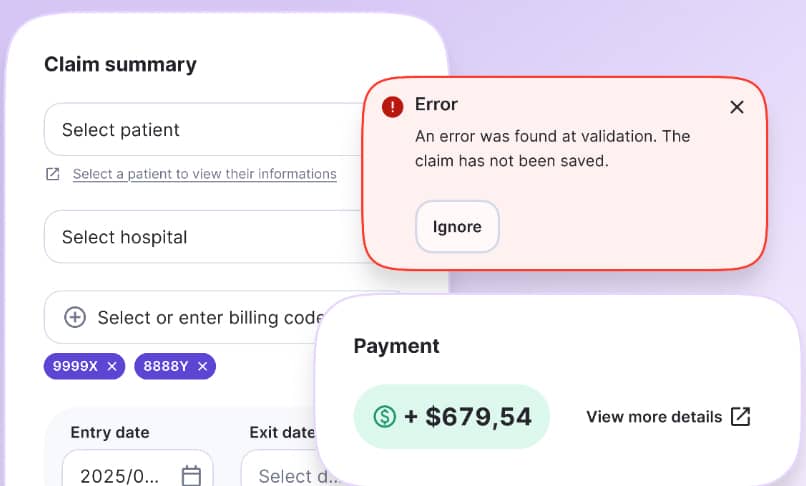
Bill with confidence by using a tool designed to meet every province’s unique medical billing rules.
Petal Billing automates your billing process and provides live agent support. Stabilize billing revenue through fewer billing rejections. More acceptances mean fewer hours managing rejections to unlock more time with patients and staff.
Access features to simplify your billing:
- EMR-connected claim automation.
- Provincial code validation and error checking.
- Real-time claim status and remittance tracking.
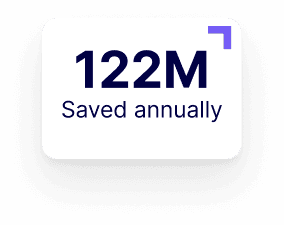
Our recent independent study found physicians using Petal Billing reported an average revenue increase of 9.4% compared to manual billing. This equates to 161 hours saved annually at a value of $24,123 per year.
Focus on what matters—let advanced billing do the rest.
Make billing a strength and watch your revenue grow: