






The ED is the system: 3 Data trends reshaping emergency care in Canada

Key takeaways ED demand is becoming more clinically complex: CTAS 4–5 visits now represent a smaller share of Canadian ED activity, while CTAS 1–3 cases are growing showing a better alignment of lower-acuity care. Primary care capacity is essential to sustaining progress: Family physician stress and burnout have improved since 2022, but access gaps and […]
British Columbia virtual care billing codes cheat sheet and MSP checklist

Discover how British Columbia physicians bill virtual care correctly under MSP, including telehealth fee codes, documentation rules, counselling requirements, and practical billing tips for family practice.
How healthcare organizations use data to improve patient flow and capacity

Healthcare organizations use data to improve patient flow, strengthen healthcare capacity management, and make better operational decisions. Explore how healthcare analytics help modern teams overcome system-wide challenges.
Manual vs automated scheduling in healthcare: Costs, risks, and benefits

Discover how automated healthcare scheduling reduces administrative burden, improves clinician satisfaction, and helps hospitals and physician groups reclaim valuable clinical time.
Why fax machines still exist in healthcare (and 3 other outdated tools that need to go)

Learn why fax machines, pagers, and other outdated tools still exist in healthcare, the operational inefficiencies they create, and how modern solutions improve communication, scheduling, and patient intake.
How pharmacies reduce emergency department overcrowding

Patient redirection connects patients to the right care setting faster. Leveraging pharmacies as critical access points helps health systems reduce ED overcrowding, improve provider wellbeing, and unlock millions of dollars in system-wide savings.
How analytics help healthcare teams manage patient demand
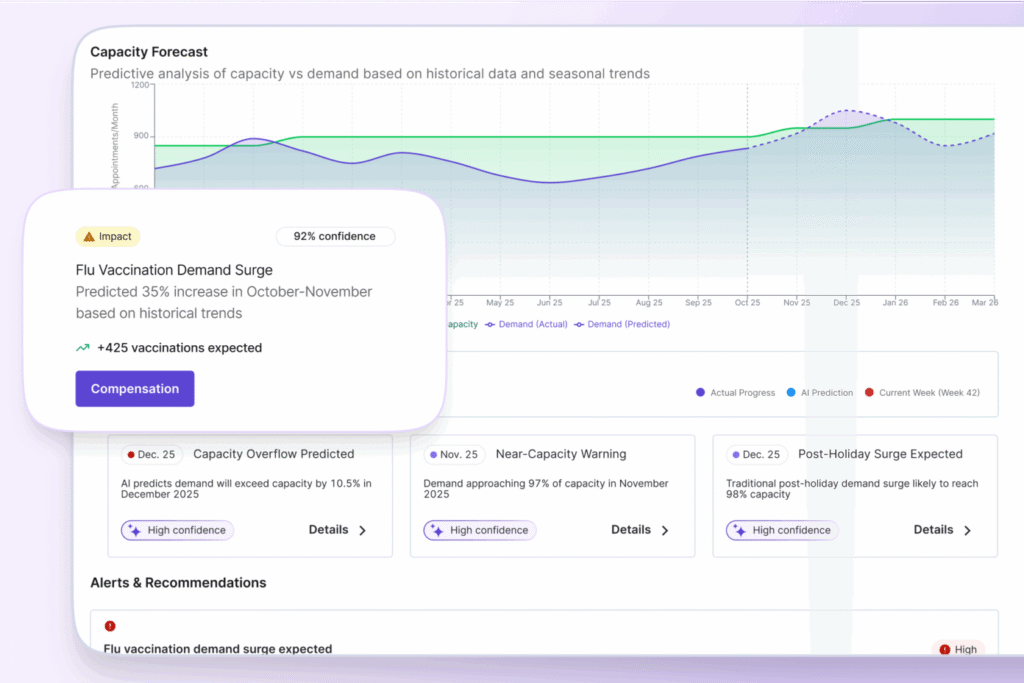
Data-driven insights help healthcare organizations make smarter choices for their teams, patients, and budgets by maximizing their resources. Rising patient demand paired with burnt-out staff requires this advanced approach to care.
How integrated billing and scheduling reduces burnout and improves healthcare capacity

Align scheduling with billing data to unlock hidden capacity, reduce burnout, and improve financial performance. When your systems work together, your teams and patients benefit.
The ‘Clinic Efficiency Audit’ playbook: How to identify time and revenue leaks

Managing and refining schedules drains physicians’ limited time and energy. Addressing key sources of poor scheduling improves patient care and satisfies teams before burnout starts.
Beyond revenue: Metrics every clinic and hospital department should track

Metrics guide decisions in care coordination, operational management, and resource allocation. Explore how clinics and hospital departments deploy metrics to achieve their goals and inform strategic decisions.