





Key takeaways
- Value-based care makes experience a core metric: Design for outcomes, equity, and cost—experience sits alongside the clinical result.
- Cut administrative burden to unlock bedside time: Automate handoffs, standardize pathways, and coordinate in real time to shorten waits and improve clarity.
- A patient flow hub turns operations into felt experience: Petal’s Hub shows fewer low‑acuity emergency department visits, faster access, and hundreds of millions in savings.
Great healthcare is more than what happens behind the scenes. Safe clinical practice remains non‑negotiable, yet patients judge their care by how smoothly they move from first click to follow‑up: access, clarity, timeliness, and confidence in next steps.
In a value‑based care landscape—where outcomes, equity, and total cost matter—patient experience becomes a managed performance pillar, not a “nice to have.”
This guide reframes patient experience through three intertwined lenses:
- Value-based care that aligns incentives around outcomes, experience, and cost.
- Administrative burden reduction that frees clinicians and staff to focus on people, not paperwork.
- The patient flow hub—a model that operationalizes both, translating real‑time orchestration into a clearer patient journey.
What is patient experience?
Patient experience spans every touchpoint: searching for care, booking, check‑in, the visit itself, transitions, and follow‑up. It reflects how access to care feels, how respected and informed people feel, and how confident they feel about what comes next.
No two patients bring the same needs. The goal is predictably personalized care: standardized where safety and quality depend on it, flexible where preferences and contexts vary. That means:
- Access and booking through intuitive online scheduling, responsive phone lines, and inclusive in‑person support.
- Service accessibility with virtual options when appropriate, language services, mobility support, and trauma‑informed practices.
- Patient–provider interactions grounded in active listening, clear expectations, and respectful handling of sensitive topics.
- Preference management that honors communication channels and mode of visit, and, where possible, continuity with the same care team.
- Follow‑up protocols that clarify who owns what—clinicians, administrative staff, community partners, health authorities, and the patient.
In value‑based models, experience links directly to outcomes and cost. Clear communication and timely coordination reduce unnecessary visits, shorten length of stay, and prevent avoidable readmissions. That’s value by design, not by chance.
The administrative burden problem
(and why fixing it improves experience)
Manual bed hunts, repeated calls for transport, spreadsheet chase‑lists for discharges, and siloed calendars create friction. Every extra step steals time from the bedside and produces delays patients feel—longer waits, mixed messages, and uncertainty.
Reducing burden elevates experience in three ways:
- More time for care through automation of routine handoffs and standardized workflows.
- Fewer delays because real‑time coordination replaces phone‑tag and guesswork.
- Clearer communication as status and next steps surface consistently to care teams and, where appropriate, to patients and families.
This is where the patient flow hub changes the game.
Meet the patient flow hub: Orchestration that patients feel
A patient flow hub centralizes visibility and coordination across access, capacity, diagnostics, procedures, and discharge. Think of it as the system’s operational brain—sensing demand, allocating supply, and automating the handoffs that often stall the patient’s journey.
Core capabilities typically include:
- Real‑time capacity views for beds, staffing, and critical resources.
- Demand forecasting for arrivals and elective volume to avoid bottlenecks.
- Automated workflows for housekeeping, transport, consults, and diagnostics.
- Discharge readiness tracking with blockers surfaced early and tasks assigned to the right role at the right time.
- Integrated communication that keeps teams aligned and gives patients timely, plain‑language updates.
- Performance analytics (e.g., time to bed from triage, on‑time starts, discharge before noon, avoidable days, readmissions) for continuous improvement.
Result: shorter waits, smoother transitions, fewer surprises, and staff who stay present with patients rather than wrestling spreadsheets and phones.
Evidence in action: What petal’s patient hub achieves
Petal’s Patient Hub shows how a flow‑enabled approach drives value and experience at scale.
System‑level impact
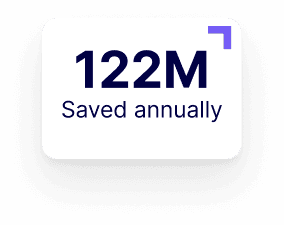
- $339 million in cumulative savings since launch—about $120–121 million annually, or roughly $2.3 million per week—stemming from prevented and redirected emergency department visits.
- 814,000 avoided emergency department visits and 353,000 redirected to primary care clinics, improving clinical appropriateness and reducing costs without sacrificing quality.
- 8.7% fewer low‑acuity emergency department visits (CTAS 4–5) versus pre‑Hub levels, signaling better alignment of people and pathways.
Equity and access
- Improved access for unattached patients—those without a regular primary care provider—who historically relied more on emergency departments for low‑acuity issues. In 2024–2025, unattached patients represented 15.9% of the population but 23.6% of Emergency Department visits, a narrowing gap as navigation and booking improved.
Integrated navigation via 811
- Tight integration with Info‑Santé 811 transforms a phone line into a gateway to primary care: 259,000 calls booked into primary care visits in 2024–2025 (up from 181,000 two years prior), with 23% of calls resulting in a scheduled visit in 2024–2025 (up from 16% in 2022–2023). This keeps non‑urgent needs out of the emergency department and delivers faster, more appropriate care.
Why this matters for experience: fewer low‑acuity visits sitting in crowded emergency departments, more same‑day or next‑day appointments, and clearer handoffs—all translating into less waiting, better information, and safer transitions.
Measuring patient experience (and tying it to value)
Improvement starts with listening and linking signals to action. Blend qualitative and quantitative measures, then connect them to operational data in the flow hub.
Qualitative prompts
- “What made you feel most cared for during this visit?”
- “Where did confusion or delay happen?”
- “What would have made going home easier?”
Quantitative indicators
- Ease of booking, clarity of instructions, staff communication, perceived wait versus actual wait, confidence in self‑management after discharge, likelihood to recommend.
Now close the loop by pairing those measures with operational metrics from the hub: time from triage to bed assignment, percentage of on‑time first cases, discharge before noon, avoidable days, and 7‑ and 30‑day readmissions. When patient‑reported experience dips, investigate upstream: was a discharge blocker unresolved until late afternoon? Did transport backlogs push delays? The hub provides the line of sight to correct course quickly.
How to improve patient experience: a practical playbook
1) Define and document standards for a predictably personalized journey
- Clear intake standards that prompt active listening and accommodate sensitive topics.
- Inclusive language and culturally safe practices embedded in scripts and forms.
- Standard discharge criteria and plain‑language instruction templates.
- Flow hub escalation rules for access constraints and surge conditions.
2) Make every step accessible
- Digital front door with intuitive online scheduling, eligibility checks, and pre‑visit prep.
- Flexible modalities (virtual when appropriate, in‑person when needed).
- Language services and accessibility supports baked into booking and visit workflows.
- Preferred communication channels honored for reminders, instructions, and follow‑ups.
3) Reduce administrative burden with a patient flow hub
- Replace phone‑tag and spreadsheets with automated tasking for housekeeping, transport, consults, and equipment.
- Surface discharge blockers early—pending labs, pharmacy needs, home‑care referrals—and assign to the right role with due times.
- Forecast tomorrow’s arrivals and discharges to align staffing and avoid last‑minute overtime.
- Provide proactive, plain‑language status updates so patients and families know what’s happening and why.
For proof: The Petal Patient Hub redirected and avoided over 1.1 million emergency department visits combined, while generating $339 million in savings—evidence that coordinated, real‑time operations reduce friction for patients and staff alike.
4) Build a closed‑loop feedback system
- Capture short PREMs (Patient‑Reported Experience Measures) at key moments: booking confirmation, post‑triage, post‑discharge.
- Trigger operational reviews in the hub when leading indicators slip (e.g., rising left‑without‑being‑seen or longer time to bed).
- Share outcomes and learning in brief, frequent forums so improvements stick.
5) Invest in staff experience
- Remove repetitive work through standardization and automation; fewer clicks, fewer calls, fewer handoffs to nowhere.
- Provide surge support from the hub so units aren’t left alone during peaks.
- Celebrate operational wins that matter to patients: “Time from triage to bed dropped, and here’s what that meant for family wait times.”
The next steps in patient experience
The future looks proactive, connected, and equitable. This means putting patient experience at the centre of your planning and execution. To make this future a reality means doing the following:
- Experience as an outcome measured alongside clinical results and cost, guiding continuous improvement and payment models.
- Predictive operations that anticipate bottlenecks; the hub orchestrates preparations rather than reacting at the last minute.
- Unified digital access that simplifies booking, triage, and instructions—lower no‑shows, fewer surprises.
- Equity embedded through language access, transportation supports, and flexible modalities that remove barriers for unattached and underserved populations—an area where Petal’s Hub demonstrates tangible progress.
Quick start checklist
Final thought
Patient experience thrives when friction disappears. A patient flow hub removes administrative drag, coordinates handoffs, and gives people a journey that feels timely, transparent, and safe. Petal’s evidence shows the approach delivers not just better moments—but better systems, at lower cost.
Secure your data today.