





Points clés à retenir
- Consultations have specific requirements: OHIP codes such as A005 and A006 require a qualifying consultation request, appropriate clinical assessment, and written reporting.
- Follow-ups aren’t a universal billing category: A returning patient may qualify for an assessment or re-assessment, and depending on the circumstances, a repeat consultation.
- Assessment codes reflect the services provided: A001, A007, A003, and A004 have different examination, documentation, and eligibility requirements.
A patient arrives for an appointment. Is it a consultation, follow-up, or assessment? Picking the right category means more than you’d think come billing submission time. While the clinical purpose may seem straightforward, selecting the appropriate OHIP billing code isn’t always as simple.
Here’s the truth: a referral doesn’t automatically qualify an appointment as a consultation; a follow-up doesn’t necessarily qualify as a repeat consultation; and, assessments can fall under several codes depending on the clinical services performed.
For Ontario physicians, understanding these distinctions is essential to accurate medical billing.
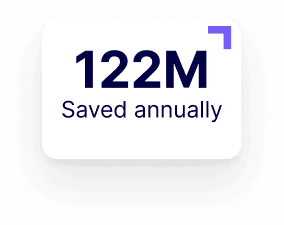
- Ontario family physicians already spend 19 hours a week on average on admin tasks. There’s no time to waste deciphering rules or fixing rejected claims.
Let’s break down the differences, explore commonly used OHIP codes, and walk through a practical checklist for selecting the appropriate code.
OHIP consultation vs. follow-up vs. assessment: What's the difference?
The distinction begins with understanding what each term means under OHIP.
Consultation: A physician provides an opinion following a qualifying written request from another authorized healthcare professional. Specific assessment, documentation, and reporting requirements apply.
Follow-up: A subsequent appointment to monitor progress, review results, or provide ongoing care. The term describes the clinical encounter but doesn’t correspond to one universal OHIP fee code.
Assessment: An examination and evaluation of a patient’s condition. Different codes apply depending on the scope of history, physical examination, physician specialty, and other requirements.
The important question isn’t simply why the patient booked the appointment. It’s what medically necessary service was provided and which OHIP requirements were satisfied.
OHIP billing code selection checklist
Use this matrix as a starting point when reviewing common outpatient consultation and assessment codes.
OHIP code | Service | What to verify before billing |
A005 | Consultation | ☐ Qualifying written request ☐ Required assessment ☐ Written report |
A905 | Limited consultation | ☐ Consultation requirements met ☐ Limited service criteria satisfied |
A006 | Repeat consultation | ☐ Same presenting problem ☐ Intervening physician care ☐ New written request |
A003 | General assessment | ☐ Full history ☐ Comprehensive examination ☐ Frequency limits |
A004 | General re-assessment | ☐ Required examination ☐ Prior history reviewed ☐ Frequency limits |
A007 | Intermediate assessment | ☐ Relevant history ☐ Examination beyond minor assessment |
A001 | Minor assessment | ☐ Brief assessment or qualifying advice ☐ Supporting documentation |
These examples are from OHIP’s Family Practice & Practice in General section. They are not interchangeable with specialty-specific, hospital, or emergency department codes. Consult the Ontario Schedule of Benefits for complete eligibility and payment rules.
OHIP consultation codes: A005 vs. A905 vs. A006
Consultation billing requires more than receiving a referral.
According to Ontario’s Ministry of Health, an eligible consultation generally requires a qualifying written request, an appropriate assessment, review of relevant information, and a written report containing findings and recommendations.
Three codes illustrate the differences:
A005: Consultation
A005 applies to an eligible consultation under Family Practice & Practice in General.
Example: A physician receives a qualifying request for an opinion about a complex patient presentation, performs the required assessment, and sends a written report to the referring provider.
A905: Limited consultation
A905 applies when the requirements of a consultation are met, but the nature of the referral requires a more limited service.
For physicians billing under Family Practice & Practice in General, the service must meet the applicable specific-assessment criteria.
A006: Repeat consultation
A006 is frequently misunderstood.
This code is applied when the same consultant evaluates the same presenting problem after another physician has provided intervening care, and a new qualifying written request has been made.
Example: A patient returns to a consultant after receiving treatment from another physician, who requests an additional opinion on the original condition.
A routine return appointment arranged by the consultant doesn’t automatically qualify.
OHIP assessment codes: A001 vs. A007 vs. A003 vs. A004
Assessment billing depends on the history, examination, and services provided, rather than the appointment duration alone.
A001: Minor assessment
A001 covers a brief history and examination of an affected area or condition, or qualifying brief advice.
Example: Evaluating a straightforward localized skin rash.
A007: Intermediate assessment
A007 requires a more extensive examination than A001, supported by relevant history and clinical findings.
Example: Evaluating persistent knee pain requiring a detailed examination to assess function and exclude other conditions.
A003: General assessment
A003 requires a full history and comprehensive examination consistent with OHIP’s general assessment requirements.
It isn’t appropriate simply because an appointment was lengthy. Generally, only one is payable per patient, per physician, per 12-month period, subject to specified exceptions.
A004: General re-assessment
A004 involves the elements of a general assessment, except that the physician need not repeat historical details already obtained. This includes family history and past medical conditions already shared in the existing general assessment.
Generally, two are payable per patient, per physician, per 12-month period, excluding the hospital-admission exception.
Billing tip: A003 and A004 require substantially more than a routine focused examination. Documentation needs to demonstrate that the applicable requirements were met.
How should physicians bill follow-up appointments under OHIP?
Now onto a common—and fun—appointment type: follow-ups.
This is where confusion between clinical terminology and billing rules becomes particularly important.
Imagine a patient returning to their physician to review treatment progress.
The appropriate code depends on what happens during that appointment.
A brief review and limited assessment might support A001. A more extensive examination might support A007. A qualifying general re-assessment could support A004.
For specialists, the appropriate code may come from an entirely different family of assessments.
Important note: A follow-up appointment isn’t automatically a repeat consultation. The specific criteria for repeat consultation billing must be met.
How do specialist consultation and assessment codes differ?
Specialists have their own OHIP code families. Two examples are internal medicine and cardiology.
Service | Médecine interne | Cardiology |
Consultation | A135 | A605 |
Repeat consultation | A136 | A606 |
Medical specific assessment | A133 | A603 |
Medical specific re-assessment | A134 | A604 |
Example: An internal medicine specialist may use A135 for an eligible consultation but A134 for a qualifying medical specific re-assessment. However, A134 isn’t the default code for every follow-up. Specialty-specific requirements, frequency limits, and documentation still apply.
What’s easier than billing? Having experts bill for you.
Common OHIP consultation and assessment billing mistakes
Before submitting claims, watch for these four issues:
- Billing consultations without complete referral documentation. Missing qualifying requests or written reports can result in reduced payment.
- Treating every follow-up as a repeat consultation. A006 and equivalent specialist codes require specific conditions beyond a returning patient.
- Selecting A003 when A007 better reflects the service. A general assessment requires comprehensive elements that may not occur during a focused appointment.
- Overlooking assessment frequency limits. Codes including A003, A004, and A005 have restrictions that can affect payment. For A005, consultations for a clearly unrelated diagnosis are limited to once every 12 months, while consultations for the same diagnosis are limited to once every 24 months.
These errors are easily avoided through consistent documentation and a review of the applicable Schedule requirements.
For additional guidance, explore our article on OHIP billing claim rejections.
Accurate OHIP billing starts with the right code
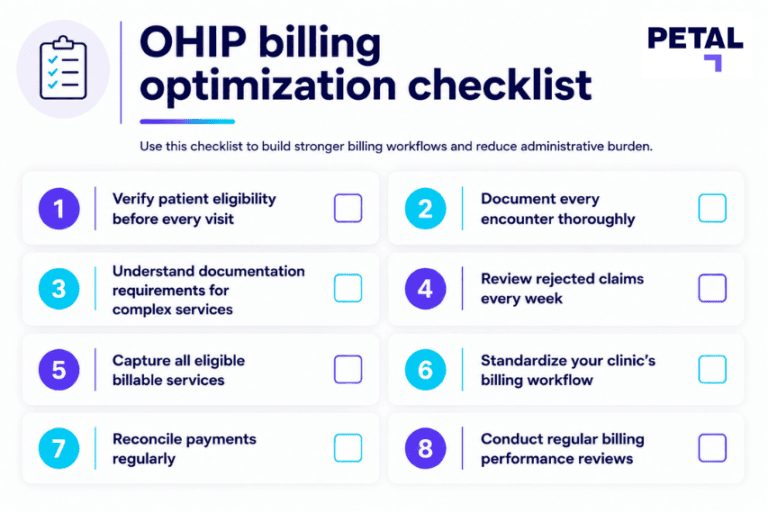
Selecting the appropriate code involves understanding the services delivered, documenting them accurately, and applying the relevant OHIP rules.
But physicians shouldn’t have to spend their evenings resolving billing uncertainties and correcting claims.
Petal Medical Billing Ontario combines experienced billing professionals with technology to help physicians capture eligible revenue, manage rejected claims, and reduce administrative work.
Spend less time managing claims and more time focusing on care.
FAQs: OHIP consultation and assessment billing codes
What is the difference between A005 and A006?
A005 is a consultation code under Family Practice & Practice in General. A006 is a repeat consultation for the same presenting problem, requiring intervening physician care and a new qualifying written request.
When should I bill A003 instead of A007?
A003 applies when the physician completes the required full history and comprehensive examination. A007 applies to an intermediate assessment requiring more examination than a minor assessment but not the full elements of A003.
Can A004 be billed for a follow-up appointment?
Yes, if the appointment meets the requirements of a general re-assessment and applicable payment limits. A004 isn’t appropriate for every follow-up.
Can a specialist bill a new consultation for an existing patient?
Potentially. Eligibility depends on factors including the presenting problem, consultation request, and applicable frequency restrictions. An existing patient relationship doesn’t automatically rule out a consultation.
What happens if an OHIP consultation doesn’t meet the requirements
When consultation requirements aren’t satisfied, OHIP may reduce the payable amount to an appropriate assessment fee. Accurate referral documentation and clinical records help avoid these adjustments.