






Key takeaways
- After-hours work receives targeted attention: Out-of-office premiums and several specialty-specific after-hours differentials increase in 2026 and again in 2027.
- On-call compensation is increasing: MOCAP availability rates rise by 5% in 2026, while the MOCAP call-back payment rises by 15%.
- Your compensation model determines which changes matter: Fee-for-service physicians, sessional physicians, and physicians working under service contracts or salary agreements are affected differently by the agreement.
The 2025 Physician Main Agreement introduces a series of compensation changes for physicians in British Columbia between 2025 and 2029. These includes fee increases, higher sessional rates, adjustments to service contract and salary ranges, increased MOCAP payments, and expanded after-hours compensation.
The compensation landscape for BC physicians has shifted.
In practice, the impact depends on how you’re paid and where you practice, as well as the services provided.
- Note: Medical billing in BC already requires physicians to account for a plethora of rules and requirements. These range from service type to patient characteristics and billing premiums.
The new agreement adds another reason to stay current.
Virtual care is a good example: Your ideal billing pathway changes according to the encounter details and whether a designated telehealth fee exists.
Here are some of the updates BC physicians should know about.
1. The agreement changes multiple compensation models
There isn’t one universal increase that applies identically to every BC physician.
The agreement took effect April 1, 2025. For 2025–26, it provided:
- A 3% increase to fees
- A 6% increase to sessional contract rates
- A 3% increase to service contract ranges and rates
- A 3% increase to salary agreement ranges and rates
- 3% increases to screening mammography reading and MRI fees
Further changes arrived April 1, 2026:
- Fees receive an average 1% increase, with allocation to Physician Sections determined on an equal-dollar-per-FTE basis.
- Sessional contract rates increase by 3%
- Service contract and salary agreement ranges and rates receive an average 1% increase
It’s important to consider how this distinction alters your or your team’s pay, as a physician shouldn’t assume that a headline percentage automatically describes the change to every individual fee.
The effect depends on your compensation arrangement and, in some cases, how funding is ultimately allocated.
In practice: Start by identifying the compensation model and fee schedule that apply to your work. These provide a foundation for understanding which changes affect your billing.
Delivering virtual care in BC?
2. After-hours compensation is increasing
After-hours work is an area receiving specific attention under the agreement.
Effective April 1, 2026, fees, percentages, and maximums for Out-of-Office Hours Premiums (01200–01217) and Pediatric After-Hours Surcharges increase by 5%.
- Looking ahead: They’re scheduled to increase by a further 10% effective April 1, 2027.
Additionally, physicians on alternative payment or salaried contracts will see their after-hours premiums increase from April 1:
- Evenings: $25 to $35/hr
- Nights: $35 to $55/hr
- Weekends/Holidays: $25 to $35/hr
There are also targeted changes for particular areas of practice.
For emergency medicine, the differential between day fee items and related evening, night, weekend, and statutory-holiday fees increases by 5% in 2026 and a further 10% in 2027.
Family medicine receives the same scheduled increases to the differential between hospital visit fees and specified on-call, on-site evening, night, weekend, and statutory-holiday hospital visit fees.
Further, the agreement introduces new after-hours premium fee codes for eligible elective surgeries beginning September 1, 2026. These apply to surgeons, surgical assistants, and anesthesiologists under the agreement’s conditions.
Billing tip: Capture details supporting an after-hours premium while the encounter is fresh instead of reconstructing it later.
3. MOCAP availability and call-back payments are changing
Physicians participating in the Medical On-Call/Availability Program (MOCAP) should pay close attention.
- What’s MOCAP? A provincial program paying physicians who participate in sustainable, on-call rotations. This keeps emergency province-wide emergency needs met.
Effective April 1, 2026:
- Annual MOCAP availability coverage rates increase by 5%
- MOCAP call-back payments increase by 15%
For 24/7/52 availability coverage, that brings the annual 2026 rates to $259,875 for Level 1, $190,575 for Level 2, $80,850 for Level 3, and $375,375 for On Site On-Call, per call group.
One distinction to keep in mind: MOCAP availability payments compensate for availability coverage. The agreement separately addresses compensation for services and qualifying callbacks.
4. Some practice categories receive targeted updates
The agreement also directs funding toward particular practice categories.
For example, a new General Practice – Maternity practice category takes effect April 1, 2026, with a Service Contract Range maximum of $415,295.
- The category is intended for comprehensive care within a Health Authority program.
Additionally, the agreement provides targeted adjustments for other practice categories over its term and establishes an Allocation Committee responsible for allocating specified funding across salary and service contract ranges.
For physicians, the broader lesson is that provincial compensation changes aren’t always uniform.
Clinicians increase revenue by an average of 9.4%, or $29,267 in British Columbia, using Petal Billing.
5. After-hours availability and coverage expectations are shifting
Separate from the compensation agreement, the College of Physicians and Surgeons of BC (CPSBC) updated its expectations around after-hours care.
In February 2026, the College replaced its Care Coverage Outside Regular Office Hours practice standard with Availability and Coverage.
- The revised standard removes the blanket expectation that physicians provide 24/7 availability while maintaining responsibilities around continuity and coverage based on patient needs.
The updated standard also clarifies expectations around critical test results, voicemail systems, and instructions for accessing care outside office hours. It indicates that patients should only be directed to an emergency department when clinically indicated.
These are professional practice expectations, rather than new billing rules.
Still, they form part of the wider context in which BC physicians are managing after-hours practice in 2026.
Stay ahead with MSP experts
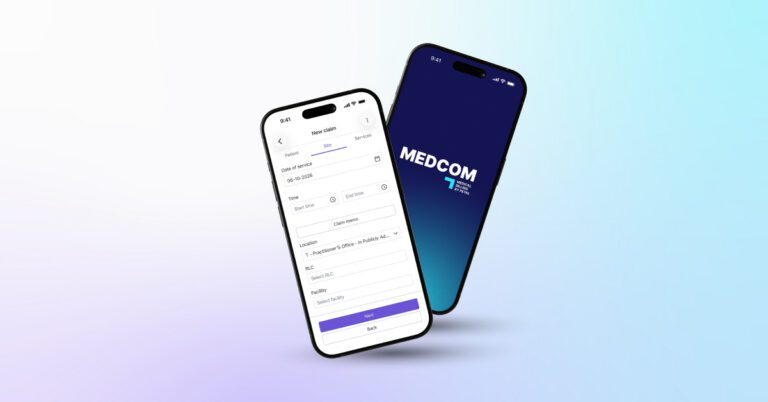
You deserve a billing solution built on expertise based in BC.
Medcom by Petal helps you achieve more revenue and few mistakes through industry-leading billing support.
- Our billing software flags and makes real time recommendations on a wide range of possible errors, codes, and contextual elements.
- Send your invoices directly from the mobile app or desktop solution.
Feel confident that your hard work is being reflected in your compensation.
Because when your practice thrives, your patients thrive too.
Trust a team on top of provincial changes:
FAQs: BC physician compensation changes
What changed for BC physician compensation in 2026?
Effective April 1, 2026, the agreement provides an average 1% increase to fees, a 3% increase to sessional contract rates, an average 1% increase to service contract and salary agreement ranges and rates, a 5% increase to MOCAP availability rates, and a 15% increase to MOCAP call-back payments, among other changes.
Did every MSP fee increase by 1% in April 2026?
Not necessarily. The agreement specifies an average 1% increase to fees, with the percentage allocation to Physician Sections determined on an equal-dollar-per-FTE basis using the most recent available fiscal-year data. Fees that don’t belong to a Physician Section receive a 1% increase.
Are BC after-hours premiums increasing?
Yes. Out-of-Office Hours Premiums and Pediatric After-Hours Surcharges increase by 5% effective April 1, 2026, followed by a further 10% increase effective April 1, 2027. The agreement also includes targeted after-hours changes for emergency medicine and family medicine.
What changed for MOCAP in BC?
MOCAP annual availability coverage rates increase by 5% effective April 1, 2026. The MOCAP call-back payment increases by 15%, with the agreement listing a 2026 call-back rate of $288 when the applicable criteria are satisfied.
Do BC physicians still need to provide 24/7 coverage to their patients?
The CPSBC’s revised Availability and Coverage standard removed the blanket 24/7 requirement. Physicians must instead consider their patients’ needs, practice and service expectations when arranging appropriate coverage, while meeting requirements concerning communication, critical results, and continuity of care.
Why do compensation changes matter for medical billing?
A new rate or premium only translates into accurate payment when the applicable billing requirements are met. Keeping fee information current, documenting services appropriately, selecting applicable codes and premiums, and reviewing payments can reduce missed compensation and unnecessary rework.