






Key takeaways
- Secure messaging protects healthcare data: Audit trails and administrative controls help organizations manage privacy obligations more effectively.
- Consumer apps cause workflow friction: Staff spend valuable time locating the right contact, confirming coverage, and following up on unanswered messages.
- Personal messaging apps blur work-life boundaries: Work conversations on personal devices contribute to “interruption fatigue” and reduced work-life separation.
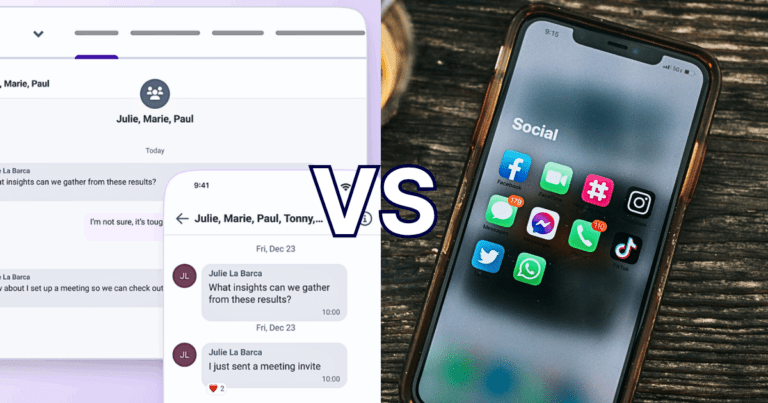
Secure healthcare messaging platforms provide stronger privacy controls, better workflows, and clearer work-life boundaries than consumer messaging apps. While tools like SMS and WhatsApp are convenient, they weren’t designed for modern healthcare’s operational and regulatory requirements.
Imagine your average day. Hopping from SMS text, WhatsApp, and email. All while trying to just get your schedule figured out.
This is communication chaos for your average person let alone a physician.
It’s understandable that many providers turn to consumer messaging apps like WhatsApp and iMessage. These tools have accelerated communication among those who are increasingly overburdened—75% of doctors say admin workload is an impediment to patient care and 90% of nurses report some level of burnout.
But healthcare organizations have increasingly recognized that consumer apps threaten compliance and work-life boundaries, let alone the logistics of keeping them all straight.
Given that healthcare cyberattacks increased by 21% in 2025 and workforce burnout continues to rise, secure messaging platforms are a more practical solution for modern healthcare teams.
Below, you’ll discover how secure healthcare messaging and consumer apps differentiate across:
- Compliance and privacy
- Workflow
- Clinician work-life balance
A brief comparison: Secure messaging vs. Consumer apps
Secure messaging ✅
Consumer apps ❌
Healthcare-specific controls
Audit trails and administrative oversight
Schedule-aware communication
Integrated provider directories
Team-based workflows
Better work-life separation
General-purpose features
Limited organizational visibility
No schedule integration
Manual contact management
Individual conversations
Work and personal communication mixed
Secure messaging vs. Consumer apps: The compliance and privacy gap
Consumer messaging apps are popular in healthcare because, despite privacy risks, they’re convenient.
They’re familiar, easy to access, and allow teams to communicate quickly during busy clinical days. When a physician needs an answer or a department needs to coordinate coverage, sending a text can feel like the fastest option.
The challenge: Healthcare communication carries responsibilities that consumer platforms were never designed to support.
Patient information finds its way into everyday conversations, including:
- Appointment details
- Coverage questions
- Clinical updates
- Treatment suggestions
These all require organizations to manage information carefully. While consumer apps may offer encryption, healthcare organizations also need visibility into how information is shared and accessed—as well as where it’s stored.
Today, 89% of Canadians are at least somewhat concerned about the protection of their privacy. Patients want to know that their providers practice smart data management.
This is where secure healthcare messaging platforms differ. They provide features such as user authentication, audit trails, role-based permissions, and administrative controls that help organizations maintain compliance with privacy requirements and internal policies.
The difference in practice: Compliance
A physician texts patient details to a colleague to coordinate follow-up care. Months later, the organization receives a privacy inquiry. Consumer apps won’t provide centralized records of the conversation. Secure messaging platforms will allow administrators to access audit logs and confirm who viewed the message.
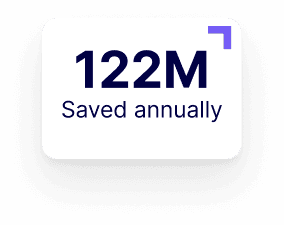
CHUM saves 8,000+ hours per year using Petal Workforce.
Secure messaging vs. Consumer apps: Workflow difference
When it comes to workflows, healthcare communication demands fundamentally different tools than everyday chatting.
The problem is consumer apps assume users already know who they need to contact and how to reach them. In healthcare environments, that information changes constantly. Physicians rotate schedules, departments share responsibilities in achieving equity, and care teams operate across multiple locations.
As a result, simple messages become coordination exercises.
- Did you know 62% of major patient safety events in hospitals include a communication breakdown?
Situations where staff must spend time searching for the correct on-call physician, confirming coverage responsibilities, locating updated contact information, or following up when messages go unanswered happen all the time.
When performed on consumer apps, the delays that emerge cause friction beyond communication and into daily operations.
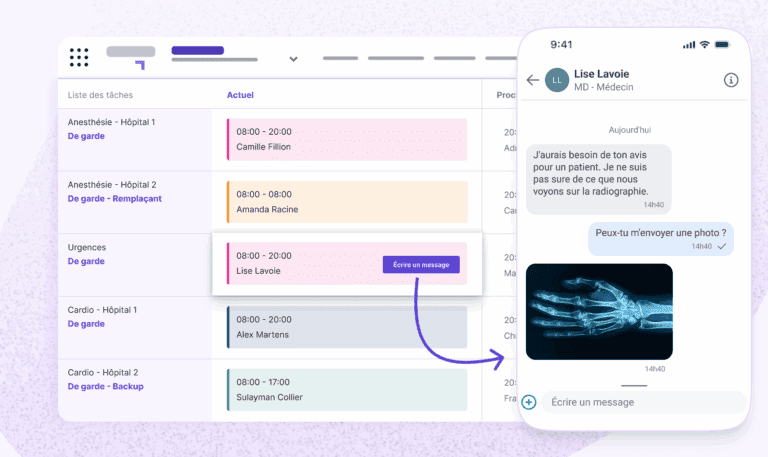
Secure healthcare messaging platforms address this challenge by connecting communication with organizational structure. Provider directories, schedule-aware routing, group messaging, and role-based contacts make it easier to identify who should receive a message and when.
In turn, teams see fewer communication bottlenecks and less admin burden when coordinating routine tasks.
The difference in practice: Workflow
An emergency department physician needs to reach the cardiologist on call. Using a consumer app, they must first search for the right contact and then confirm who’s covering. Secure messaging allows the physician to immediately message the current on-call cardiologist through an integrated directory tied to updated schedules.
Secure messaging vs. Consumer apps: Impact on clinician well-being
Communication tools shape clinicians’ daily lives.
Across Canada, physicians now spend close to 20 million hours annually on administrative work. They don’t have time to waste on communications, and they don’t want to add admin burden to their already limited leisure time.
Many healthcare professionals rely on personal devices for work-related communication. Over time, work conversations begin to coexist alongside:
- Family messages
- Social notifications
- Personal responsibilities
- Scroll time
Further, clinicians manage communication across multiple channels. Text messages, phone calls, emails, and department tools compete for their attention.
Consumer messaging apps amplify this burden because they provide little structure around communication. Conversations become fragmented, and priorities become unclear.
Secure healthcare messaging platforms support a more organized communication environment. Teams have clearer pathways for collaboration, greater visibility into responsibilities, and fewer unnecessary follow-ups.
Reducing communication friction won’t solve clinician burnout. But when healthcare organizations remove avoidable administrative obstacles, clinicians gain more time and attention for spending where they want.
The difference in practice: Provider well-being
A physician finishes their shift but continues receiving work-related messages through a personal messaging app. With secure messaging, communication follows defined workflows and professional channels, making it easier to separate work responsibilities from personal time.
Petal users make 400,000+ shift trades and transfers per year.
Give your team a proven communications solution
Patients win when their providers are informed and unburdened.
Petal Workforce features secure clinical communications and mobile access to keep your team connected.
Canada’s healthcare leaders trust us to manage their messaging. Here’s why they choose Workforce:
- Secured through encryption, as well as SOC 2 Type II certified and PIPEDA compliant
- Supports messaging and calling directly from the real-time calendar
- Highly configurable preferences enable providers to control their contact information visibility
- Code alert triggers that message defined groups in emergency situations
Align your teams now to support stronger, better coordinated care tomorrow.
Secure your communications and your workflow:
FAQ: Secure messaging vs. Consumer apps
What is secure healthcare messaging?
Secure healthcare messaging is a communication system designed specifically for healthcare organizations, providing features such as encryption, user authentication, audit trails, and administrative oversight.
Why do healthcare organizations use secure messaging instead of SMS?
Standard SMS and consumer messaging apps often lack the controls, visibility, and governance healthcare organizations require to manage sensitive information and communication workflows.
Are consumer messaging apps compliant with healthcare privacy regulations?
Compliance depends on the organization, jurisdiction, and platform configuration. However, many consumer apps lack the administrative controls and oversight features healthcare organizations typically require.
How does secure messaging improve healthcare workflows?
Secure messaging helps teams identify the right contact faster, coordinate care more efficiently, and reduce time spent managing communication manually.
Can secure messaging reduce clinician burnout?
While no single tool will eliminate burnout, reducing communication friction and administrative burden helps improve the day-to-day clinician experience.
What features should healthcare messaging software include?
Healthcare messaging platforms should include encryption, audit trails, role-based communication, provider directories, schedule awareness, group messaging, and administrative controls.