









Key takeaways
- Accurate patient information prevents rework: Verifying PHNs and MSP eligibility before every visit helps claims move through Teleplan more smoothly.
- Choosing the correct fee item protects physician revenue: Matching every service to the appropriate MSP billing code limits rejected and underpaid claims.
- Consistent billing habits improve cash flow: Submitting claims regularly and reviewing MSP requirements saves wasted time on administrative burden and payment delays.
The most common MSP billing mistakes include submitting incorrect patient information, selecting the wrong fee item, missing required documentation, billing virtual care incorrectly, and overlooking MSP billing rules. Most of these issues are preventable with consistent billing workflows and regular claim reviews.
Every submitted MSP claim represents care you’ve already delivered.
When that claim is rejected, delayed, or paid incorrectly, physicians see their cash flow slow and follow-up requirements build. Patient care becomes hampered as time is drawn away from patient needs to administrative burden.
- Time savings wanted: 48% of BC physicians report their time spent on administrative tasks increased in the past year, and 90% say these tasks majorly contribute to burnout.
Fortunately, most billing mistakes follow predictable patterns. They typically stem from small oversights like missing documentation or overlooking a provincial billing requirement.
Recognizing these issues early helps physicians strengthen their billing processes before they become recurring problems.
British Columbia’s Medical Services Plan (MSP) has its own billing rules and fee schedules. Understand how they work to improve claim acceptance rates and minimize mistakes toward more sustainable revenue growth.
Here are seven MSP billing mistakes BC physicians should avoid.
1. Using incorrect or incomplete patient information
Successful claims always begin with accurate patient information.
One incorrect digit in a Personal Health Number (PHN), an outdated MSP eligibility record, or mismatched demographic information leads to claim rejections before payment processing.
Naturally, these mistakes are particularly common during busy clinic sessions. When providers and staff are focused on patient flow, small details may be missed.
- Note: Out-of-province patients deserve additional attention, because reciprocal billing usually requires different information than standard MSP claims.
Build patient verification into every visit. This will eliminate many avoidable claim issues.
Look to confirm:
- PHN accuracy
- MSP eligibility on the date of service
- Patient demographics where required
- Out-of-province billing requirements
Example: A family physician sees a patient whose PHN was entered incorrectly. The claim is rejected through Teleplan, requiring staff to investigate the error, update the patient record, and after weeks of work, resubmit the claim.
BC physicians using Petal gained $29,267 more annually on average compared to manual billing.
2. Choosing the wrong MSP fee item decreases revenue
Providing excellent care doesn’t guarantee the correct billing outcome.
MSP contains hundreds of fee items. Choosing the closest-looking code instead of the appropriate one will result in reduced payments or rejected claims.
Some common examples of wrong selections: billing a visit instead of a consultation, selecting an incorrect age-based virtual care code, or using a fee item outside its intended context.
- Did you know? BC’s Rural Retention Program allows physicians working in designated rural communities to receive fee premiums on top of standard MSP fee code payments. If you practice in an eligible community, don’t miss applying these premiums to maximize your earnings.
Until you become familiar with the codes you use most often, consult the MSP Payment Schedule regularly.
To improve accuracy today:
- Confirm services meet fee item definitions.
- Review age-based requirements where applicable.
- Verify provider and practice setting eligibility.
- Check that codes align with documented encounters.
Example: A physician bills a consultation fee for a patient encounter that doesn’t meet MSP’s consultation requirements. Although care was appropriate, the claim is adjusted to a lower-value service, which reduces revenue.
3. Missing required documentation at claim submission

Strong documentation is the bedrock of billing success.
Depending on the service provided, physicians may need to document referrals, counselling time, start and end times, medical necessity, or additional clinical details.
- Note: Virtual care introduces additional documentation expectations. This is particularly true when specific telehealth billing rules apply.
Developing consistent documentation habits benefits more than billing accuracy. Complete clinical notes also support continuity of care and strengthen readiness in the case of an audit.
Established documentation requirements include:
- Referral information
- Counselling details
- Start and end times where required
- Medical necessity
- Clinical findings supporting the billed service
- Telehealth documentation
Example: A physician provides an extended counselling session but forgets to record the required start and end times. When billing staff prepare the claim, they can’t confidently support the service billed. The physician’s time is spent fixing the problem as payment is delayed.
4. Virtual care billing errors
Virtual care has become a routine part of practice throughout BC, but MSP billing rules in this domain still require careful attention.
Depending on the service provided, physicians need to use designated telehealth fee items. These span claim notes, document patient consent, and additional timing information.
Many virtual care billing issues arise because physicians assume every phone or video visit follows the same workflow. In fact, requirements differ based on the service provided and the applicable MSP fee item.
Before submitting a virtual care claim, confirm:
- The correct telehealth fee item has been selected where one exists.
- Required claim notes have been included.
- Patient consent has been documented.
Standardize your virtual care workflow and be glad nothing’s missed during busy clinic days.
Example: A physician bills an in-person fee for a virtual visit without including the required telehealth claim note. The claim is flagged during processing, delaying reimbursement.
Maximize your virtual care earnings with the
5. Ignoring MSP fee schedule rules
Accurate billing extends beyond selecting the correct fee item.
The MSP Payment Schedule includes rules that determine when certain services are payable. It also indicates how frequently services can be billed, and which services must accompany others.
Physicians who overlook these requirements may submit claims that accurately reflect the care they provided but don’t satisfy MSP’s billing criteria.
As your practice grows, reviewing the rules attached to your highest-volume services will stop many recurring billing issues.
When reviewing claims, check for:
- Frequency limits
- Required prerequisite services
- Eligible code combinations
- Diagnostic or clinical requirements where applicable
- Service-specific billing conditions
Your billing will become more predictable, and you’ll avoid annoying claim adjustments.
Example: A physician bills a premium that demands another service was performed first. Because the prerequisite wasn’t met, the premium is refused. Over time, repeated mistakes like this lead to revenue leakage and mounting reconciliation work.
6. Waiting too long to submit claims
Submitting claims consistently is a simple way to improve billing accuracy.
When claims remain unsubmitted for weeks or months, details become more difficult to verify. Growing backlogs become increasingly difficult to address.
Delayed submission also increases the risk of over-aged claims and slows cash flow. Even if claims are eventually accepted, physicians may spend considerably more time preparing and correcting them than if they had been submitted shortly after the encounter.
Build these billing habits into your workflow:
- Complete documentation immediately after the encounter
- Submit claims daily or weekly
- Review remittances every payment cycle
- Resolve rejected claims as soon as they’re identified
- Submit all claims well before the 90-day MSP submission deadline
Many physicians find that daily or weekly claim submission supports a manageable, profitable routine.
Example: A busy physician waits until the end of the quarter to complete outstanding billing. Several encounters require clarification, and one patient’s documentation can’t be fully reconstructed. What could have been a few minutes of daily billing becomes several days of catch-up.
7. Assuming BC billing works like another province
Physicians who relocate to BC—or regularly work locum assignments—bring valuable clinical experience with them.
Billing, however, doesn’t transfer as easily.
Although BC, Alberta, and Ontario, follow similar billing journeys, each province has its own fee schedule, submission requirements, documentation expectations, and claim validation process.
A workflow that worked well under AHCIP or OHIP may not align with MSP.
So, instead of relying on previous habits, physicians should treat MSP as its own billing system and become familiar with its requirements.
When beginning practice in BC:
- Review the MSP Payment Schedule.
- Familiarize yourself with Teleplan requirements.
- Learn the fee items you’ll use most frequently.
- Confirm documentation expectations for common services.
- Review remittance reports regularly to identify recurring issues early.
Investing a little time upfront saves you from billing problems later.
Example: A physician relocating from Ontario bills several services using workflows they followed successfully under OHIP. After receiving multiple adjusted claims, they discover that BC’s billing requirements differ for consultations. Updating their workflow early would have prevented weeks of corrections.
Trust MSP experts based in BC
When your billing works, you save time and your patients are better served.
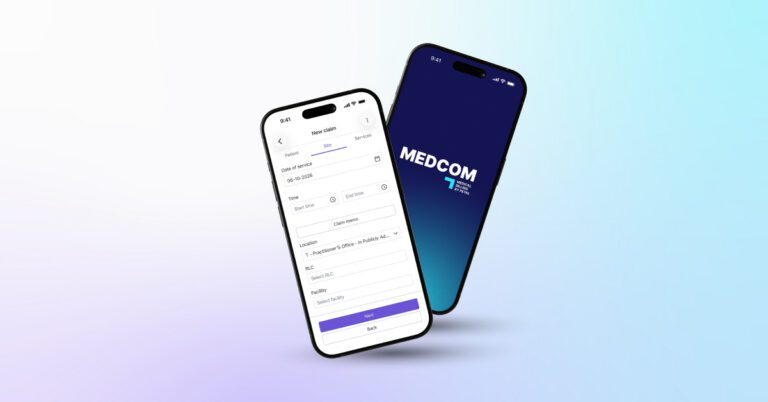
Medcom by Petal helps you avoid costly mistakes through industry-leading billing support. Our billing software flags and makes real time recommendations on a wide range of possible errors, codes, and contextual elements. Send your invoices directly from the mobile app or desktop solution.
Dedicated medical billing software paired with human expertise identifies issues before claims are submitted and improves your first-pass acceptance rates.
Maximize your impact through smoother, simpler billing today.
Navigate MSP billing with confidence:
FAQs: MSP billing claims
What are the most common MSP billing mistakes?
Common MSP billing mistakes include entering incorrect patient information, choosing the wrong fee item, missing required documentation, billing virtual care incorrectly, overlooking fee schedule rules, delaying claim submission, and assuming BC billing rules are the same as another province’s.
Why are MSP claims rejected?
MSP claims are commonly rejected because of invalid patient information, incorrect billing codes, missing documentation, unmet billing requirements, duplicate claims, or services that don’t comply with the MSP Payment Schedule.
How can physicians reduce MSP billing errors?
Building consistent billing workflows, verifying patient information before every visit, documenting encounters thoroughly, reviewing the MSP Payment Schedule regularly, and submitting claims promptly can significantly reduce billing errors.
How long do physicians have to submit MSP claims?
Fee-for-service physicians are generally expected to submit MSP claims electronically within 90 days of the service date. Submitting claims regularly helps avoid over-aged claims and reduces administrative burden.
Does virtual care follow different MSP billing rules?
Yes. Many virtual care services require designated telehealth fee items, claim notes, patient consent documentation, or additional timing requirements. Physicians should confirm the applicable billing rules before submitting virtual care claims.
Can physicians still be paid if they choose the wrong MSP fee item?
Sometimes. Depending on the situation, a claim may be rejected, reduced, or adjusted to a lower-value service. Selecting the correct fee item before submission helps reduce corrections and protects physician revenue.