






Points clés à retenir
- A structured response limits audit stress: Understanding the audit scope before acting supports accurately, timely audit responses.
- Every audit is an opportunity to improve: Reviewing findings and standardizing billing processes decreases future compliance risks and boosts long-term billing accuracy.
- Strong documentation is your best defense: Complete, legible clinical notes demonstrate that billed services were medically necessary and appropriately coded.
If you’ve received an audit notice from the Alberta Health Care Insurance Plan (AHCIP), don’t panic. In many cases, audits are used to verify that submitted claims comply with the Schedule of Medical Benefits and are backed by appropriate documentation. Read the audit notice carefully, gather the requested records, review your claims, respond before the deadline, and use the findings to strengthen your billing processes.
AHCIP billing audits happen to the best physicians.
Audits happen very rarely due to fraudulent billing, or even due to accusations of fraud. The main reason is usually a presumption of billing errors or misinterpretation of agreements. Alberta Health mainly targets physicians who have billings statistically different from the average of their colleagues.
Nonetheless, managing audits is time-consuming, which slows care delivery, weakens clinic growth, and increases staff burnout.
- Remember: Alberta Health receives millions of invoices every year from health professionals, and each one is verified by a computerized system or by employees as part of the organization’s mandate. Don’t take an audit personally.
Your best protection is compliant billing and adequate clinical notes. Make sure your patient files and notes have clear descriptions of the patient’s situation, as well as the services provided.
If you’re audited, follow these five steps to position you and your team for success.
Step 1: Read the audit notice carefully
Your first reaction may be to start gathering patient charts immediately. Resist this urge.
Instead, take a few minutes to understand exactly what Alberta Health is requesting.
Audit notices typically explain which billing period or claims are under review, what documentation must be submitted, and when your response is due. Read the notice from beginning to end before taking any action. Missing a deadline or overlooking part of the request causes unnecessary complications.
Remember that receiving an audit notice does not automatically mean Alberta Health believes fraud has occurred. Audits are a routine part of administering millions of physician claims each year.
Starting with a clear understanding of the audit scope makes every step that follows easier.
Billing virtual care in Alberta? Use our codes cheat sheet and AHCIP checklist.
Step 2: Gather supporting documentation
Your documentation will form the foundation for your response.
Gather every document that supports the billed service before responding and organize your records in the same order as the audit request.
Here are examples of key billing documentation:
- Progress notes
- Consultation notes
- Operative reports
- Referral letters
- Diagnostic results (if applicable)
- Virtual care documentation (start/stop times if required)
- Scheduling records
Don’t alter documentation after the fact. If clarification is required, follow accepted documentation practices rather than rewriting history.
Step 3: Review each claim objectively
Before responding, compare the submitted claim against the Schedule of Medical Benefits and your documentation.
Ask yourself, and if necessary, your team:
- Was the correct code used?
- Were modifiers applied correctly?
- Were billing limitations respected?
- Does the documentation support the billed service?
- Are referrals or required patient information included?
If errors exist, understand them before responding to Alberta Health.
Alberta physicians using Petal gained $38,581 more annually on average compared to manual billing.
Step 4: Respond completely and on time
Punctuality is key to managing audits and returning your focus to patient care.
Submit exactly what Alberta Health requested before the deadline.
Be sure to include:
- Requested records
- Organized documentation
- Any explanatory letter if appropriate
Keep copies of everything submitted and avoid sending superfluous documentation.
Step 5: Learn from the audit
Audits are an opportunity to establish more effective billing practices.
Whether the audit results in no changes or identifies billing issues, use it to improve future workflows.
Here’s what to ask yourself and your team:
- Were documentation expectations consistent?
- Did multiple providers bill the same situation differently?
- Are there recurring coding mistakes?
- Do internal processes need updating?
An audit is a chance to strengthen billing accuracy across the practice. Your revenue growth will be better for it!
Best practices for managing AHCIP audits successfully + checklist
The best time to prepare for an audit is long before one arrives.
Healthcare teams that build consistent billing habits into their daily workflows are typically better positioned to respond quickly and confidently when documentation is requested.
Document clearly and consistently
Clinical documentation should support every billed service. Establish clear documentation standards across your organization, so providers consistently record patient history, assessments, referrals, procedures, time requirements, and medical decision-making where applicable.
Review billing regularly
Periodic internal billing reviews help identify recurring documentation gaps, coding inconsistencies, and rejected claim patterns before they become larger compliance issues. Reviewing high-volume codes and frequently used modifiers uncovers small problems that are easily corrected.
Stay current on billing requirements
Billing rules evolve over time. Assign responsibility for monitoring Alberta Health updates, reviewing Schedule of Medical Benefits changes, and sharing important information with physicians and billing staff. Regular education helps ensure everyone is working from the same guidance.
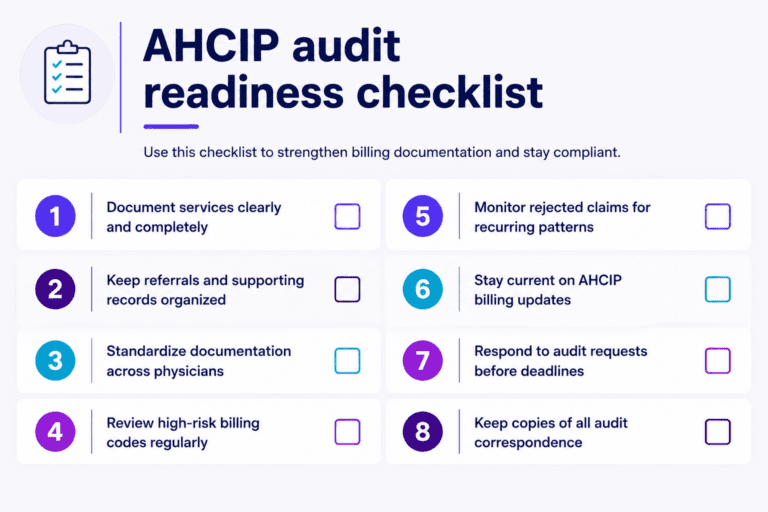
Use this readiness checklist to remain prepared for potential audits:
Submit more successful claims on first pass
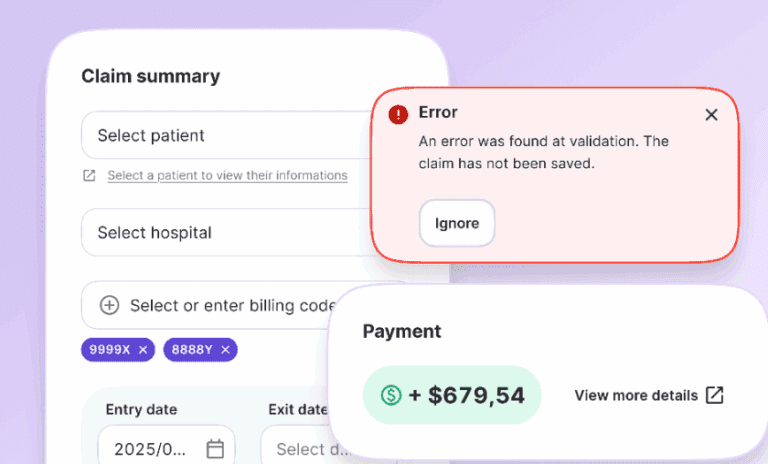
Audit or no audit, choose a billing solution for all scenarios.
Petal Billing in Alberta provides centralized, tailored medical billing solutions for Alberta physicians via self-serve or fully managed for AHCIP, WCB, private, and out-of-province claims. Access real-time claim status and code tracking at every step, as well as remittance reception and automated payment reconciliation.
- Our recent independent study found physicians using Petal Billing saved 3.1 hours per week on average.
Make your billing process smooth, so you worry less about mistakes and more about patients.
Improve your billing success rate:
FAQs: AHCIP audits
Why did I receive an AHCIP audit?
Alberta Health conducts audits to verify that billed services comply with the Schedule of Medical Benefits and are supported by appropriate documentation. An audit does not automatically indicate suspected fraud.
What documentation should I provide during an audit?
Submit the records requested in the audit notice. Depending on the review, this may include clinical notes, referrals, consultation reports, operative notes, diagnostic results, and other supporting documentation.
Can I change my chart after receiving an audit notice?
Clinical records should not be rewritten after the fact. If clarification is necessary, follow accepted documentation practices for adding an appropriately dated addendum rather than altering the original record.
What happens if Alberta Health identifies billing errors?
Depending on the findings, Alberta Health may request clarification, adjust payments, or recover amounts that cannot be supported by documentation or billing rules.
Am I responsible if someone else submits my claims?
Yes. Physicians remain responsible for the accuracy of their billing, even when claims are prepared or submitted by clinic staff or a billing agency.
How can I reduce the likelihood of future audits?
Maintain complete documentation, review billing regularly, stay current on Alberta Health billing requirements, and establish consistent billing processes across your practice.