








Points clés à retenir
- The best billing solution fits your practice: Your specialty, compensation model, and preferred level of support should guide your decision.’
- Support after submission matters: Reviewing payment statements and resolving rejected claims, as well as tracking reimbursements, are as important as submitting claims.
- Choose a solution that grows with you: A flexible billing platform adapts as your career evolves, whether it’s joining a group practice, working at multiple sites, or another change.
The best medical billing solution is one that fits your practice and preferred level of support. Whether you choose billing software, a billing agency, clinic support, or a hybrid solution, the right option will limit administrative work, improve billing accuracy, and simplify the path from patient care to payment.
Starting independent practice comes with plenty of decisions.
Where will you practice? What compensation model will you work under? How will you organize your schedule?
One decision that receives less attention, but has a lasting impact on your day-to-day growth, is how you’ll manage medical billing.
The right billing solution influences how much time you spend on administration, how efficiently claims are processed, how easily you resolve billing issues, and whether your workflow adapts as your practice grows.
Whether you’re establishing your first practice or looking for a better way to manage billing, here’s what to consider before making your decision.
Four ways physicians manage medical billing
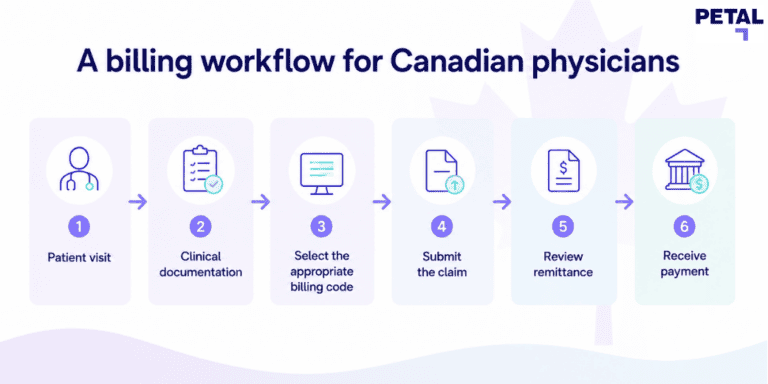
There’s no single approach that works for every physician.
Across Canada, medical billing is typically managed in one of four ways, each offering different advantages depending on your preferences and practice.
- Want more details on getting started? Check out: Your first 90 days of medical billing: A roadmap for new physicians.
1. Self-managed billing software
Many appreciate the flexibility and control this option provides.
Modern platforms include features like electronic claim submission, automated claim validation, reporting tools, and mobile access to simplify daily workflows.
Managing billing independently also means taking responsibility for reviewing payment statements and correcting rejected claims, as well as keeping up with provincial billing requirements.
2. Medical billing agency
Billing agencies prepare and submit claims on your behalf after receiving your billing information.
This limits administrative work associated with claim submission and is appealing for physicians who prefer to outsource billing responsibilities.
The level of expertise varies between providers, however. Look for an agency that understands your specialty, your province’s billing requirements, and your preferred compensation model.
3. Clinic administrative support
Some clinics and healthcare organizations provide internal administrative staff who manage physician billing. These roles are often referred to as Medical Office Assistants (MOAs) or Medical Billing Clerk.
Before relying entirely on clinic support, understand who reviews rejected claims and follows up when billing issues arise. Responsibilities vary between organizations, and levels of billing expertise differ significantly.
4. Hybrid billing solutions
Hybrid solutions combine medical billing software with expert billing support.
Physicians benefit from digital workflows while maintaining access to experienced billing professionals who help review claims, answer billing questions, monitor payments, and resolve issues when they occur.
Clinicians save 3.1 hours per week using Petal Billing.
Seven questions to ask before choosing a medical billing solution
Once you’ve narrowed your options, compare solutions using these practical questions.
1. Does it support your type of practice?
Billing workflows aren’t identical across specialties or care settings.
A family physician working in community practice has different billing needs than a hospital-based specialist or physician providing virtual care.
Choose a solution that supports your current workflow while remaining flexible enough to evolve alongside your practice.
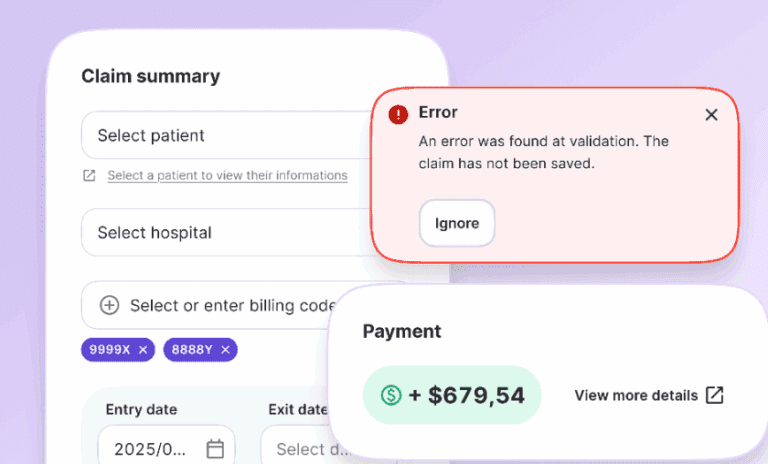
2. Does it help prevent billing mistakes before submission?
Correcting rejected claims takes significantly more time than preventing errors in the first place.
Look for features that identify common issues, including:
- Missing billing information
- Incorrect code combinations
- Required documentation
- Validation against current billing requirements
For example, a small mistake like incorrectly entering a patient’s AHCIP or OHIP number could cause weeks of payment delay.
3. What happens after claims are submitted?
Submitting claims is only one step in the billing cycle.
You’ll also need to review payment statements, identify rejected claims, understand adjustment or rejection reasons, submit corrections when needed, and confirm payments have been received. Some billing solutions continue supporting physicians throughout this process.
- Explore how billing software compares to billing services.
Understanding what happens after submission is just as important as understanding how claims are submitted.
4. What level of support is available?
Even experienced physicians encounter billing questions.
Some providers offer online documentation and self-service resources. Others provide onboarding and access to billing specialists who know provincial billing requirements and specialty-specific workflows.
5. Will it save you time?
A billing solution should simplify your workflow.
When comparing options, consider questions such as:
- Can you submit claims from multiple devices?
- Does it reduce duplicate data entry?
- Does it automate repetitive tasks?
- Does it provide useful reporting?
- Is the interface easy to learn and use consistently?
Even small time savings each day quickly add up over the course of a year. Petal surveys have revealed that 60% of respondent physicians spend one hour extra a day on administrative tasks after hours, and some as many as three hours a day.
6. Can it grow with your career?
Your billing needs today may look very different five years from now.
You may expand into multiple practice locations, change compensation models, join a group practice, or take on additional clinical responsibilities.
Choosing a flexible solution today makes future transitions easier.
7. Are you comparing overall value?
Cost matters—but it shouldn’t be your only consideration.
A lower-priced solution may require more administrative work, increase the likelihood of billing errors, or provide limited support when problems arise.
Instead of comparing subscription fees alone, consider the overall value a solution delivers through time savings, billing accuracy, workflow efficiency, and expert guidance.
12,000+ providers and administrators trust Petal to simplify their billing.
Common mistakes when choosing a billing solution
Many physicians make similar mistakes when evaluating billing options. Fortunately, they’re easy to avoid.
Choosing based only on price
The least expensive option isn’t always the most cost-effective if it causes more administrative burden or contributes to missed revenue.
Assuming every solution works for every physician
Billing requirements differ between specialties, provinces, and compensation models. Make sure the solution aligns with how you practice.
Overlooking onboarding and training
Even intuitive software requires time to learn. Strong onboarding allows physicians à build efficient billing habits from day one.
Waiting until billing becomes overwhelming
Establishing an effective billing workflow early is much easier than rebuilding one after administrative work begins to pile up.
Thinking only about today's needs
Your practice will evolve over time. Choosing a solution that adapts alongside your career limits unnecessary disruptions.
Choose a billing solution that supports long-term growth
Your added earnings today seed your practice success for years to come.
Facturation médicale’s user-friendly features and live support agents based in your province will position you for simpler, smoother medical billing.
You’ll access:
- Tools designed for 40+ medical specialties.
- Expert human guidance to solve challenging problems.
- A proven solution that processes $3B in claims annually.
Drive a higher claim acceptance rate to achieve more revenue and greater confidence that your delivered services will be properly compensated.
You’ll have more focus for your patients with smarter medical billing.
Choose a solution tailored to your needs:
FAQs: Choosing a medical billing solution in Canada
What is the best medical billing solution for physicians?
The best medical billing solution depends on your specialty, practice setting, province, and how involved you want to be in managing billing. Some physicians prefer managing claims independently, while others benefit from billing agencies or hybrid solutions that combine software with expert support.
Should I use billing software or a medical billing service?
Billing software provides greater control and automation, while medical billing services limit administrative work by managing claims on your behalf. Many physicians choose a hybrid solution that combines both technology and professional billing expertise.
What features should I look for in medical billing software?
Look for features such as automated claim validation, payment tracking, reporting, mobile access, secure claim submission, and support for your province’s billing requirements. Strong onboarding and responsive customer support are also important.
Can I switch medical billing solutions later?
Yes. Many physicians change billing solutions as their practices grow or their needs change. Choosing a flexible platform makes future transitions easier and minimizes workflow disruptions.
How can a medical billing solution reduce administrative work?
Modern billing solutions automate repetitive tasks, identify billing errors before submission, simplify payment tracking, and reduce the time spent correcting rejected claims. This allows physicians to spend less time on administration and more time caring for patients.
Does every medical billing solution work across Canada?
Not necessarily. Billing rules, fee schedules, and claim submission processes differ by province. Before choosing a solution, confirm that it supports the billing requirements, compensation models, and workflows specific to where you practice.