






Points clés à retenir
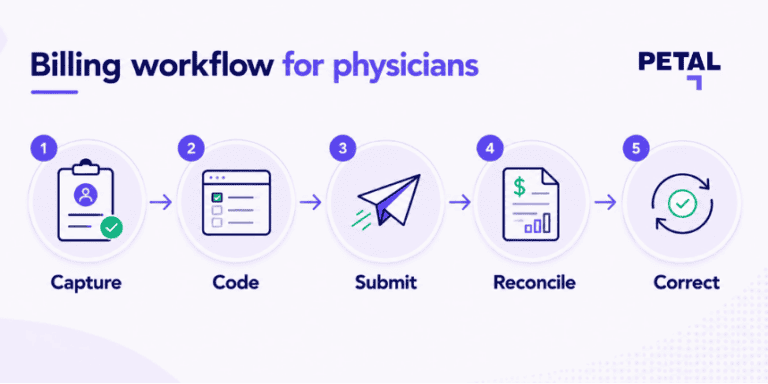
- Billing is a workflow, not a single submission: Every patient encounter should move through capture, coding, submission, reconciliation, and correction.
- Consistency lowers cognitive load: Recording billing details at the point of care and submitting claims daily or weekly prevents stress of potential gaps and administrative backlogs.
- Your payment model changes the rules, but the need for a system persists: Whether you use fee-for-service or Alberta’s Primary Care Physician Compensation Model (PCPCM), accurate documentation and claim follow-up remain essential.
The Alberta medical billing workflow is the repeatable process physicians use to convert documented patient care into accurate AHCIP claims and timely payment. It includes capturing billing details during the patient encounter, selecting the appropriate billing codes, submitting claims, reviewing remittance statements, and correcting rejected or reduced claims.
You’ve spent close to a decade learning to assess patients and make clinical decisions. Then independent practice introduces a different question: How does today’s work become payment?
Whether you knew it or not before, a physician is tasked with becoming a type of entrepreneur, and that means taking the necessary steps to get paid.
Residency rarely teaches that part in depth.
The answer isn’t to memorize the entire Schedule of Medical Benefits (SOMB) or become a billing agent between appointments. It’s to build one reliable workflow that works for you and keeps details from living in your head:
Before your first clinic day: Make sure you can bill
A licence to practice and authorization to bill are separate milestones.
After obtaining your CPSA practice permit, register with Alberta Health for your nine-digit Practitioner Identification number, or Prac ID.
You may also need the correct Business Arrangement, practice relationship, direct deposit, and billing connection. Alberta Health’s registration instructions explain the Prac ID process.
New physician setup checklist
- CPSA practice permit’s active
- Prac ID has been issued
- Business Arrangement and practice relationship are correct
- Direct deposit’s configured
- A billing method is ready
- You know who reviews rejected and reduced claims*
Preparing for rejection management isn’t something to ignore but to embrace as a system or support to manage claims ensures stronger revenue predictability.
Step 1: Capture billing details while the encounter is fresh
The lowest-stress workflow begins during care.
Confirm the patient’s health number and capture the service, diagnosis, location, referral details, time, and relevant circumstances. Your note must support the service claimed. The goal is to avoid the need to reconstruct a clinic day from memory.
Example: The detail that disappears by Friday
During a busy Tuesday clinic, a service may qualify for a modifier. The care is documented, but the billing detail isn’t. By Friday, the physician remembers the visit but not the precise information. A 30-second point-of-care habit prevents after-hours detective work.
Alberta physicians using Petal earned $38,581 more annually on average compared to manual billing.
Step 2: Code from a focused working list
The Alberta SOMB defines insured services, fees, modifiers, explanatory codes, and governing rules. It’s authoritative, but you don’t need to memorize it.
Build a favourites list around the codes and modifiers you use most: common visits, assessments, procedures, virtual care, and after-hours services. Check the current SOMB when a service or rule is unfamiliar.
What about PCPCM?
Alberta’s PCPCM is an optional model for eligible family physicians and rural generalists providing comprehensive care. It combines encounter, time, and complexity-adjusted panel payments, but it doesn’t eliminate billing. The PCPCM billing guide says the model uses roughly 94% of standard fee-for-service codes.
Step 3: Submit on a schedule, not when you “find time”
AHCIP claims have a general requirement to be submitted within 90 days of the service date.
Treat that as an outside limit. Daily or weekly submission keeps encounters fresh, supports steadier cash flow, and leaves time for corrections.
Billing tip: Compare your appointment or day sheet with submitted claims. This catches missed visits before they age into lost revenue.
Step 4: Reconcile every payment cycle
Submitting is only the midpoint. Alberta Health’s Statement of Assessment and Statement of Account show what was paid, reduced, or rejected.
The Physician’s Resource Guide helps physicians prepare claims and interpret these statements.
Review each cycle for:
- Claims that were rejected or paid at zero
- Claims paid below the expected amount
- Missing modifiers or information
- Repeated explanatory codes
A rejection isn’t a judgment on care. It’s feedback that the claim needs attention. Correct it while the encounter remains easy to review.
Step 5: Turn errors into a lighter workflow
Keep a short error log. When a patient identifier, modifier, or service creates repeated problems:
- Identify the repeated issue.
- Find the applicable SOMB or AHCIP rule.
- Add a prompt, favourite code, or validation step.
- Confirm the issue disappears in later remittances.
Common billing mistakes in a physician’s first year
- Waiting weeks to enter claims
- Assuming clinic staff will catch every missing detail
- Leaving rejections until the encounter is difficult to reconstruct
- Applying FFS habits to PCPCM claims without checking its rules
Billing virtual care?
Final takeaway: Build stability before optimization
Your first goal isn’t to optimize every possible code. It’s to create a stable loop in which every encounter is captured, submitted, reviewed, and resolved. When that loop is reliable, billing stops competing with patient care for space in your head.
That’s how you’ll maximize your earnings and position your practice for long-term growth.
Ready to make Alberta billing easier from day one?
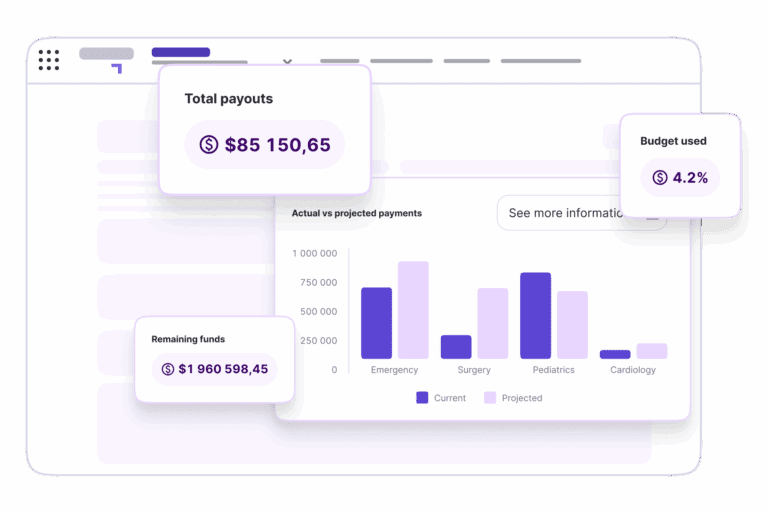
Smoother billing so often means more patients are seen.
Facturation médicale supports AHCIP, WCB, private, and out-of-province claims. médecins using Petal Billing reported an average 9.4% revenue increase and 3.1 hours saved per week compared with manual billing.
Start your career strong—your first year of medical billing is free. Talk to a Petal billing expert.
Navigate MSP billing with confidence:
FAQs: Starting family medicine in Alberta
What does a new Alberta family physician need before billing AHCIP?
You need an active CPSA practice permit and Alberta Health registration, including a Prac ID. You may also require the appropriate Business Arrangement, practice relationship, and direct deposit. Before practicing independently, confirm who submits claims, how billing details are captured, and who reviews remittances and rejections.
How long do Alberta physicians have to submit an AHCIP claim?
AHCIP claims generally must be received within 90 days of the service date. Exceptions are limited, so daily or weekly submission is safer than working toward the deadline. Frequent submission also improves cash-flow visibility and leaves time to correct missing information while the encounter remains fresh.
Do Alberta family physicians still submit claims under PCPCM?
Yes. PCPCM changes how eligible family physicians and rural generalists are compensated, but it doesn’t eliminate claims. Physicians bill eligible encounters and time under PCPCM rules, while complexity-adjusted panel payments provide another component. Confirm your model, Business Arrangement, eligible services, and current rules before submitting.
Should a new physician do their own medical billing?
That depends on the time, visibility, and support you want. Software offers control but requires you to manage coding, remittances, and corrections. Clinic staff or a service can reduce administration, while a hybrid combines software visibility with expert follow-up. Regardless of the method, the physician remains responsible for accuracy.
What should physicians do when an AHCIP claim is rejected?
Review the explanatory code, compare the claim with the patient record and current SOMB rule, correct the issue, and resubmit promptly when permitted. Track recurring rejections. When the same problem repeats, improve the capture or validation step rather than treating every claim as an isolated event.