









Automated physician scheduling software vs. spreadsheets: What changes for your team?
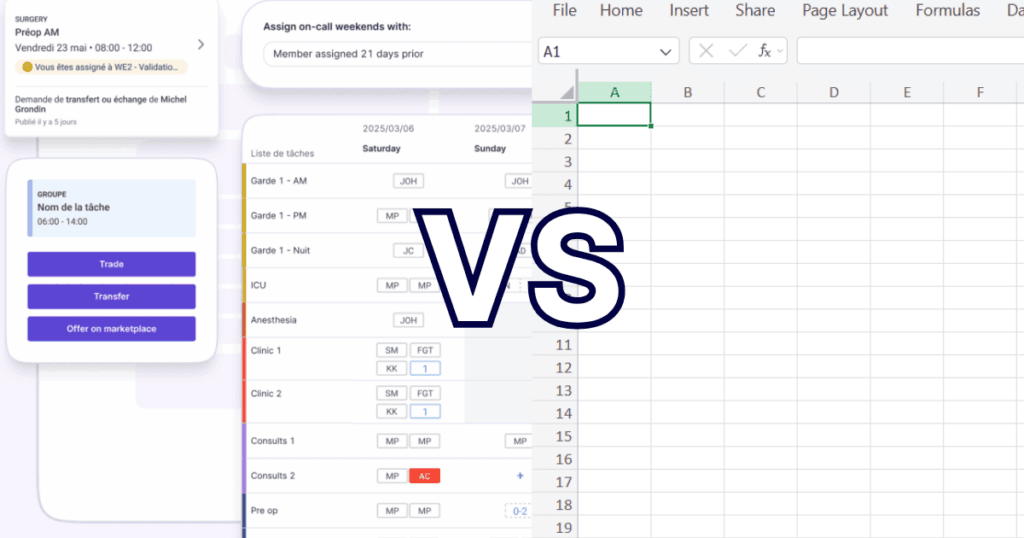
Compare automated physician scheduling software with spreadsheets and see how automation improves scheduling for physicians, department chiefs, and administrative teams through greater visibility and less manual work.
Manual scheduling vs. Automated scheduling: How features guide healthcare efficiency
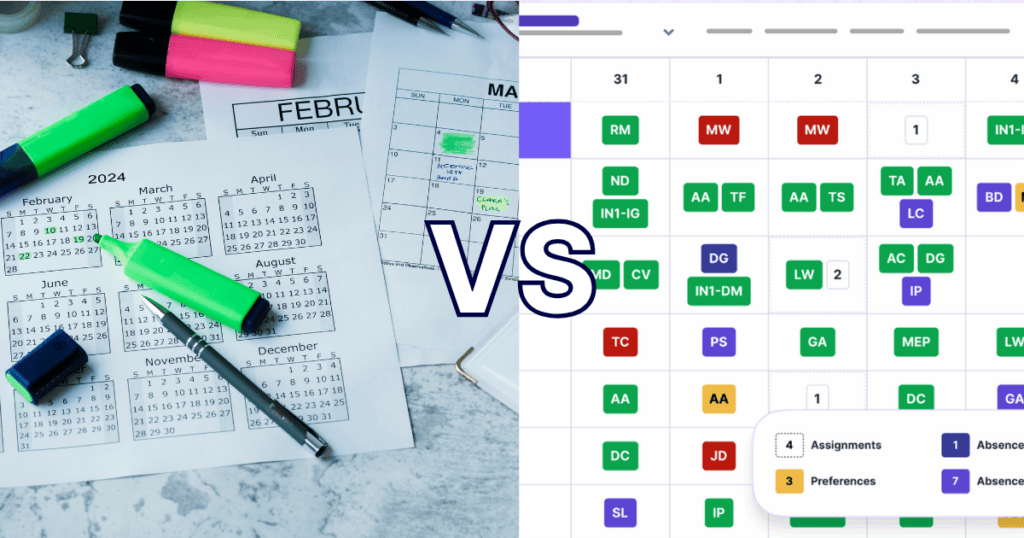
Learn how automated scheduling software simplifies schedule creation with configurable rules and physician preferences, then streamlines schedule management through real-time visibility, shift swaps, on-call coverage, and centralized coordination for healthcare teams.
Still managing physician schedules in Excel? 4 Steps to modernize manual scheduling

Learn how healthcare teams successfully move away from Excel-based physician scheduling. This guide outlines a structured, change-ready approach to modern scheduling, including key considerations for stakeholder adoption, workflow improvements, and long-term scalability.
Manual vs automated scheduling in healthcare: Costs, risks, and benefits

Discover how automated healthcare scheduling reduces administrative burden, improves clinician satisfaction, and helps hospitals and physician groups reclaim valuable clinical time.
Physician scheduling without burnout: A practical framework

Use this framework for managing physician schedules without burnout to reduce admin burden, improve workflows, and protect clinical time.
4 Ways better nurse scheduling boosts hospital profitability

Hospitals deliver optimal care when providers are satisfied. Learn how nurse scheduling software reduces overtime, improves retention, lowers labor costs, and supports better patient care.
5 Ways to improve nurses’ work-life balance without adding work

Nurses improve work-life balance by reducing administrative workload, gaining schedule flexibility, and improving communication. Discover five practical strategies healthcare organizations can implement today.
The ‘Clinic Efficiency Audit’ playbook: How to identify time and revenue leaks

Managing and refining schedules drains physicians’ limited time and energy. Addressing key sources of poor scheduling improves patient care and satisfies teams before burnout starts.
Beyond revenue: Metrics every clinic and hospital department should track

Metrics guide decisions in care coordination, operational management, and resource allocation. Explore how clinics and hospital departments deploy metrics to achieve their goals and inform strategic decisions.
5 Scheduling mistakes burning out your physicians

Managing and refining schedules drains physicians’ limited time and energy. Addressing key sources of poor scheduling improves patient care and satisfies teams before burnout starts.