







Points clés à retenir
- Fair and transparent schedules improve trust. When schedules reflect staff preferences and clear rules, teams feel better about planners’ decisions.
- Automating scheduling reduces frustration and saves time. Nurses spend less time coordinating shifts and more time focusing on care and recovery.
- Streamlined absence management minimizes disruption. Automated callouts, shift swaps, and centralized vacation tracking make unplanned changes easier to handle.
Nurses improve work-life balance when they have more control over their schedules, fewer administrative burdens, and clearer communication.
The most effective way to achieve this is through better workforce management systems that reduce manual work and increase flexibility. When time is lost to manual scheduling and fragmented communication, personal time is compromised and work-life balance is strained.
It’s imperative that nurses’ wellness is prioritized now. Nurses had more overtime hours worked compared to other health providers in 2025. In 2023–2024, 8% of all hours worked by front‑line providers (excluding physicians) in hospital nursing units were overtime—22.6 million hours, roughly equal to 11,500 full‑time positions.
Nurse retention is critical to maintaining and improving patient care. But today’s inefficient systems skew work-life balance and cause burnout. When we consider that 43% of nurses in Quebec are leaving the profession before turning 35, further strain on nurses will jeopardize the entire healthcare system.
It’s logistically and economically challenging to constantly hire new nurses as former nurses leave the profession. Third parties aren’t the answer either. Hiring nurses through agencies is often more expensive due to additional fees or markups.
The following five strategies focus on practical ways to improve nurses’ work-life balance without adding more to nurses’ plates and, in fact, help close the demand-capacity gap.
1) Automate scheduling to save time and reduce manual work
Automating scheduling helps nurses reclaim time by eliminating repetitive administrative tasks and accelerating coverage decisions.
Manual scheduling requires hours of coordination, especially when managing complex staffing needs across departments. Automated systems simplify this process. Coverage gaps are identified instantly, and available staff are highlighted for filling them. This efficient approach reduces the need for tiring back-and-forth communication while minimizing delays.
Further, automation supports compliance and transparency through customized rules based on specialty, role, and seniority. Instead of relying on manual checks, scheduling rules are embedded directly into the system. This reduces the risk of errors and promotes consistency.
Impact on nurses and planners
- Nurses: Fewer disruptions caused by last-minute changes and clearer visibility into upcoming shifts.
- Planners: Less time spent building and adjusting schedules.
CHUM saves 8,000+ hours per year using Petal Workforce.
2) Create fair and transparent schedules
Your automated scheduling solution improves work-life balance when prioritizing fairness, transparency, and alignment with staff needs.
On the other hand, schedules that feel unpredictable contribute to frustration and burnout. Unpredictability and unfairness feels like a car stopping and starting abruptly like constant whiplash.
Traditional group-level scheduling systems, too often powered by closed spreadsheets, legacy tools, paper print outs scattered around, or even Post-it notes, were never designed to manage today’s complexity.
Effective automation uses department-specific rules and staff preferences to create balanced schedules that distribute shifts equitably. This includes considerations like workload distribution, historical scheduling patterns, and union rules.
In turn, transparency increases and trust builds among teammates. When nurses understand how schedules are generated and why certain decisions are made, they’re more likely to feel confident in the process. Clear visibility into scheduling logic helps reduce confusion and perceived inequities.
Impact on nurses and planners
- Nurses: Greater confidence in schedules and reduced frustration from perceived inequities.
- Planners: Fewer disputes over scheduling decisions amid increased trust in the system, reducing time spent justifying or reworking schedules.
3) Simplify absence management and shift coverage
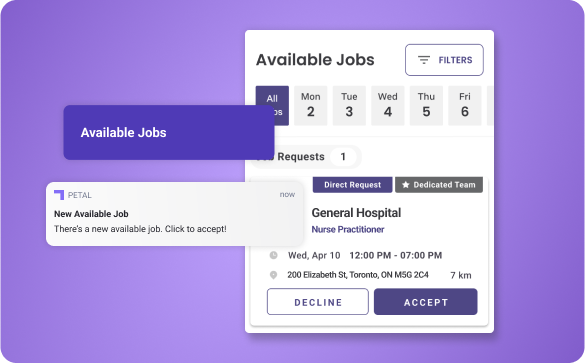
Effective absence management allows nurses to handle unplanned changes without added admin burden.
Otherwise, schedules are disrupted, and pressure adds teams to find coverage.
Automated callout workflows help fast-track this process by immediately identifying available staff and notifying the right people. This reduces delays and prevents coverage gaps from escalating.
Moreover, empowering nurses to manage their own schedules improves flexibility. Features such as shift swaps and transfers allow staff to adjust their schedules when personal needs arise. Managers aren’t asked to perform extensive coordination. When additional coverage is needed, a broader shift marketplace is deployed to reach more qualified staff.
To further streamline planning, provide a centralized vacation calendar that includes a view of time-off requests and approvals. This helps managers make informed, fair decisions for their teams.
Impact on nurses and planners
- Nurses: More flexibility to manage unexpected events, as well as easier access to shift swaps without manually coordinating.
- Planners: Faster coverage for unplanned absences and less time spent coordinating replacements or tracking time-off requests.
Petal users make 400,000+ shift trades and transfers per year.
4) Enable secure, role-based communication
Centralized, secure communication makes nurses’ lives easier, during high-intensity and low-intensity periods, reducing emotional drain. In turn, nurses have space to achieve balance by reducing message overload and only receiving relevant information.
Time is critical to patients and teams in emergency situations.
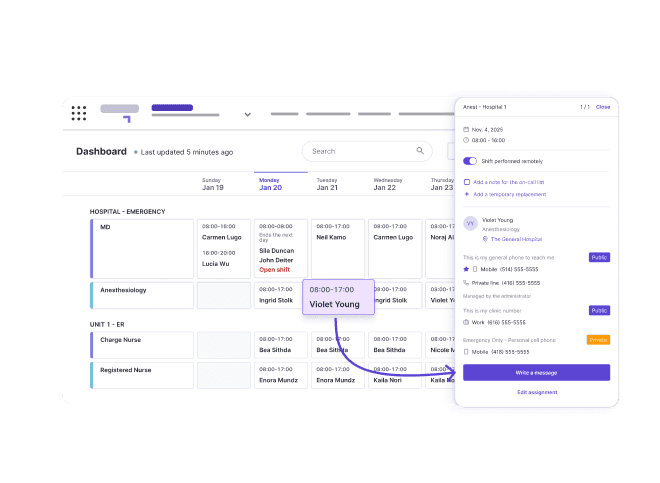
Instead of relying on pagers and unsecured channels like SMS or social messaging apps, healthcare organizations keep all communication encrypted and contained within a compliant environment. Providers message or call directly from the schedule, access a complete staff directory, and control how their contact information is shared.
In critical situations, automated alert workflows streamline coordination. Teams trigger alerts that notify predefined groups and escalate communication based on priority until someone responds. This structured approach promotes timely responses while maintaining visibility and accountability.
Accessible via both mobile and web, secure messaging enables seamless collaboration whether providers are on-site or off-site.
Impact on nurses and planners
- Nurses: Fewer irrelevant notifications and clearer, role-specific updates that reduce confusion.
- Planners: More efficient communication with targeted messaging, removing repetition and the risk of missed information.
5) Use mobile access to manage schedules anytime, anywhere
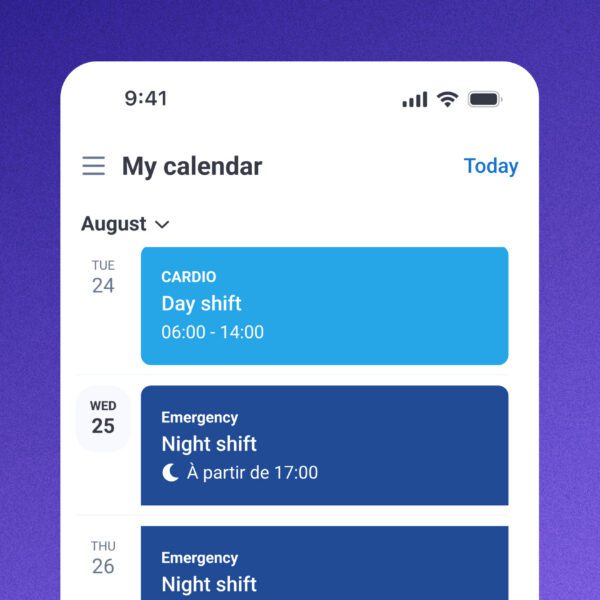
Mobile access gives nurses the flexibility to manage their schedules like modern professionals.
Mobile-first scheduling platforms—such as the Petal Health Mobile App (App Store / Play Store)—allow staff to access their schedules anytime, request changes, receive updates, and communicate in real time. This ease of access gives nurses the control necessary to feel assured and build the lives they want—at work and beyond.
Mobile tools also allow nurses to initiate and accept shift swaps directly from their devices. Instead of relying on calls or messages, schedule adjustments are handled efficiently in a few steps.
This level of accessibility simplifies coordination and reduces the time spent managing schedules. As a result, nurses spend less time organizing their work and more time focusing on rest and recovery.
Impact on nurses and planners
- Nurses: Real-time access to schedules and the ability to manage shifts from anywhere supports better work-life boundaries.
- Planners: Increased responsiveness with the ability to make quick schedule adjustments without being tied to a desktop system.
Petal is on call for nurses
Say good-bye to pagers and paper schedules—for good.
Petal Workforce Management is tailored to nurses.
Automated Scheduling, Absence Management, and the Petal mobile app save time for nurses and planners. Instantly identify coverage gaps, then fill them fast. Save time by automating fair schedules based on department-specific rules. Gain visibility from anywhere, anytime.
Proof: CHUM used Petal Workforce to transform its operations. An independent study analyzed the impacts:
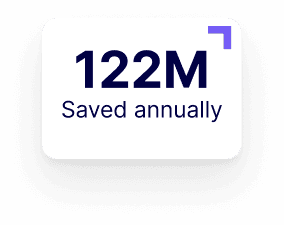
- 8,000 hours saved annually
- $610K in annual economic value
- 407% increase in daily self-service searches
Lorsque les infirmières et infirmiers sont soutenus, leurs patients le sont aussi.
Bring nurses’ work-life into balance:
FAQ: Nurses’ work-life balance
- What causes poor work-life balance for nurses?
Poor work-life balance for nurses is primarily caused by unpredictable schedules, excessive overtime, staffing shortages, and administrative burden. These factors reduce control over personal time and increase fatigue, leading to burnout. - How can hospitals improve nurses’ work-life balance?
Hospitals improve nurses’ work-life balance by implementing better scheduling systems, reducing manual administrative work, enabling flexible shift swaps, and improving communication. These changes give nurses more control over their time without adding workload. - Does better scheduling really reduce nurse burnout?
Yes, better scheduling reduces nurse burnout by minimizing last-minute changes, supporting fair shift distribution, and giving nurses more predictability. When schedules are transparent and aligned with preferences, stress and fatigue decrease. - Why is schedule flexibility important for nurses?
Schedule flexibility is important because it allows nurses to adapt their work to personal responsibilities and unexpected life events. Flexible options like shift swaps and mobile access help maintain boundaries between work and personal life. - What role does technology play in improving nurse work-life balance?
Technology improves nurse work-life balance by automating scheduling, simplifying absence management, and enabling real-time communication. This reduces administrative workload and allows nurses to focus more on patient care and recovery time.